El Quijote de Miguel de Cervantes
1992 • Comedy, Drama
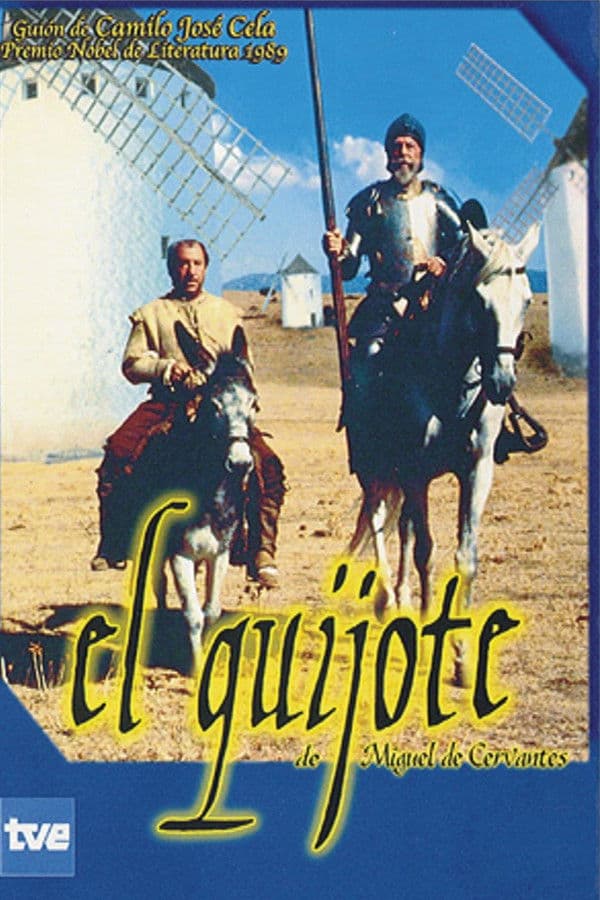
Miniseries version of the first half of Cervantes' famous novel.
Runtime: 5h 10m
Buy related books from Amazon
As an Amazon Associate I earn from qualifying purchases. Read the full disclosure.
Why you should read the novels
If the 1992 screen version sparked your curiosity, reading the Don Quixote book by Miguel de Cervantes delivers a fuller, funnier, and far more layered experience. The novel’s voice, irony, and social satire unfold across two parts, letting you travel La Mancha with Don Quixote and Sancho Panza at a depth no movie can match. Discover why this timeless classic is celebrated as the birth of the modern novel.
Only the book immerses you in Cervantes’ playful narration, the historical-feigned chronicle framing, and the rich embedded stories that expand the world beyond the iconic windmills. An English translation of Don Quixote reveals the evolving friendship, moral ambiguity, and razor-sharp critique of chivalric romances that adaptations must compress. To truly grasp the humor, heartbreak, and humanity, read the novel that inspired every Don Quixote movie.
Choose a trusted English translation to enjoy fluent, engaging prose while staying faithful to Cervantes’ intent. Reading Don Quixote gives you the complete arc, the dazzling metafiction, and the earthy, proverb-filled banter that define this masterpiece. For book lovers and classic literature seekers, the novel offers unmatched insight, depth, and delight compared to any screen adaptation.
Adaptation differences
Scope and structure are the biggest differences between the Don Quixote book and the 1992 adaptation. The two-part novel spans many journeys, digressions, and inset tales, while a film must highlight a smaller selection of emblematic episodes. Screen versions often combine characters, compress timelines, and skip or abbreviate interpolated novellas to sustain momentum and a cohesive runtime.
Cervantes’ distinctive narration and metafictional play are greatly reduced on screen. The book’s layered narrators, authorial asides, and the conceit of a translated chronicle are central to its humor and originality. Part Two’s self-referential twist—characters reacting to the fame of Part One and to a spurious sequel—is typically simplified or minimized in a movie to keep the story straightforward and cinematic.
Tone and texture shift as well. The novel balances slapstick, satire, and stark realism, including harsher beatings, bawdy jokes, and social critique that many adaptations soften for broader appeal. Films usually favor warmth, pathos, and picturesque adventure, trimming earthier humor and the sharper edges of Cervantes’ critique of chivalric fantasies and contemporary society.
Character arcs and thematic emphasis are streamlined. Don Quixote’s idealism and Sancho Panza’s pragmatic loyalty evolve gradually in the book through lengthy conversations and proverbs, which a movie condenses into key scenes. Episodes such as Sancho’s Barataria governance, courtly pranks, and debates on authorship and truth are often shortened. Dulcinea may be visualized or romanticized on screen, whereas the novel keeps her largely as an unseen ideal—shifting the story’s focus from satire of illusion to a more direct, poignant portrait of dreaming versus reality.
El Quijote de Miguel de Cervantes inspired from
Don Quixote: Part One
by Miguel de Cervantes
Don Quixote: Part Two
by Miguel de Cervantes