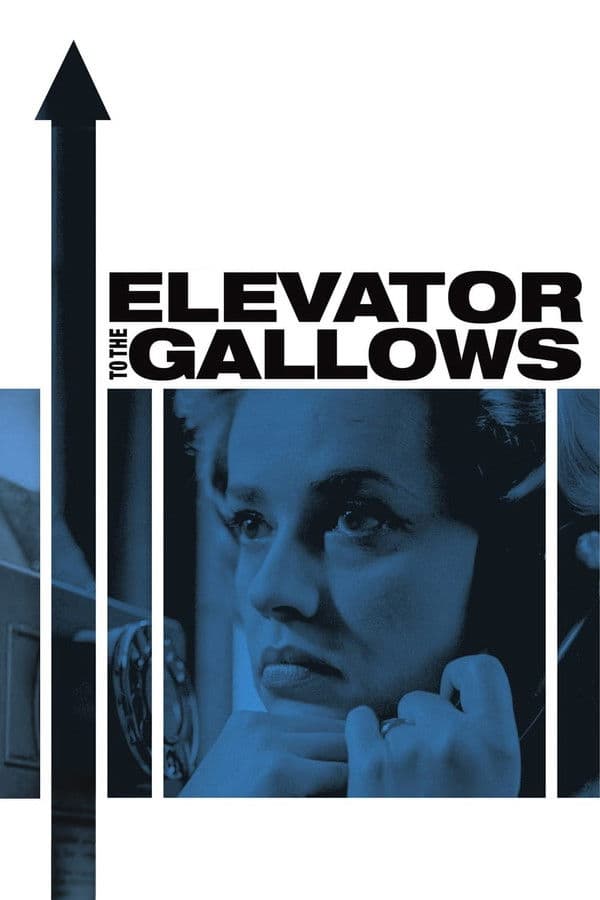
Elevator to the Gallows
1958 • Crime, Drama, Thriller • NR
A self-assured businessman murders his employer, husband of his mistress, which unintentionally provokes an ill-fated chain of events.
Runtime: 1h 32m
Buy related books from Amazon
As an Amazon Associate I earn from qualifying purchases. Read the full disclosure.
Why you should read the novel
Choose the source novel, Elevator to the Scaffold by Noël Calef, for a sharper, more immersive French noir experience. The book’s taut prose and psychological tension pull you inside the crime rather than keeping you at a cinematic distance.
On the page, motives, doubts, and fatal choices unfold with precision. Calef’s crime novel deepens every turn of the plot, giving readers the interior voices, investigative logic, and moral ambiguity that a movie can only hint at.
If you want the definitive Elevator to the Gallows experience, read the novel first. This classic thriller rewards careful readers with richer character backstories, meticulously built suspense, and a chilling inevitability that lingers long after the last chapter.
Adaptation differences
Elevator to the Gallows the film compresses time and space for a feverish, near real-time feel, while Noël Calef’s novel allows a slightly wider investigative lens. The book’s pacing lets consequences accumulate methodically, strengthening its procedural edge.
Point of view is a key difference. The novel enters characters’ minds, revealing motives, panic, and rationalizations with forensic clarity. The movie instead relies on faces, silence, and visual cues, trading inner monologue for atmospheric suggestion.
Style shifts are profound. Louis Malle’s adaptation bathes the story in Miles Davis’s improvised jazz and nocturnal imagery—elements unavailable to the book—shaping a mood-driven, existential noir where music and shadow do the storytelling.
The mechanics of discovery and resolution also diverge. The film leans on visual motifs and photographic evidence to ensnare its players, whereas the novel emphasizes written traces, procedural reasoning, and investigator persistence—delivering a more methodical unmasking on the page.
Elevator to the Gallows inspired from
Elevator to the Scaffold
by Noël Calef