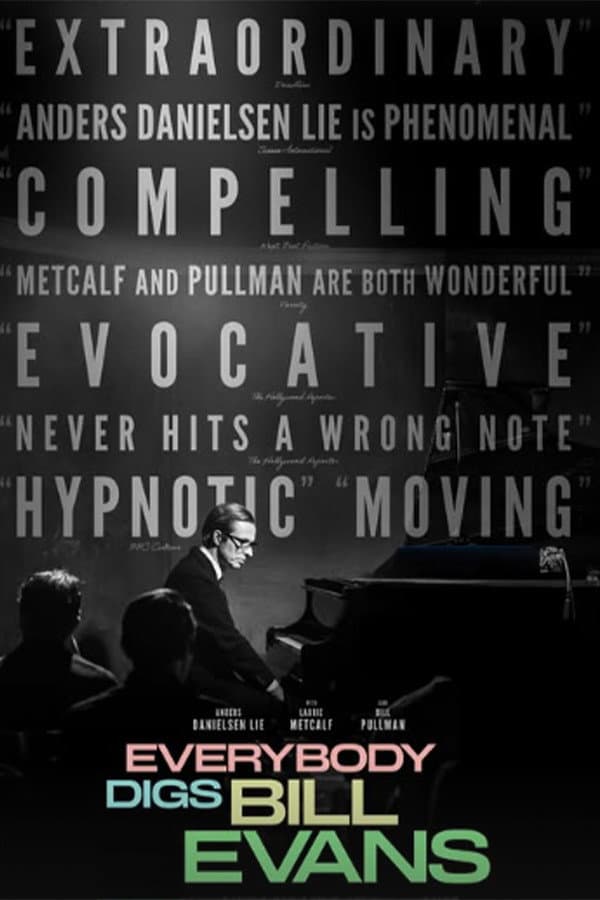
Everybody Digs Bill Evans
2026 • Drama, Music
June 1961, NYC: legendary jazz pianist Bill Evans has found his musical voice and created the perfect trio, including bass player Scott LaFaro, said to be his soulmate through music. A residency at New York’s Village Vanguard culminates in the live taping of two of the greatest jazz records of all time in one night. Ten days later, LaFaro dies in a car crash. Numb with grief, Evans stops playing.
Runtime: 1h 42m
Buy related books from Amazon
As an Amazon Associate I earn from qualifying purchases. Read the full disclosure.
Why you should read the novels
There is no official source book announced for Everybody Digs Bill Evans (2026). If you want the deepest, most reliable portrait of the jazz piano legend, start with Bill Evans: How My Heart Sings by Peter Pettinger. This definitive English‑language biography blends meticulous research, interviews, and musical insight, making it the ideal choice for readers seeking an authoritative Bill Evans biography instead of a speculative biopic.
Pettinger’s book delivers richly contextualized storytelling: childhood, classical influences, the Riverside and Verve years, the Village Vanguard recordings, and collaborations that shaped modern jazz. You’ll find nuanced discussions of pieces like Waltz for Debby and Peace Piece, along with candid examinations of studio sessions, band dynamics, and creative breakthroughs—depth that no two-hour movie can fully match.
For musicians and devoted listeners, pairing Pettinger’s narrative with Jack Reilly’s The Harmony of Bill Evans (Vol. 1–2) unlocks the pianist’s harmonic language, voicings, and inner logic. Reading these books empowers you to hear more, understand more, and appreciate more—making them the best path for anyone searching for an in‑depth Bill Evans biography, jazz history exploration, and serious music analysis over a one‑time viewing.
Adaptation differences
Because no production details or script are publicly available for Everybody Digs Bill Evans (2026), the following differences highlight how biographical films often diverge from well‑sourced books like Peter Pettinger’s Bill Evans: How My Heart Sings. These points will help set expectations for anyone weighing a movie against in‑depth reading.
Scope and chronology: Films typically compress timelines, merge events, or create composite characters for pacing. Pettinger’s biography provides a careful chronology, session‑by‑session context, and discographical clarity, preserving nuance in Evans’s development that a feature adaptation would likely condense or reorder for dramatic impact.
Musical depth: On screen, music cues are excerpts; analysis must be brief. Books offer full‑length explorations of voicings, touch, and harmonic choices. Pettinger’s narrative and Jack Reilly’s The Harmony of Bill Evans (Vol. 1–2) break down signature pieces and studio approaches in ways a film can only hint at, giving readers concrete musical understanding.
Tone and sourcing: A movie may foreground conflict, addiction, or romance to drive plot, sometimes at the expense of balance. A researched biography anchors claims in interviews, archives, and primary documents, weighing conflicting accounts and citing sources so readers can evaluate the evidence—an academic rigor that screen storytelling rarely matches.
Everybody Digs Bill Evans inspired from
The Harmony of Bill Evans (Vol. 1–2)
by Jack Reilly
Bill Evans: How My Heart Sings
by Peter Pettinger