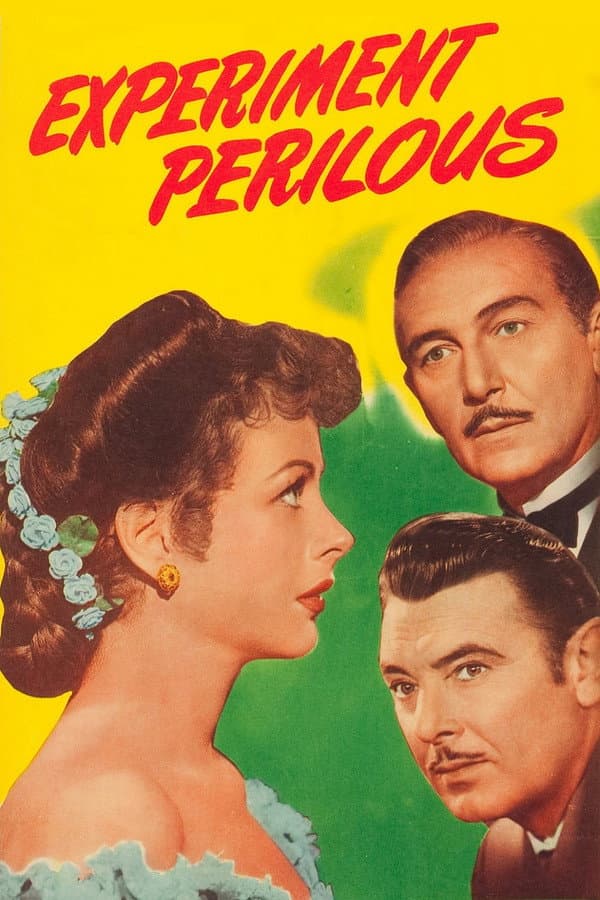
Experiment Perilous
1944 • Romance, Thriller • PG
In 1903, Doctor Huntington Bailey meets a friendly older lady during a train trip. She tells him that she is going to visit her brother Nick and his lovely young wife Allida. Once in New York, Bailey hears that his train companion suddenly died. Shortly afterward, he meets the strange couple and gets suspicious of Nick's treatment of his wife.
Runtime: 1h 31m
Buy related books from Amazon
As an Amazon Associate I earn from qualifying purchases. Read the full disclosure.
Why you should read the novel
Before you press play on the 1944 movie Experiment Perilous, start with Margaret Carpenter's original novel. The Experiment Perilous book builds a slow-burn mystery with layered psychology, period detail, and finely tuned suspense the screen only suggests.
Reading Experiment Perilous by Margaret Carpenter gives you direct access to motives, memories, and clues the adaptation condenses. If you love gothic suspense and psychological thrillers, the source material offers richer nuance, character depth, and atmosphere.
Choose the novel—borrow it from your library, download an ebook, or buy a print edition—and experience Experiment Perilous as the author intended. Read the book before you watch to appreciate the story's themes, twists, and emotional complexity in their fullest form.
Adaptation differences
Key differences between the Experiment Perilous book and movie begin with point of view. The film centers on Dr. Bailey's investigative perspective and visual tension, while the novel spends more time within Allida and Nick Bederaux's inner lives, revealing motives and doubts with greater psychological detail.
Tone and content also diverge. Shaped by Production Code-era limits, the adaptation leans into romantic melodrama and clearer moral lines. Margaret Carpenter's novel embraces more ambiguity and unsettling gray areas, hinting at implications the film softens or omits for censorship and pacing.
Structure is streamlined on screen. Subplots and secondary figures are combined or reduced, and clues arrive in concentrated set pieces. The book develops backstories and social settings across chapters, unfolding relationships gradually instead of compressing them into a few suspense highlights.
The endings differ in emphasis. The movie resolves conflict with a tidy, cathartic climax designed for maximum dramatic impact. The novel's resolution is more measured and reflective, dwelling on consequences, medical ethics, and the lingering effects of manipulation and gaslighting after the central mystery is unraveled.
Experiment Perilous inspired from
Experiment Perilous
by Margaret Carpenter