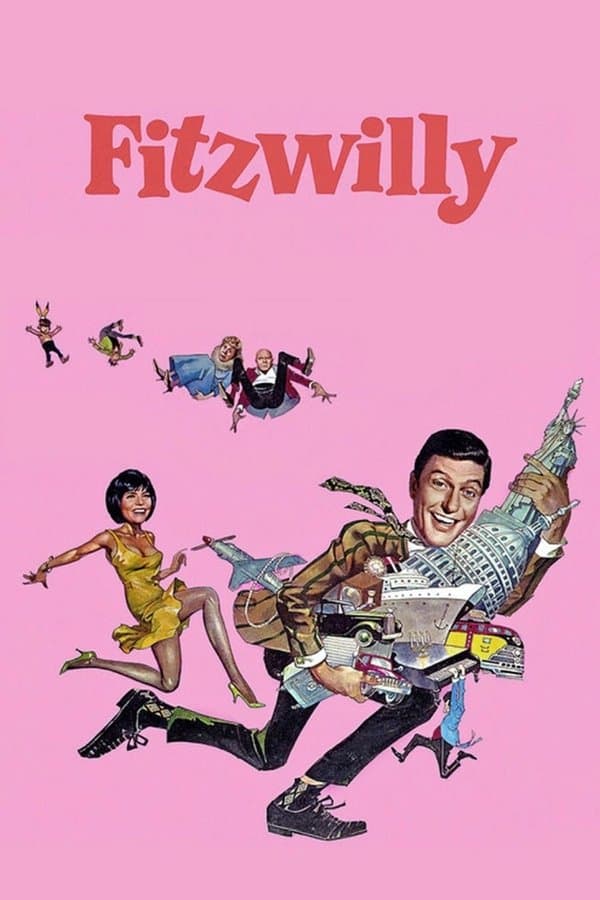
Fitzwilly
1967 • Comedy, Romance • NR
When Miss Vicki's father dies, she becomes the world's greatest philanthropist. Unfortunately, she is flat broke! Her loyal butler, Claude Fitzwilliam, leads the household staff to rob from various businesses by charging goods to various wealthy people and misdirecting the shipments, all to keep Miss Vicki's standard of living.
Runtime: 1h 42m
Buy related books from Amazon
As an Amazon Associate I earn from qualifying purchases. Read the full disclosure.
Why you should read the novel
Before pressing play on Fitzwilly (1967), discover the witty source that inspired it: A Garden of Cucumbers by Poyntz Tyler. This sharp, character-rich novel delivers the clever caper, romantic tension, and social satire the film hints at—only with more texture, more schemes, and more deliciously dry humor.
Reading the original book lets you live inside the butler’s ingenuity and the eccentric household he protects, all against the bustle of 1960s New York. Tyler’s prose balances breezy comedy with thoughtful observation, giving readers a full tour of every con, close call, and consequence that a fast-paced movie can only summarize.
If you love heist comedies, romantic mischief, and high-society shenanigans, make the novel your first stop. A Garden of Cucumbers offers deeper character development, richer backstories, and caper details perfect for readers who want the complete Fitzwilly experience straight from the page.
Adaptation differences
One of the clearest differences is right on the cover: the novel is titled A Garden of Cucumbers, while the movie is retitled Fitzwilly. The film’s name spotlights the butler as a brandable, lovable rogue, shifting attention from the ensemble dynamic implied by the book’s title to a star-centered caper identity.
Tone and pacing also diverge. The movie leans into buoyant slapstick, musical flourishes, and a sparkling romance to fit a 1960s studio-comedy groove. The novel sustains a drier, more literate satire, lingering on planning, ethics, and the logistics of clever cons—moments that page-turners can savor but films often compress.
Character depth is another key difference between the adaptation and the book. On screen, secondary staff and supporting players are streamlined so the caper and love story can speed along. On the page, readers spend more time with the household’s inner workings, the heiress’s quirks, the butler’s private calculations, and the secretary’s perspective—adding nuance to motives, loyalties, and risks.
Plot mechanics are condensed for the movie, which assembles the schemes into a handful of big set pieces and an upbeat, neatly tied climax. The book presents a broader array of cons, near-misses, and repercussions, creating a slower-burn escalation and a more reflective aftermath. In short, the film favors breezy momentum; the novel offers fuller context and a more layered moral portrait.
Fitzwilly inspired from
A Garden of Cucumbers
by Poyntz Tyler