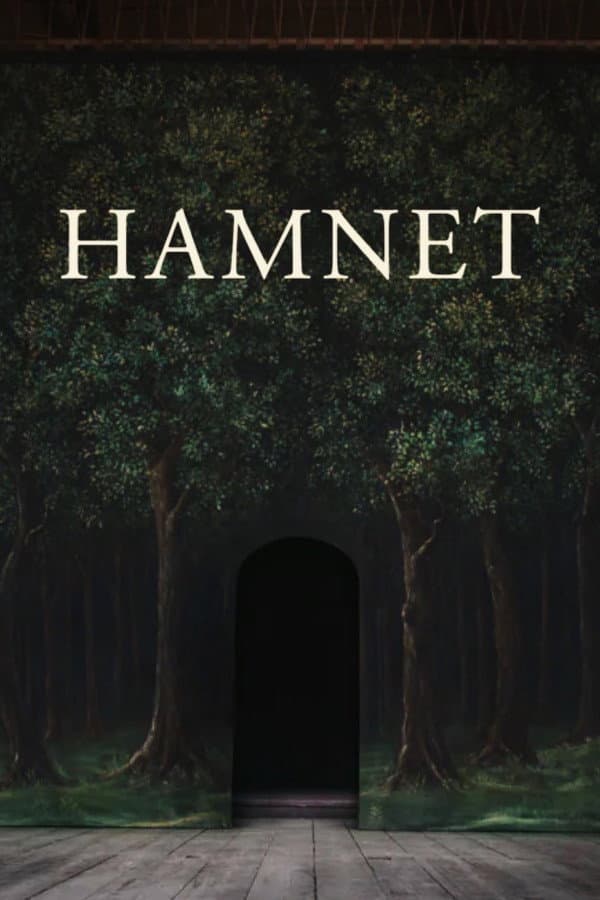
Hamnet
2025 • Drama, Romance • PG-13
The powerful story of love and loss that inspired the creation of Shakespeare's timeless masterpiece, Hamlet.
Runtime: 2h 5m
Buy related books from Amazon
As an Amazon Associate I earn from qualifying purchases. Read the full disclosure.
Why you should read the novel
Before you watch the 2025 Hamnet movie, read Hamnet by Maggie O'Farrell. This richly atmospheric historical novel invites you into Stratford-upon-Avon's hearth and heartbreak with immersive detail and breathtaking emotional clarity.
On the page, Agnes (Anne) Hathaway's perspective blooms through lyrical prose, sensory description, and layered inner life—qualities a film can only hint at. Readers feel grief, love, craft, nature, and marriage in intimate, slow-burn scenes that reward close attention.
Choose the book if you want the full texture behind Shakespeare's family story: deeper motivations, nuanced timelines, and a meditative narrative arc. Borrow, buy, or download the ebook to experience Hamnet exactly as Maggie O'Farrell imagined it—before or instead of watching the movie.
Adaptation differences
Because the 2025 Hamnet film adapts Maggie O'Farrell's novel, and release details can evolve, consider these differences as common book-to-screen shifts rather than confirmed scene-by-scene changes. Comparing the Hamnet book vs movie works best by understanding what cinema typically condenses or externalizes.
Interiority and voice: the Hamnet novel deeply inhabits Agnes (Anne) Hathaway's inner life—her intuitions, grief, and quiet resilience. A film usually externalizes that interiority through performance, visuals, and dialogue, trimming internal monologue, herbal lore, and symbolic motifs that the book develops with lyrical subtlety.
Structure and timeline: O'Farrell’s narrative moves nonlinearly across courtship, family life, illness, and aftermath. Screen adaptations often streamline chronology, merge or omit side characters, and condense subplots to fit a feature-length runtime, reshaping cause-and-effect and the pace at which revelations arrive.
Tone and emphasis: the novel lingers on domestic texture, sensory detail, and the minute rhythms of mourning. A movie may rebalance focus toward clearer plot beats—public events, turning points, or staged performances—altering pacing, sharpening conflicts, and shifting emphasis among Agnes, Shakespeare, and the twins to achieve cinematic momentum.
Hamnet inspired from
Hamnet
by Maggie O'Farrell