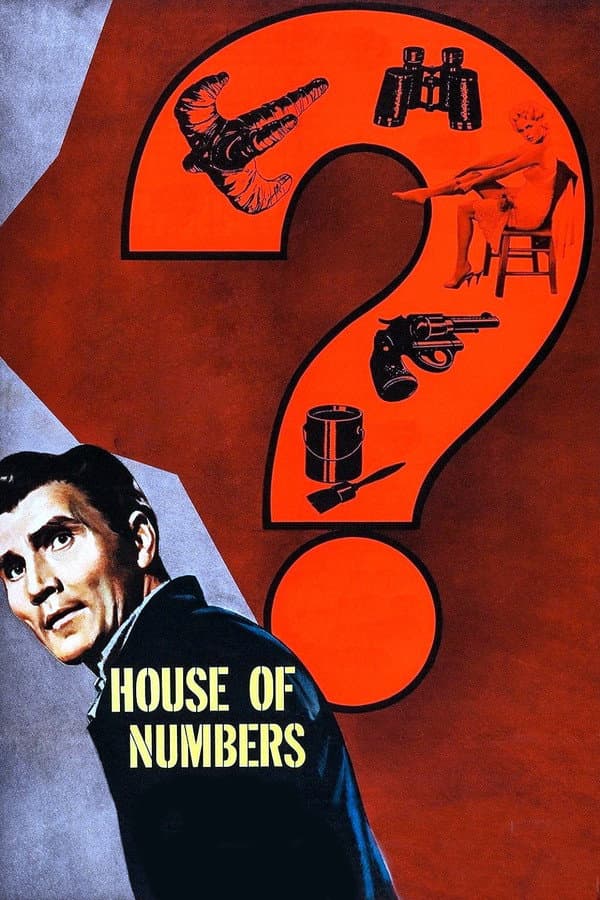
House of Numbers
1957 • Crime, Drama • NR
Story of twin brothers - one trying to help the other escape from prison.
Runtime: 1h 30m
Buy related books from Amazon
As an Amazon Associate I earn from qualifying purchases. Read the full disclosure.
Why you should read the novel
Discover House of Numbers, the gripping Jack Finney novel that inspired the 1957 film. On the page, Finney’s razor‑sharp prose builds claustrophobic suspense inside San Quentin with compelling authenticity and meticulous detail.
Choose the book over the movie to experience deeper character psychology, richer motives, and the step‑by‑step mechanics of the high‑stakes plan. Finney’s narrative immerses you in procedures, risks, and moral consequences the screen can only hint at.
If you love classic crime fiction, reading the original House of Numbers novel delivers the definitive story: textured settings, layered tension, and a finale whose emotional impact lingers far longer than any single viewing.
Adaptation differences
Character depth and perspective: The House of Numbers novel gives fuller access to thoughts, fears, and shifting loyalties, while the film necessarily externalizes motives through performances and action. The book’s interior tension sustains a more intimate, psychological thriller.
Plot scope and pacing: To fit a tight runtime, the movie condenses timelines, streamlines the escape logistics, and combines or omits side characters. The novel includes extra procedural steps, setbacks, and investigative detours that enrich the strategy and stakes.
Tone and prison detail: Production‑code era limits soften some depictions of brutality, corruption, and day‑to‑day hardship. The film leans on visual set pieces and the twin‑identity hook, whereas the book develops slow‑burn realism and granular San Quentin routines.
Resolution and emphasis: The screen version favors clearer moral closure and a neater wrap‑up, while the novel lingers on ambiguity, ethical fallout, and psychological aftershocks. Family and romantic dynamics also receive different weight onscreen compared with the source.
House of Numbers inspired from
House of Numbers
by Jack Finney