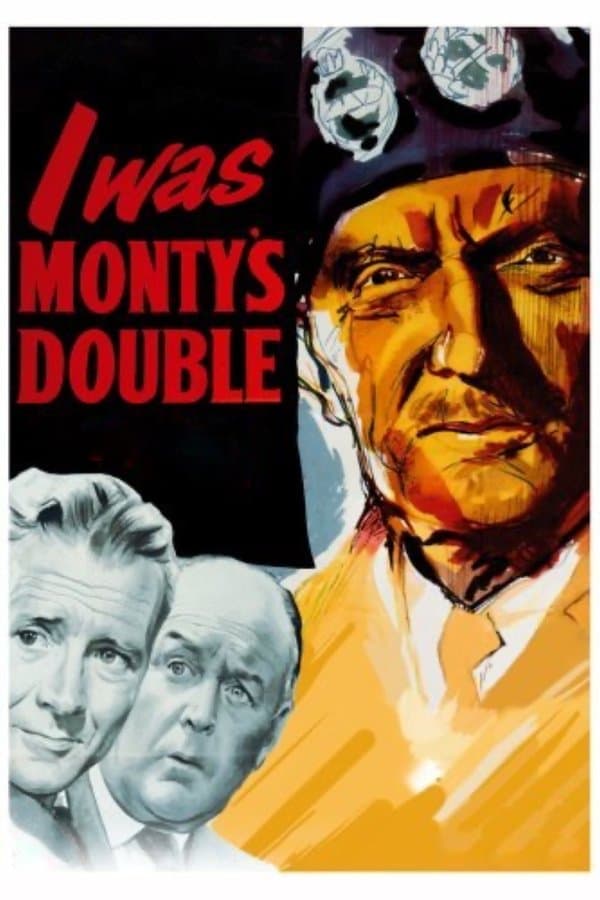
I Was Monty's Double
1958 • Drama, War
The incredible but true story of how an impersonator was recruited to impersonate General Montgomery to mislead the Germans about his intentions before the North Africa campaign.
Runtime: 1h 41m
Buy related books from Amazon
As an Amazon Associate I earn from qualifying purchases. Read the full disclosure.
Why you should read the novel
If you’re fascinated by I Was Monty’s Double (1958), go straight to the source: M. E. Clifton James’s memoir. His first-person account of Operation Copperhead delivers the precise details, anxieties, and triumphs only an eyewitness can provide—unfiltered, human, and irresistibly readable.
The book reveals the meticulous craft behind the impersonation—training, mannerisms, security protocols, and the constant fear of a misstep—set against the realities of wartime Britain. It’s a rare blend of spycraft, stagecraft, and psychology that the film can only sketch in broad strokes.
For readers who crave authenticity, historical context, and the full emotional weight of a true WWII deception, the memoir outshines the movie. Discover the granular truth of Operation Copperhead, directly from the man who became Montgomery.
Adaptation differences
The film compresses events and combines real figures into composite characters for clarity and pace. In the memoir, James details a broader cast of intelligence officers, extended preparation, and a more nuanced chain of command than the streamlined on-screen “handlers.”
To heighten suspense, the adaptation introduces thriller-style peril—close calls and villainous pursuit—where the book emphasizes procedure, secrecy, and discipline. The memoir’s tension is primarily psychological and logistical, not action-forward set pieces or kidnapping-style subplots.
The movie often magnifies the mission’s immediate impact for dramatic payoff. The book places Operation Copperhead within the larger framework of Allied deception (notably Operation Bodyguard), carefully calibrating what the ruse was—and wasn’t—designed to achieve, along with the practicalities of travel and cover stories.
Tone diverges significantly: the film favors brisk patriotic entertainment and neat resolutions; the memoir is more reflective, dwelling on identity, stress, and the oddity of returning to anonymity after an extraordinary assignment. Readers get candid insights that cinema necessarily trims or reframes.
I Was Monty's Double inspired from
I Was Monty's Double
by M. E. Clifton James