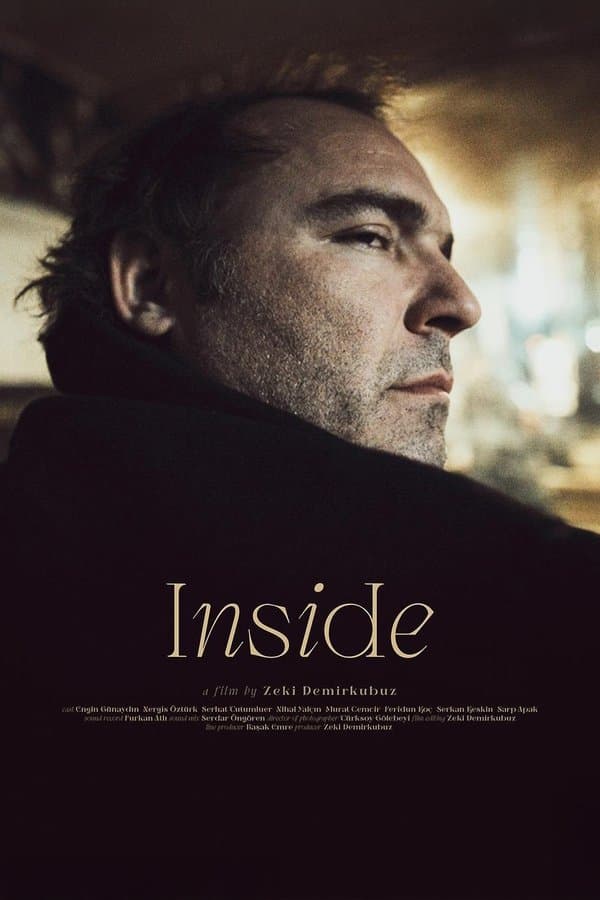
Inside
2012 • Drama
A man's life, thoughts, feelings and his very own darkness... Adapted from Dostoevsky's novel "Notes from Underground", Demirkubuz follows Muharrem as he gets himself invited to a party where he is not welcome, just to find himself disgusted.
Runtime: 1h 47m
Buy related books from Amazon
As an Amazon Associate I earn from qualifying purchases. Read the full disclosure.
Why you should read the novel
If Inside (2012) left you fascinated by corrosive self-examination and social unease, go straight to the source: Notes from Underground by Fyodor Dostoevsky. This seminal novella is a razor-sharp, first-person descent into the mind of literature’s most acerbic antihero, whose confessions, contradictions, and psychological insights shaped modern existential thought.
Reading Dostoevsky’s original gives you the unfiltered voice the film can only suggest—those blistering monologues, paradoxes, and philosophical arguments that challenge free will, rational egoism, and the messy logic of being human. It’s intimate, disquieting, and impossible to shake.
For students, cinephiles, and anyone curious about the roots of psychological realism, the novel offers the depth, context, and intellectual electricity that adaptations inevitably compress. Experience the classic that inspired Inside (2012), and discover why Notes from Underground remains one of the most influential works in world literature.
Adaptation differences
Form and voice: Notes from Underground is a first-person confession—angry, ironic, and relentlessly self-critical. Inside (2012) translates that inner torrent into actions, glances, and tense encounters, inevitably reducing the novel’s long philosophical digressions. The movie prioritizes behavior and atmosphere over the book’s argumentative monologue, changing how we access the protagonist’s psyche.
Time and place: Dostoevsky’s story unfolds in 19th‑century St. Petersburg, while Inside relocates the material to contemporary Turkey. The shift reframes class, bureaucracy, and social codes, substituting modern workplaces, apartments, and gatherings for imperial salons and taverns, and it updates the social satire to fit a present-day urban milieu.
Characters and plot focus: The novel’s “Underground Man” is unnamed and deliberately undefined; the film gives the character a concrete identity, daily routines, and social circle. Inside streamlines or sidelines some literary threads (such as the extended Liza subplot) to concentrate on rivalry, resentment, and humiliating social set pieces—especially the excruciating dinner that reinterprets the book’s famous gatherings.
Tone and resolution: Dostoevsky’s text blends metaphysical rebellion with moral self-indictment, ending in an open, essayistic fade. The film leans into social realism and black comedy, offering more tangible conflicts and visual payoffs. Where the book leaves us inside a philosophical echo chamber, the movie delivers a harsher, situational portrait of alienation that stands on its own cinematic terms.
Inside inspired from
Notes from Underground
by Fyodor Dostoevsky