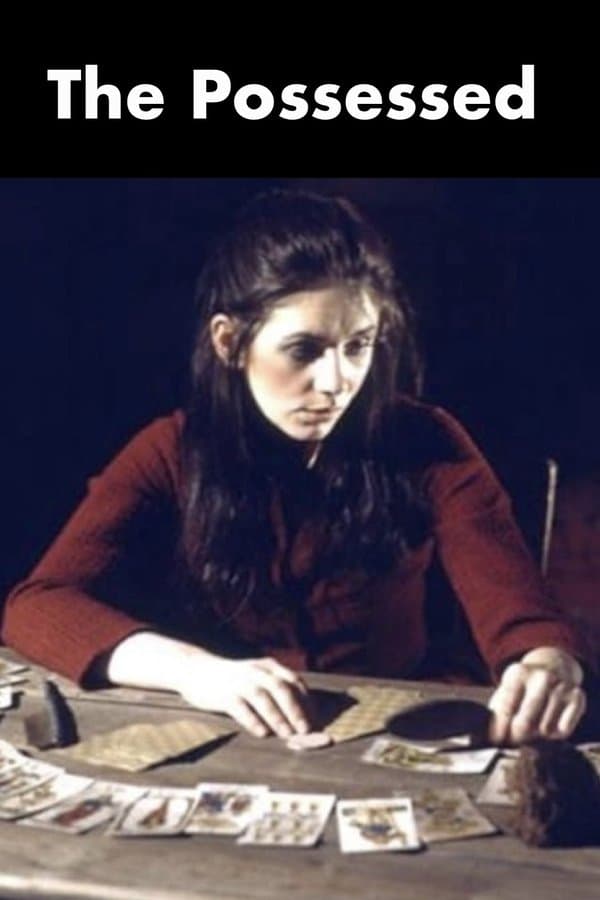
The Possessed
1969 • Horror, TV Movie
Adaptation of Dostoevsky's novel about liberal discussion versus revolutionary action in a provincial Russian town in the mid-nineteenth century.
Runtime: 3h
Buy related books from Amazon
As an Amazon Associate I earn from qualifying purchases. Read the full disclosure.
Why you should read the novel
Before pressing play on the 1969 film The Possessed, unlock the original vision in Fyodor Dostoevsky’s novel Demons (also known as The Possessed or The Devils). This landmark classic delivers a richer, more immersive political and psychological thriller than any screen version can capture.
Reading Demons puts you inside the characters’ minds—their obsessions, contradictions, and moral crises—revealing the roots of radicalization, the seduction of ideology, and the catastrophic cost of fanaticism. The novel’s razor‑sharp satire and haunting suspense reward slow reading with depth you simply can’t get in two hours.
If you care about story, meaning, and nuance, choose the book. Modern, highly readable English translations are widely available, making it easy to experience the full force of Dostoevsky’s ideas, unforgettable characters, and darkly prophetic vision—exactly as he intended.
Adaptation differences
Scope and context: the novel’s vast social panorama and intricate political network are necessarily compressed on screen. Subplots, backstories, and the town’s complex power dynamics often get streamlined, shifting the emphasis from systemic critique to a tighter, event‑driven plot.
Characters: screen adaptations typically merge or reduce roles—minor conspirators and society figures are combined or removed, and some relationships are simplified. This narrows the ideological spectrum Dostoevsky explores and can tilt focus toward the most dramatic figures (e.g., Stavrogin and Pyotr Verkhovensky) at the expense of Shatov, Kirillov, and Stepan’s full arcs.
Philosophy and narration: the novel’s biting narrator, dense debates, and extended confessional passages are trimmed. “Stavrogin’s Confession” and the Tikhon episode—central to the book’s moral gravity—are frequently omitted or abbreviated, reducing the psychological and theological stakes that drive the story’s darkest turns.
Tone and ending: the book’s blend of satire, tragedy, and moral inquiry often shifts toward thriller pacing on film. Set‑pieces (like the governor’s fête) are shortened, and outcomes may be framed more decisively, whereas the novel leaves readers with a wider, more troubling aftermath that underscores the social and spiritual collapse Dostoevsky foresaw.
The Possessed inspired from
Demons (also translated as The Possessed / The Devils)
by Fyodor Dostoevsky