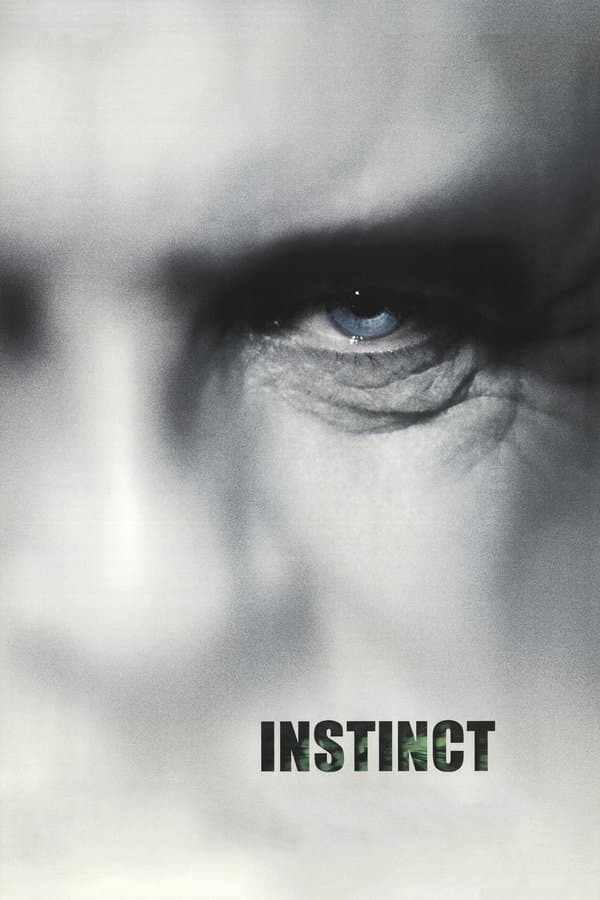
Instinct
1999 • Drama, Thriller • R
In a prison for the criminally insane, deranged anthropologist Ethan Powell is set to be examined by a bright young psychiatrist, Theo Caulder. Driven by ambition and a hunger for the truth, Caulder will eventually risk everything—even put his very life on the line—in a harrowing attempt to understand the bizarre actions of this madman.
Runtime: 2h 4m
Buy related books from Amazon
As an Amazon Associate I earn from qualifying purchases. Read the full disclosure.
Why you should read the novel
If Instinct (1999) intrigued you, discover the original vision in Ishmael by Daniel Quinn, the novel that inspired the film. Quinn’s award-winning work offers a deeper, more thought-provoking exploration of humanity’s relationship with nature than any two-hour movie can deliver.
Ishmael unfolds through a unique teacher–student dialogue with a wise gorilla who challenges the myths of modern civilization, sustainability, and progress. The clarity, nuance, and philosophical rigor of these conversations are the heart of the book—layers of meaning that screen adaptations inevitably compress.
Whether you enjoyed Instinct, care about environmental ethics, or love transformative ideas, read Ishmael in English to experience the source material’s full context and power. Instead of rewatching the movie, choose the novel that can reshape how you see culture, growth, and personal responsibility.
Adaptation differences
Instinct is a very loose adaptation of Ishmael by Daniel Quinn. The novel centers on a telepathically communicative gorilla named Ishmael mentoring a human narrator through conversations. The film replaces this with Dr. Ethan Powell, a human anthropologist who lived among gorillas, and Dr. Theo Caulder, a psychiatrist—shifting the mentor–student dynamic from nonhuman teacher to human patient.
Genre and structure diverge sharply. Ishmael is philosophical dialogue—Socratic, idea-driven, and mostly set in quiet rooms—while Instinct is a psychological thriller staged in institutions and flashbacks, with confrontations, hearings, and bursts of violence. The movie builds external stakes and plot mechanics that the book deliberately avoids in favor of sustained inquiry.
Themes are reframed. The novel foregrounds Quinn’s framework about taker versus leaver cultures, cultural myths, the agricultural revolution, and the stories that justify human domination. The film skims the man-and-nature respect angle through Powell’s bond with a gorilla troop but drops the book’s explicit frameworks, focusing instead on personal trauma, control, and institutional brutality.
Characters and resolutions differ as well. Instinct adds new figures (such as Powell’s daughter and abusive guards) and delivers conventional redemptive beats within a prison-drama arc. Ishmael maintains a minimalist cast and ends as an open challenge to the reader, prioritizing changed thinking over spectacle. The result is a movie inspired by the premise, not a faithful rendering of the book’s substance.
Instinct inspired from
Ishmael
by Daniel Quinn