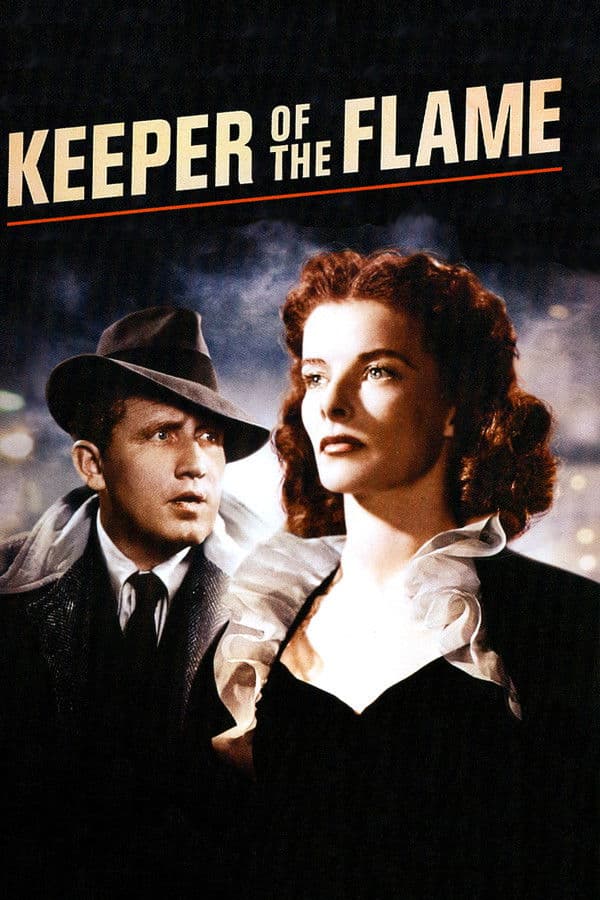
Keeper of the Flame
1943 • Drama, Mystery
Famed reporter Stephen O'Malley travels to a small town to investigate the death of a national hero.
Runtime: 1h 40m
Buy related books from Amazon
As an Amazon Associate I earn from qualifying purchases. Read the full disclosure.
Why you should read the novel
Experience Keeper of the Flame as I. A. R. Wylie originally imagined it. The Keeper of the Flame novel offers deeper psychology, richer political insight, and a more layered moral landscape than the 1943 film adaptation.
Reading the source book reveals complex motivations, interior monologues, and social contexts that the movie can only suggest. If you want the full story behind the mythmaking, media influence, and creeping authoritarian charisma, go to the novel that inspired the film.
For readers who value literary nuance, Wylie’s prose delivers the substance behind the suspense. Choose the Keeper of the Flame book to explore its themes in full, discover the author’s authentic intent, and appreciate the story beyond the limits of a studio-era screenplay.
Adaptation differences
The movie streamlines and softens the book’s political critique. Wylie’s novel addresses the dangers of domestic authoritarianism more explicitly, while the film abstracts and dilutes some of that content to meet Production Code and wartime sensitivities.
Characterization shifts noticeably. On the page, Christine Forrest and reporter Steven O’Malley are explored through interior thought, moral conflict, and ambiguity; on screen, their complexities are externalized through dialogue and plot mechanics. The adaptation also reframes degrees of culpability and responsibility to align with 1940s moral codes.
Scope and structure are tightened for the film. The novel develops a broader web of associates, social forces, and ideological networks behind the public hero’s image, whereas the movie condenses these elements into fewer characters, compresses timelines, and concentrates action around the estate for clarity and pace.
The endings differ in emphasis and texture. Wylie’s book resolves through patient investigation, revelation, and ethical reckoning in the public sphere; the film leans into melodramatic confrontation and sensational set pieces, trading the novel’s open-ended moral weight for a cleaner, more immediate resolution on screen.
Keeper of the Flame inspired from
Keeper of the Flame
by I. A. R. Wylie