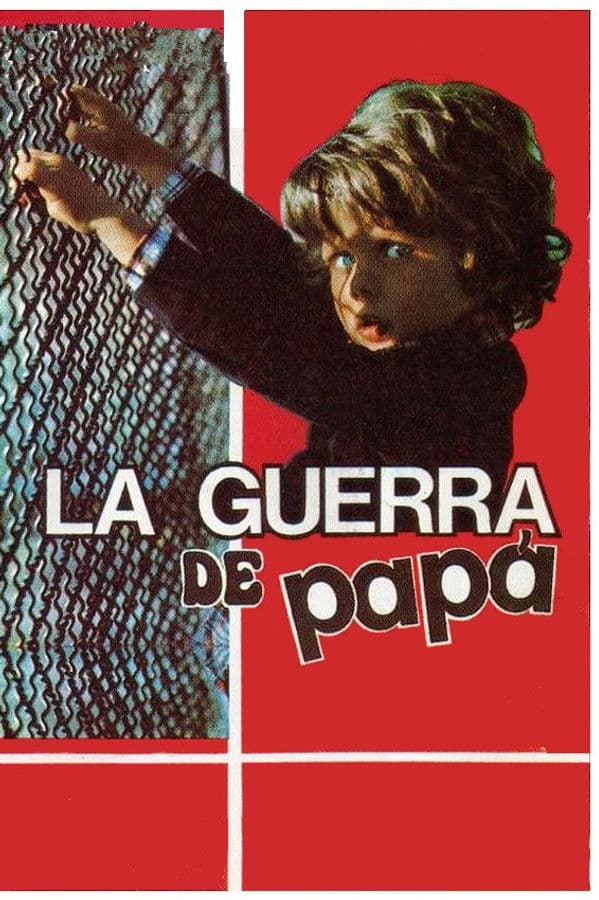
La guerra de papá
1977 • Comedy
Spain, March 1964: Quico is a very naughty child of three belonging to a wealthy middle-class family. Since Cristina's birth, he feels he has lost the privileged position of "prince" of the house for his eight months old sister. So, with his brother Juan, who is eight years old and is quite disobedient, spend their time committing prank after prank, causing the resulting anger of his mother, the nanny and the old housemaid. The rest of the family members are two much older brothers, his resigned mother and a retrograde father of authoritarian ideas. But many years have passed, and the civil war that won the despot Don Pablo is simply for their children "Dad's war".
Runtime: 1h 31m
Buy related books from Amazon
As an Amazon Associate I earn from qualifying purchases. Read the full disclosure.
Why you should read the novel
If you loved La guerra de papá (1977), discover the original literary heartbeat in Miguel Delibes’ The Deposed Prince. This modern classic of Spanish literature immerses you in a four‑year‑old’s world with unmatched intimacy, nuance, and linguistic music that no screen can fully replicate. Reading the novel means experiencing Delibes’ precise ear for everyday speech, cultural atmosphere, and emotional detail—page by page, moment by moment.
The Deposed Prince offers a richer portrait of family, childhood jealousy, and the fragile balance of home life in late‑Franco Spain. Delibes captures a child’s logic and mischief with tenderness and irony, revealing social layers and generational tensions that a film can only suggest. For readers seeking depth, subtle humor, and unforgettable voice, the book is the definitive source.
Choose the novel to appreciate Delibes’ craftsmanship, the rhythm of interior thought, and the quiet shocks of recognition that arise from authentic detail. For fans of literary fiction, coming‑of‑age stories, and Spanish cultural history, The Deposed Prince is the essential companion—or better yet, the main event—delivering insight, empathy, and timeless storytelling beyond the movie’s frame.
Adaptation differences
The most striking difference between La guerra de papá and The Deposed Prince is perspective. Delibes builds the novel almost entirely through a small child’s viewpoint and cadences, channeling his inner monologue and skewed logic. The film, by contrast, necessarily broadens the lens—externalizing thoughts into dialogue and action, and giving more space to parents and siblings. This shift changes how audiences perceive motives, misunderstandings, and family tensions.
Tone and texture also diverge. On the page, Delibes layers sly irony and social observation beneath the child’s voice, creating a delicate balance between charm and critique. The movie leans more toward accessible family dramedy, amplifying warmth, humor, and sentiment to suit cinematic pacing and audience expectations, while softening some of the novel’s sharper, language‑driven edges.
Narrative structure is streamlined for the screen. The book’s episodic, day‑in‑the‑life flow—rich with micro‑moments, repetitions, and linguistic play—becomes a clearer arc with selected set pieces in the adaptation. Scenes are rearranged or condensed to create momentum, visual variety, and emotional payoffs, inevitably compressing the novel’s textural density and the cumulative power of its interior monologue.
Context and emphasis shift subtly in adaptation. Delibes’ portrait of late‑Franco domestic life and class nuance hums beneath the child’s perceptions in the novel, while the film foregrounds universal family themes and the child‑parent dynamic. The result is a movie that captures the spirit of childhood disruption but places less weight on the book’s quiet social critique and its intricate, voice‑driven comedy—making the novel indispensable for a complete book‑vs‑movie understanding.
La guerra de papá inspired from
The Deposed Prince
by Miguel Delibes