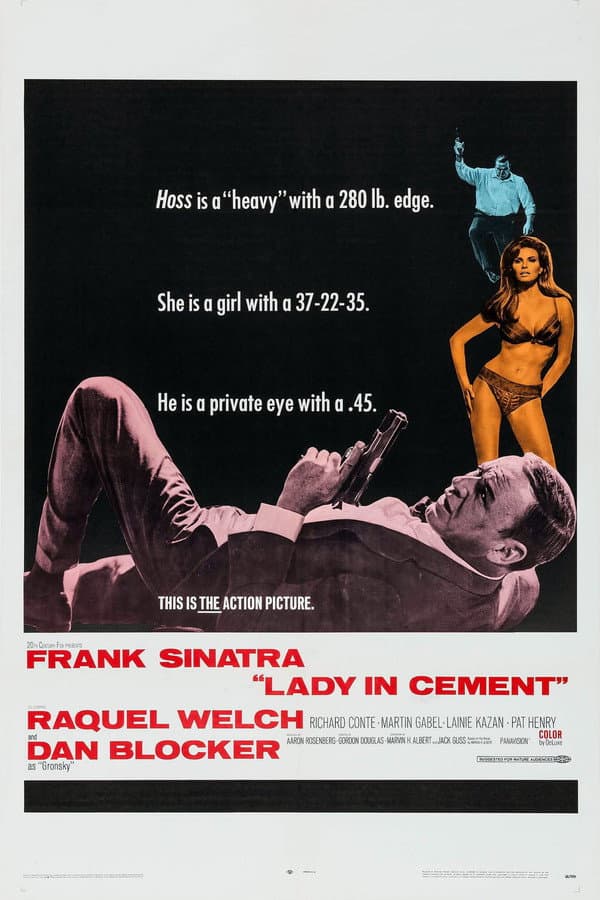
Lady in Cement
1968 • Crime, Mystery, Thriller • R
While diving for sunken treasure, street-smart gumshoe Tony Rome finds the body of a gorgeous blonde, her feet stuck in a block of cement. Soon after, tough guy Waldo Gronski hires him to find a missing woman named Sandra Lomax, and Rome wonders if there's a connection. He sets about trying to locate the woman, and in no time finds himself mixed up with a beautiful party girl and a slippery racketeer.
Runtime: 1h 33m
Buy related books from Amazon
As an Amazon Associate I earn from qualifying purchases. Read the full disclosure.
Why you should read the novel
Discover the sharp, original voice behind the movie by reading Lady in Cement, the Tony Rome novel by Marvin H. Albert (as Anthony Rome). The book’s hardboiled prose, atmospheric Miami settings, and razor‑edged dialogue deliver a richer, moodier crime experience than the screen can capture.
Fans of classic detective fiction will savor the novel’s gritty procedural detail, sardonic humor, and morally textured characters. If you enjoy Raymond Chandler, Ross Macdonald, or Elmore Leonard, the Lady in Cement novel offers that same noir bite—complete with the private eye’s inner monologue you won’t get on film.
For readers seeking the definitive Tony Rome mystery, the book is the best entry point. Explore the suspense at your own pace, soak in the clues, and appreciate Albert’s craftsmanship—then decide how the movie stacks up against the source. Start with the Lady in Cement novel today.
Adaptation differences
The biggest difference between the Lady in Cement book and movie is tone. On the page, Marvin H. Albert’s hardboiled style leans darker, drier, and more cynical. The film favors breezier momentum, a jazzy vibe, and glamorous Miami visuals tailored to a star‑driven, late‑1960s crime caper.
Plot structure is also streamlined on screen. The novel’s investigation features more legwork, layered subplots, and incremental clue‑gathering. The adaptation condenses beats, merges or trims supporting players, and tightens timelines so the central mystery moves quickly and cleanly for a two‑hour audience.
Character depth shifts notably. In the book, Tony Rome’s inner commentary and moral calculations add grit and nuance; supporting figures have fuller backstories and motivations. The movie emphasizes action, chemistry, and quips, simplifying relationships and reframing certain roles to keep the pace and spotlight on the lead.
Themes and endings diverge in emphasis. The novel’s hardboiled world spotlights systemic corruption, vice, and consequences with a blunter edge. The film softens violence and vice, favors a tidier wrap‑up, and leans into entertainment value—choices shaped by period norms and commercial expectations, not the book’s more uncompromising noir sensibility.
Lady in Cement inspired from
Lady in Cement
by Marvin H. Albert (as Anthony Rome)