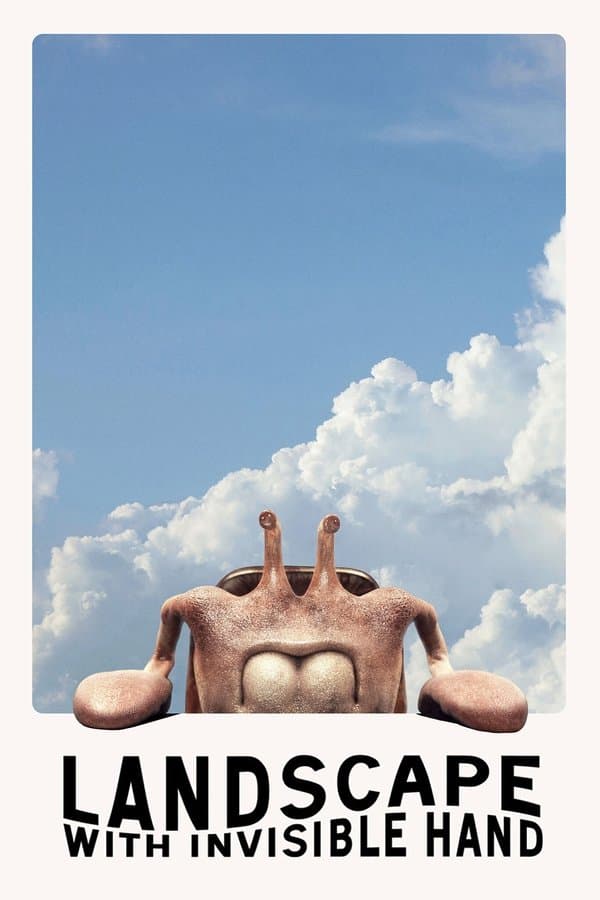
Landscape with Invisible Hand
2023 • Comedy, Drama, Science Fiction • R
Years into a benevolent alien occupation, mankind is still adjusting to its new overlords. Their technology initially held promise for global prosperity, but rendered most human jobs – and steady income – obsolete. When two teenagers discover the aliens are fascinated with human love and will pay for access to it, they decide to livestream their romance to make extra cash for their families.
Runtime: 1h 45m
Buy related books from Amazon
As an Amazon Associate I earn from qualifying purchases. Read the full disclosure.
Why you should read the novel
Before you stream the movie, discover the razor-sharp satire and intimate voice of M. T. Anderson’s Landscape with Invisible Hand. The novel delivers a close-up portrait of adolescence under alien capitalism, blending wit, ache, and big ideas in polished, precise prose that a film can only hint at.
Readers who love book vs. movie comparisons will find the source novel richer in interiority, social commentary, and world-building detail. Anderson’s first-person narration pulls you directly into Adam’s creative mind, turning every sketch and observation into a cutting lens on inequality, the gig economy, and performative romance for the Vuvv.
Short, propulsive, and fiercely imaginative, the book is a perfect weekend read that rewards re-reading. If you’re curious about the origins of the film’s most striking concepts, reading the novel gives you the unfiltered themes, layered humor, and human stakes that made this story worth adapting in the first place.
Adaptation differences
Structure and voice: The novel is a compact, first-person work that unfolds in vignette-like chapters, many keyed to Adam’s art and observations. The film necessarily reshapes this into a more continuous three-act arc, externalizing inner monologue through performances, visual gags, and production design. If you want the story’s original cadence and interiority, the book is where it lives.
Focus and character: On screen, family dynamics and ensemble chemistry take up more space, adding comedic set pieces and expanding roles around Adam—especially the parents and housemates. The book stays tightly tethered to Adam’s perspective, using his art-making as the organizing principle and emotional barometer. This shift changes how we experience stakes, humor, and empathy between the book and the movie.
World-building and the courtship stream: In the novel, the monetized “courtship show” is one hustle among many inside a broader portrait of economic displacement under the Vuvv. The adaptation elevates the dating-stream premise into a central, serialized throughline with heightened spectacle, on-camera etiquette, and public adjudications, leaning into the visual comedy of 1950s-styled rituals. The book, by contrast, parses these pressures more quietly and analytically.
Themes and ending tone: The novel’s ending is more ambiguous and stinging, emphasizing the costs of survival and the fragile solace of art. The movie tempers its critique with a slightly warmer, audience-friendly finish and moments of wry hope. If you’re seeking the starkest version of the idea—and a deeper dive into its socioeconomic satire—the differences between the book and the film make the case for reading the original.
Landscape with Invisible Hand inspired from
Landscape with Invisible Hand
by M. T. Anderson