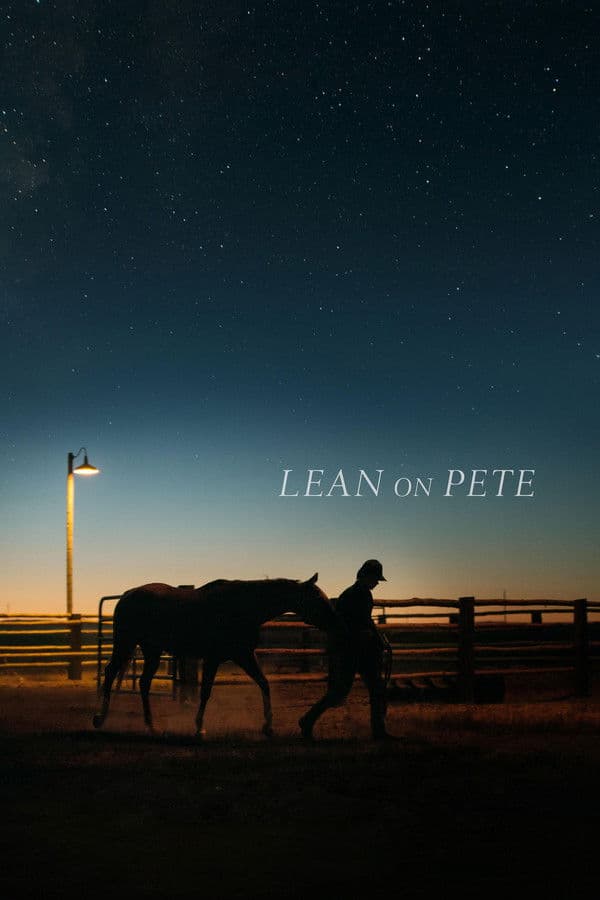
Lean on Pete
2018 • Adventure, Drama • R
Charley Thompson, a teenager living with his single father, gets a summer job working for horse trainer Del Montgomery. Bonding with an aging racehorse named Lean on Pete, Charley is horrified to learn he is bound for slaughter, and so he steals the horse, and the duo embark on an odyssey across the new American frontier.
Runtime: 2h 1m
Buy related books from Amazon
As an Amazon Associate I earn from qualifying purchases. Read the full disclosure.
Why you should read the novel
Discover Lean on Pete, the acclaimed novel by Willy Vlautin. Before you watch the 2018 film adaptation, read the source book to experience Charley Thompson’s voice, grit, and hope exactly as the author intended.
Willy Vlautin’s Lean on Pete is a powerful coming-of-age novel set against the American West and the fading world of low-level horse racing. The book delivers intimate, first-person storytelling that puts you inside Charley’s head—every decision, every mile, every fragile connection.
If you want the deepest version of this story, start with the novel. It’s the definitive Lean on Pete experience: richer character development, vivid detail, and emotional nuance the screen can only suggest. Read the book to feel the full journey.
Adaptation differences
Narrative perspective is the biggest shift. The novel is told in Charley’s first-person voice, giving direct access to his thoughts, fears, and memories. The film adopts a restrained, observational style, relying on performance and image rather than inner monologue, which changes how we understand Charley’s choices.
Structure and pacing are streamlined in the movie. The book spends more time at the racetrack and along the road, exploring day-to-day survival and work. The adaptation condenses the timeline, trims extended episodes, and merges or omits some side characters, creating a cleaner arc focused on key relationships and milestones.
Tone and intensity differ as well. Vlautin’s novel is unflinching about poverty, hunger, and danger on the margins of America. The film softens or implies some of the darkest incidents, favoring suggestion over explicit detail. The result is a gentler but less harrowing portrait compared to the book’s raw immediacy.
Setting and resolution shift subtly. While both versions follow Charley’s search for his aunt, the film updates the world to a contemporary feel and emphasizes visual landscapes over backstory. The book offers a longer aftermath that lingers on recovery and routine; the movie concludes earlier, with a more immediate sense of closure.
Lean on Pete inspired from
Lean on Pete
by Willy Vlautin