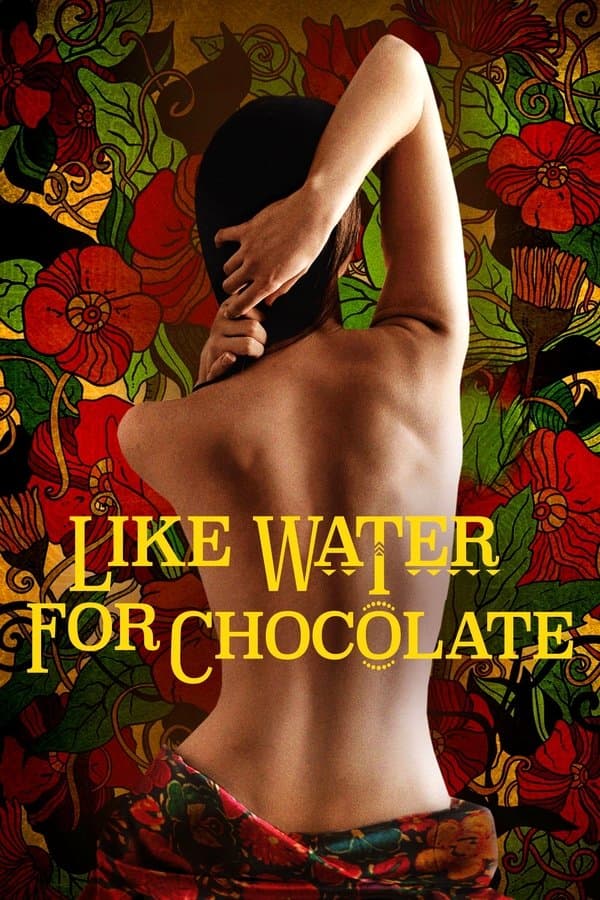
Like Water for Chocolate
1992 • Drama, Romance • R
Tita is passionately in love with Pedro, but her controlling mother forbids her from marrying him. When Pedro marries her sister, Tita throws herself into her cooking and discovers she can transfer her emotions through the food she prepares, infecting all who eat it with her intense heartbreak.
Runtime: 1h 45m
Buy related books from Amazon
As an Amazon Associate I earn from qualifying purchases. Read the full disclosure.
Why you should read the novel
Discover the unforgettable magic of Like Water for Chocolate by Laura Esquivel—the original novel that inspired the acclaimed 1992 film. If you loved the movie’s passion and visual splendor, the book offers even richer cultural context, deeper character motivations, and sensory writing that makes every emotion feel as vivid as a simmering pot on the stove. Read the novel to experience Esquivel’s masterful magical realism exactly as she crafted it.
The book’s unique structure—twelve monthly chapters complete with recipes, romances, and home remedies—invites you into a living kitchen where ingredients shape destiny. Each chapter blends step-by-step cooking with folklore and feeling, turning culinary rituals into transformative storytelling. For fans of magical realism, culinary fiction, and Mexican literature, this novel is a must-read that the film can’t fully replicate.
Choosing the book over the movie means savoring fuller arcs for Tita, Pedro, Mama Elena, Gertrudis, and John Brown, all rendered with lyrical detail. From the textures of tradition to the sparks of rebellion, the prose lingers on nuances the adaptation condenses. Read Like Water for Chocolate to immerse yourself in a timeless love story, a family chronicle, and a feast of language you’ll want to revisit again and again.
Adaptation differences
Curious about the differences between the Like Water for Chocolate movie and the book? While the 1992 film captures the story’s passion and sumptuous imagery, Laura Esquivel’s novel offers a distinct structure, voice, and depth that the adaptation streamlines. Reading the source enhances every scene you’ve watched by revealing intentions, histories, and textures that unfold on the page.
Structure is the biggest shift. The novel unfolds in twelve monthly chapters, each anchored by a recipe, complete with techniques, remedies, and cultural asides. The film nods to this conceit but condenses the timeline and omits much of the step-by-step culinary detail and home-remedy lore. As a result, the book’s kitchen alchemy—how food transmits feeling—lands with greater nuance and narrative layering.
Narration and character development also differ. The book is framed as a family chronicle narrated by Tita’s descendant, creating an intimate, archival feel; the film uses voiceover but with a leaner, less foregrounded frame. On the page, secondary characters receive expanded arcs and backstories: Gertrudis’s revolutionary rise, Mama Elena’s history and its consequences, and John Brown’s heritage and “the matches” philosophy all gain texture and explanation that the movie necessarily compresses.
Tone and thematic emphasis shift as well. The novel balances sensuality with dark humor, satire of rigid tradition, and rich domestic lore; the film leans more toward romantic melodrama and visual spectacle. Key episodes align across versions, but the book lingers on interiority, symbolism, and reflective closure, offering a more contemplative aftermath and a stronger sense of family legacy than the brisker cinematic ending.
Like Water for Chocolate inspired from
Like Water for Chocolate: A Novel in Monthly Installments, with Recipes, Romances, and Home Remedies
by Laura Esquivel