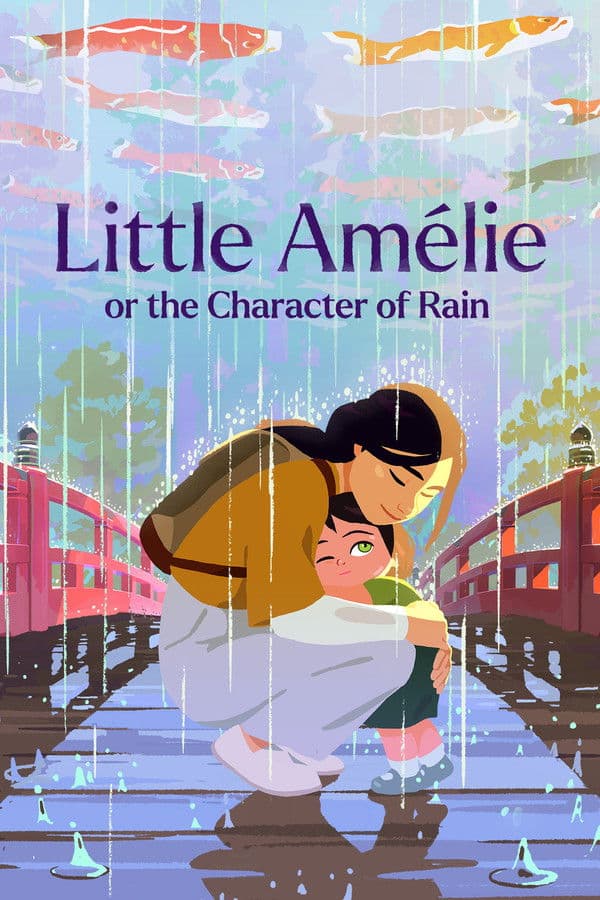
Little Amélie or the Character of Rain
2025 • Animation, Drama, Family • PG
The world is a perplexing, peaceful mystery to Amélie until a miraculous encounter with chocolate ignites her wild sense of curiosity. As she develops a deep attachment to her family's housekeeper, Nishio-san, Amélie discovers the wonders of nature as well as the emotional truths hidden beneath the surface of her family's idyllic life as foreigners in post-war Japan.
Runtime: 1h 17m
Buy related books from Amazon
As an Amazon Associate I earn from qualifying purchases. Read the full disclosure.
Why you should read the novel
Before you watch the 2025 film Little Amélie or the Character of Rain, immerse yourself in Amélie Nothomb’s The Character of Rain. The novel’s crystalline prose, intimate wit, and philosophical clarity offer textures of thought and feeling that only the page can sustain.
Set in Japan and told through a uniquely reflective child’s-eye consciousness, The Character of Rain invites slow reading, reflection, and rereading—moments a movie must compress for pacing. Fans of elegant literary fiction, memoir, and coming-of-age stories will discover layers of imagery and meaning that reward attention.
If you’re weighing book vs movie, start with the source. Reading the Amélie Nothomb novel first delivers richer context, subtext, and voice. It’s ideal for book clubs and comparative reading. Choose The Character of Rain book now, then enjoy the film with a deeper understanding of its themes and nuances.
Adaptation differences
Internal voice vs visuals: The Character of Rain book is powered by an introspective, metaphysical first-person voice. A screen adaptation typically must externalize that interiority into images, sound, and dialogue, which alters how irony, humor, and self-awareness register for the audience.
Structure and pacing: The novel unfolds in brief, essay-like chapters and meditative pauses. Movies often reorder scenes, condense timelines, and streamline reflection to fit a feature runtime—noticeable book vs movie differences that shift rhythm, emphasis, and narrative momentum.
Characters and context: On the page, caregivers, cultural textures of Japan, and language nuances accumulate subtly over time. Film versions commonly amalgamate minor figures, adjust settings, or simplify multilingual exchanges so international audiences can follow without heavy exposition—changes that reshape relationships and atmosphere.
Themes and tone: Nothomb’s text blends mythic conceits, satire, and tenderness in finely balanced proportions. Screen storytelling usually emphasizes concrete coming-of-age beats and visual motifs over dense philosophical digressions, a central difference between the book and the movie that influences mood, depth, and interpretive space.
Little Amélie or the Character of Rain inspired from
The Character of Rain
by Amélie Nothomb