Little Women
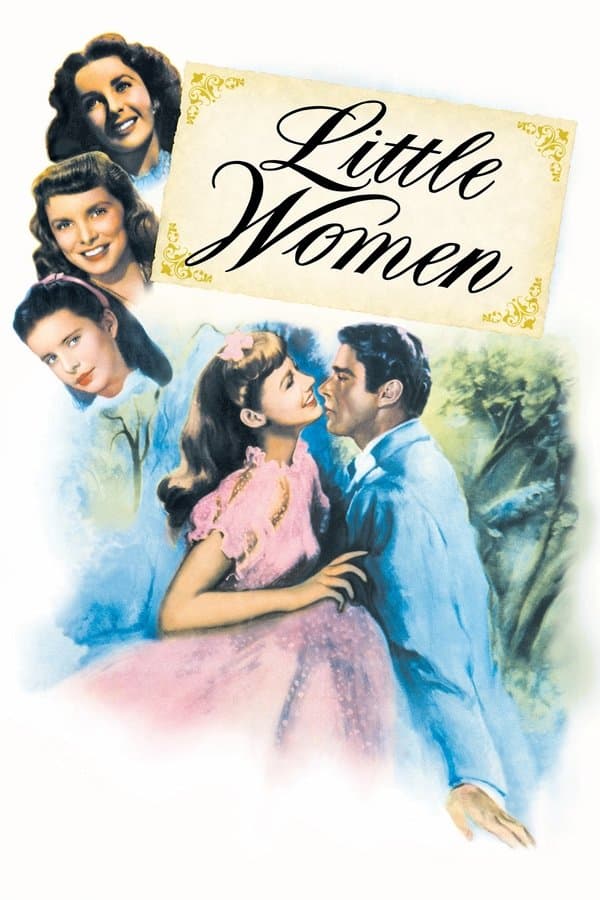
1949 • Drama, Family, Romance • NR
Four sisters come of age in America in the aftermath of the Civil War.
Runtime: 2h 1m
Buy related books from Amazon
As an Amazon Associate I earn from qualifying purchases. Read the full disclosure.
Why you should read the novels
Before pressing play on the 1949 film, experience Louisa May Alcott’s Little Women where it began: the novel. The book’s rich interiority, intimate letters, and nuanced moral growth reveal layers the screen can’t fully capture, from everyday New England textures to the sisters’ private thoughts.
Reading both Little Women (Part First) and Good Wives (Part Second) lets you follow Jo, Meg, Beth, and Amy across years of change—career ambitions, courtship, grief, artistry, and domestic life—at a depth the movie compresses. You’ll witness Jo’s writing journey, Laurie’s maturation, and Amy’s discipline in ways uniquely alive on the page.
If you’re searching for the definitive Little Women book experience, choose a reliable English edition or an annotated version. For book clubs, students, and classic-literature fans, Louisa May Alcott’s original novel offers unmatched character development, historical context, and emotional resonance that turn casual readers into lifelong admirers.
Adaptation differences
The 1949 MGM adaptation condenses both volumes into a single, brisk narrative, reshuffling or trimming scenes to fit a feature runtime. Jo’s apprenticeship as a writer, Beth’s long illness, and Laurie’s European detour are compressed, giving events a tidier arc and faster payoffs than in the novel.
Tone and themes shift noticeably. Alcott’s explicit moral framework—rooted in Pilgrim’s Progress, spiritual self-scrutiny, and service—is softened on screen, while social and economic textures (work, charity, class expectations, and the March family’s wartime constraints) are simplified. The father’s Civil War chaplaincy and its consequences feel more backgrounded than in the book.
Characterization is streamlined. Jo and Professor Bhaer’s bond develops more quickly, with less space for his critique of her sensational stories and her gradual artistic redirection. Laurie and Amy’s relationship accelerates in Europe, trimming the introspective growth both undergo in the novel. Meg and John Brooke’s marital and financial struggles are tidied, and several childhood set-pieces are abbreviated or omitted, such as the school “limes” punishment and extended sequences of Jo’s publishing setbacks.
Presentation also shapes differences: the film emphasizes Christmas warmth, Technicolor pageantry, and studio-era comedy beats, lending a polished, sentimental glow. Letters, journals, and interior monologues—central to Alcott’s voice—become external dialogue or vanish, changing motivations and nuance. The result is a charming, cohesive movie that highlights family and romance, while the book delivers greater psychological depth, moral inquiry, and day-to-day realism.
Little Women inspired from
Little Women
by Louisa May Alcott
Good Wives
by Louisa May Alcott