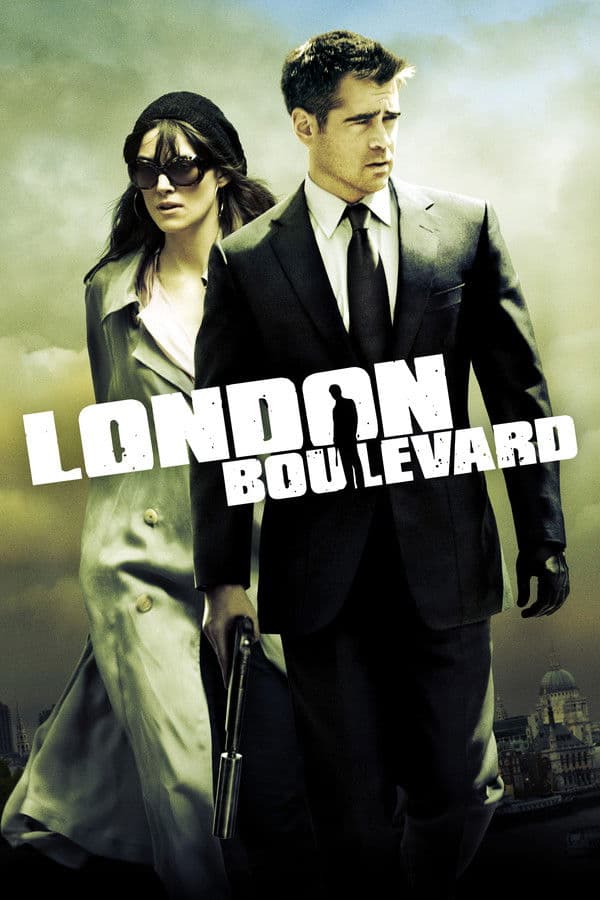
London Boulevard
2010 • Crime, Drama • R
A parolee falls for a reclusive movie star while trying to evade a ruthless gangster.
Runtime: 1h 43m
Buy related books from Amazon
As an Amazon Associate I earn from qualifying purchases. Read the full disclosure.
Why you should read the novel
Before you stream the film, discover the razor-edged source: London Boulevard, the acclaimed crime novel by Ken Bruen. This lean, atmospheric book delivers a darker, sharper vision of London’s underworld, crafted with Bruen’s trademark hardboiled minimalism and unforgettable voice. If you crave authentic noir, the London Boulevard novel gives you the purest version.
Reading the book unlocks layers you won’t find on screen: intimate interiority, moral ambiguity, and the rhythm of a city that can make or break you in a heartbeat. Bruen’s prose cuts fast and deep, turning every page into a tense, propulsive step through London’s alleys, pubs, and high-walled mansions. The result is a crime story that lingers long after the last line.
Choose the source material for the most complete experience. The London Boulevard book by Ken Bruen offers richer character work, starker stakes, and a more immersive sense of place than any adaptation. If you love British crime fiction, modern noir, and uncompromising storytelling, read the novel first and let the film be the encore.
Adaptation differences
Curious about the differences between the London Boulevard movie and the book? William Monahan’s film keeps the broad premise but retools tone and emphasis. Where Ken Bruen’s novel is hardboiled and spare, the adaptation leans into glossy contemporary crime-romance, favoring style-forward set pieces, celebrity culture, and sleek pacing over the book’s jagged minimalism and intimate interior voice.
One of the clearest shifts is the actress character. In the novel, the reclusive employer is an aging screen legend, Lilian Palmer—an explicit nod to classic Hollywood melancholy. The film recasts her as a contemporary young star, Charlotte, intensifying paparazzi pressure and reshaping the central relationship from caretaker–confidante dynamics into a more conventional romantic arc. This single change ripples through motivations, power balances, and the story’s emotional temperature.
Structure and characterization are also streamlined for the screen. The movie consolidates elements of the criminal underworld, trims or merges side characters, and compresses timelines to maintain momentum. Bruen’s on-page interior monologue, literary and pop-cultural references, and bruising self-reckonings largely recede, replaced by visual mood, terse exchanges, and bursts of violence. As a result, the film softens some of the book’s bleak introspection while amplifying external conflict.
Finally, the ending beats diverge in key ways—who survives, how debts are settled, and the final note of irony or closure differ between versions. The novel leaves a starker, more nihilistic aftertaste consistent with noir tradition, whereas the film pursues a tidier, audience-facing resolution built around cinematic tension. If you’re comparing the London Boulevard book vs movie, these tonal, character, and structural departures define the adaptation’s distinct identity.
London Boulevard inspired from
London Boulevard
by Ken Bruen