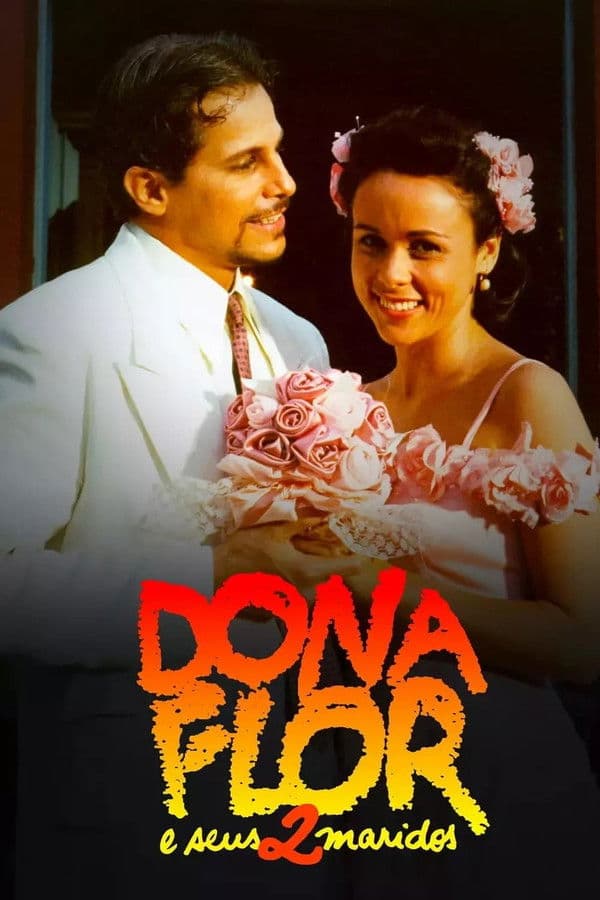
Luz, Câmera, 50 Anos: Dona Flor e Seus 2 Maridos - O Filme
2015 • Comedy, Drama, TV Movie
The 20 episode miniseries edited into a 141 minute TV film. The beautiful Flor marries Vadinho and soon finds out he's spending all their money on gambles and has mistresses all over the city. Vadinho suddenly dies while partying during Carnival, and Flor, left helpless and full of debts, ends up marrying Teodoro, who's the exact opposite of her late husband.
Runtime: 2h 22m
Buy related books from Amazon
As an Amazon Associate I earn from qualifying purchases. Read the full disclosure.
Why you should read the novel
Before pressing play on the movie, discover Jorge Amado’s Dona Flor and Her Two Husbands, the novel that ignited it all. Amado’s mischievous, humane prose delivers deeper character layers, sharper humor, and a richer sense of longing than any screen can capture.
Reading the book immerses you in Salvador, Bahia—its markets, kitchens, music, and mystical rituals—through lush descriptions you can almost taste and hear. Amado’s storytelling blends romance, sensuality, and magical realism with a culinary and cultural feast that rewards every page.
If you love romantic comedies with a twist of the fantastic, the novel is the definitive experience. Explore the full arc of Flor’s heart, the novel’s sly social satire, and the tender, timeless questions about love, fidelity, and freedom—straight from the source.
Adaptation differences
The 2015 Luz, Câmera, 50 Anos presentation is a condensed feature-length cut drawn from a television miniseries, not a ground-up film adaptation of the novel. This re-edit prioritizes plot momentum and the central triangle, compressing timelines and streamlining events that the book lingers over with leisurely, flavorful detail. Many neighborhood subplots and side characters are reduced, combined, or omitted to fit the tighter runtime.
On the page, Amado’s narrator offers playful irony and intimate access to Flor’s contradictions—her propriety, her desires, and her evolving moral calculus. Screen versions must externalize that inner debate, so the movie leans on dialogue, performance, and visual cues. As a result, the novel’s ambivalence and layered commentary on bigamy, respectability, and personal freedom resonate more subtly and complexly in print.
Cultural texture shifts as well. The book luxuriates in Bahian cuisine, markets, street life, and Afro-Brazilian religious traditions, using food and ritual as metaphors for passion and community. A broadcast-friendly film edit touches these elements but abbreviates ceremonies, recipes, and social observations, focusing instead on romance and comedic rhythm. The novel’s satirical edge toward small-town hypocrisies is also more pronounced in prose.
Tone and sensuality are calibrated differently. Television standards temper the novel’s erotic frankness, while magical elements become visually literal on screen, narrowing the playful ambiguity Amado sustains in text. Even when key plot points align, the book’s conclusion carries a reflective, bittersweet openness that screen adaptations often smooth into a more accessible, upbeat register.
Luz, Câmera, 50 Anos: Dona Flor e Seus 2 Maridos - O Filme inspired from
Dona Flor and Her Two Husbands
by Jorge Amado