Monte Walsh
1970 • Western • PG-13
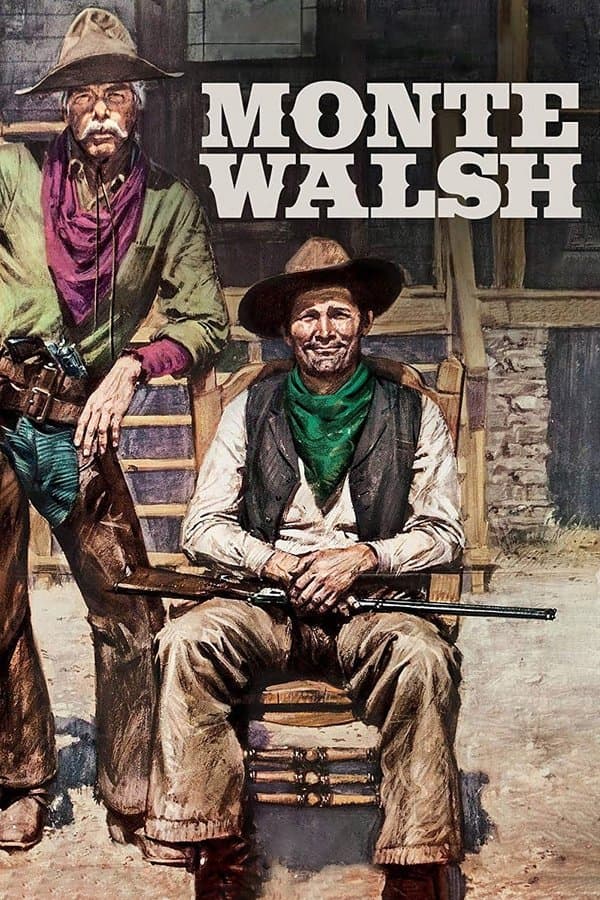
Monte Walsh is an aging cowboy facing the ending days of the Wild West era. As barbed wire and railways steadily eliminate the need for the cowboy, Monte and his friends are left with fewer and fewer options. New work opportunities are available to them, but the freedom of the open prarie is what they long for. Eventually, they all must say goodbye to the lives they knew, and try to make a new start.
Runtime: 1h 39m
Buy related books from Amazon
As an Amazon Associate I earn from qualifying purchases. Read the full disclosure.
Why you should read the novel
Before you watch the 1970 Western Monte Walsh, discover the original source: Monte Walsh by Jack Schaefer. The novel offers a richer, slower-burning portrait of a working cowboy’s life that no two-hour film can match.
Schaefer’s prose immerses you in authentic day-to-day details—roundups, bunkhouse camaraderie, changing ranch economics—while exploring the bittersweet reality of a West in transition. The Monte Walsh book captures interior reflections, hard-won wisdom, and the quiet humor of men who live by their skills and their word.
If you value depth, texture, and historical nuance, read the Monte Walsh novel before (or instead of) pressing play. It’s widely available in paperback, ebook, and audiobook—an essential Jack Schaefer classic for readers of literary Westerns.
Adaptation differences
Curious about differences between the Monte Walsh movie and the book? Jack Schaefer’s novel spans a broader arc of years and experiences, presenting an episodic, lived-in chronicle of a cowboy’s work and world. The 1970 film condenses this scope, choosing a tighter timeline and a more conventional dramatic shape.
Character focus shifts too. The Monte Walsh movie places greater emphasis on the romance and the close-knit buddy dynamic, streamlining relationships to build clear emotional through-lines. In the book, Monte’s inner life, his code, and the subtle evolution of his friendships are explored in more layered, reflective detail.
When it comes to plot and tone, the film heightens key conflicts and set pieces to deliver cinematic payoffs, while the novel favors accumulation—small jobs, seasonal rhythms, and quiet reckonings that add up to profound change. Antagonists and secondary cowboys are often combined or simplified on-screen, whereas the book preserves a wider, textured cast and the messier realities of trail work and ranch consolidation.
Finally, the endings diverge in feel. The Monte Walsh book leans into ambiguity and the sobering truth that no one gets to be a cowboy forever, leaving readers with a resonant, elegiac afterglow. The film offers a more cathartic, neatly framed closure. For the fullest understanding of themes—aging, identity, and the vanishing frontier—read the novel and then evaluate how the adaptation reshapes Schaefer’s vision for the screen.
Monte Walsh inspired from
Monte Walsh
by Jack Schaefer