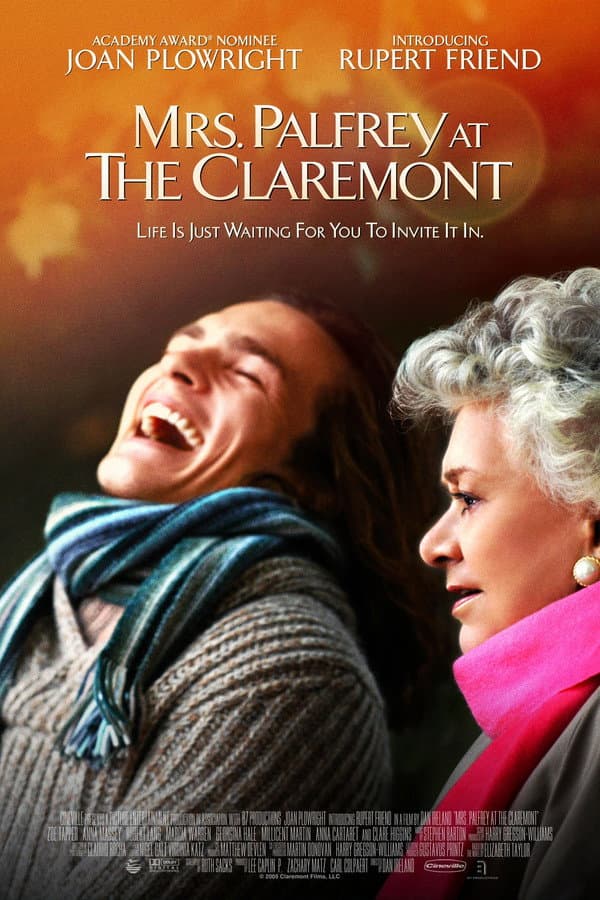
Mrs Palfrey at The Claremont
2005 • Comedy, Drama • NR
All but abandoned by her family in a London retirement hotel, an elderly woman strikes up a curious friendship with a young writer.
Runtime: 1h 48m
Buy related books from Amazon
As an Amazon Associate I earn from qualifying purchases. Read the full disclosure.
Why you should read the novel
Before you press play, discover the tender brilliance of Mrs Palfrey at the Claremont by Elizabeth Taylor. The novel’s elegant prose, dry wit, and compassionate insight into aging and friendship create a richer, more immersive experience than any screen can offer.
Reading the book lets you linger with Mrs Palfrey’s inner life—her sharp observations, private hopes, and quiet courage. Taylor’s nuanced character portraits and psychologically precise scenes reward careful readers who want depth, subtlety, and the full emotional architecture behind the story you see in the movie.
If you love thoughtful British fiction, choose the source novel. It’s ideal for book clubs, fans of character-driven stories, and anyone searching “Mrs Palfrey at the Claremont book” or “Elizabeth Taylor novel” who wants the most complete, memorable version of this moving tale.
Adaptation differences
Tone and emphasis shift notably between the book and the movie. Elizabeth Taylor’s novel is a sharper social comedy—unsentimental, slyly ironic, and exacting about loneliness and the rituals of respectability—while the film softens edges with warmer sentiment and a more comforting emotional glow.
The adaptation updates time and texture. The book’s early-1970s London, with its manners and mores, becomes a contemporary setting on screen, changing details of class signals, city rhythms, and everyday technology. This modernization subtly alters how characters read to the audience and how their small social transgressions land.
Characterization is streamlined and sweetened in the movie. Several hotel residents are condensed or lightly reimagined, and the young writer’s depiction tilts more gallant and overtly kind. The film also amplifies a romantic thread for the young man—most notably through Gwendolyn—giving viewers a conventional subplot that’s minimal or absent in the novel’s tighter focus on Mrs Palfrey’s perspective.
Structure and access to interiority differ, too. The novel’s power comes from interior observation—those exact, piercing moments you can only get on the page—while the film must externalize through dialogue, glances, and montage. As a result, certain scenes and the ending feel gentler and more consoling on screen, whereas the book’s conclusion retains a starker, more unsentimental finality that lingers long after you close it.
Mrs Palfrey at The Claremont inspired from
Mrs Palfrey at the Claremont
by Elizabeth Taylor