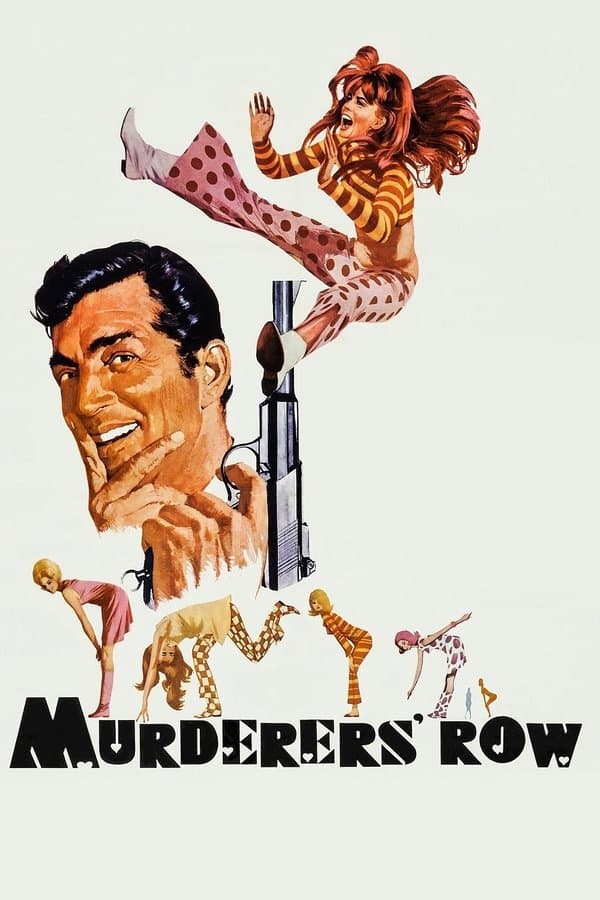
Murderers' Row
1966 • Action, Adventure, Comedy • NR
The handsome top agent Matt dies a tragic death in his bath tub - the women mourn about the loss. However it's just faked for his latest top-secret mission: He shall find Dr. Solaris, inventor of the Helium laser beam, powerful enough to destroy a whole continent. It seems Dr. Solaris has been kidnapped by a criminal organization. The trace leads to the Cote D'Azur.
Runtime: 1h 45m
Buy related books from Amazon
As an Amazon Associate I earn from qualifying purchases. Read the full disclosure.
Why you should read the novel
Before you press play, consider opening Donald Hamilton’s Murderers' Row, the gripping Matt Helm novel that inspired the film. Hamilton delivers lean, no-nonsense prose and razor-edged suspense that reward careful reading far more than a quick watch ever could.
The book’s Matt Helm is a hardened professional operating in a chillingly believable world of tradecraft, moral ambiguity, and high-stakes deception. If you crave authentic spy fiction—closer to fieldwork than fantasy—this novel offers tension, detail, and stakes you can feel.
Readers who enjoy classic Cold War espionage will find Hamilton’s tightly wound plotting and stark realism irresistible. Discover why the Matt Helm books have earned lasting respect among thriller fans who prefer grit, intelligence, and credibility over gadget-driven spectacle.
Adaptation differences
Tone is the biggest shift. Donald Hamilton’s Murderers' Row is a hard-edged, realistic spy thriller, while the movie embraces bright, comic, and campy 1960s fun. The book’s grounded violence and moral weight become quips, swing, and splashy set pieces on screen.
Characterization changes dramatically. On the page, Matt Helm is a cold, disciplined professional whose decisions carry consequences; in the film, he’s a breezy charmer whose persona leans into playful banter, cocktails, and high-style antics. The serious operative becomes a lounge-slick superspy.
Plot and stakes diverge. The novel’s mission unfolds with procedural detail, plausible tradecraft, and tightly coiled tension; the movie favors larger-than-life threats, flashy locations, and quick-turn escapades. Subtle intelligence work and slow-burn suspense give way to brisk, spectacle-forward momentum.
Style and texture are transformed. Hamilton’s first-rate realism, interior focus, and terse prose are replaced by eye-catching production design, pop performances, gadgets, and comedic beats. Female characters in the film skew glamorous and romantic, contrasting with the novel’s more pragmatic, often ambiguous, espionage-world dynamics.
Murderers' Row inspired from
Murderers' Row
by Donald Hamilton