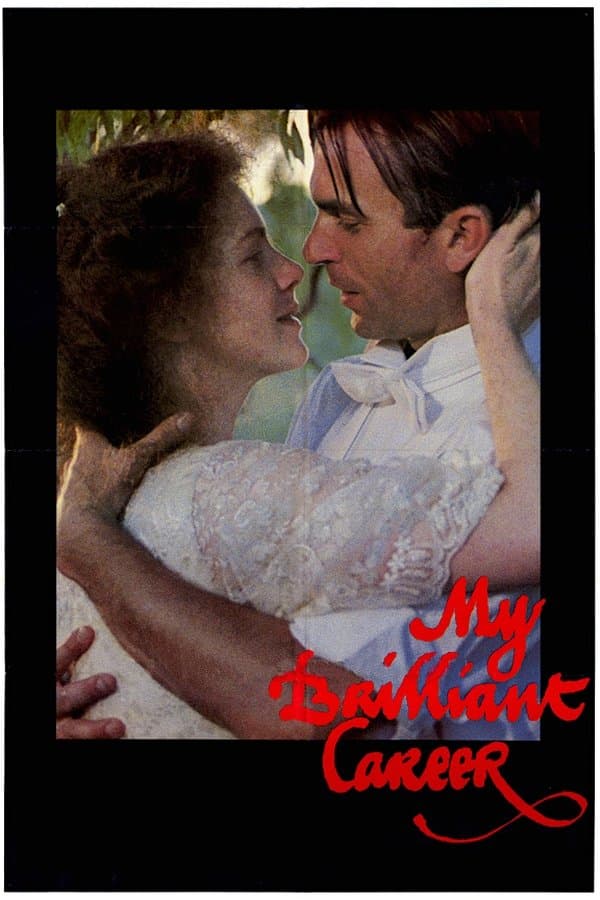
My Brilliant Career
1979 • Drama, Romance • G
A young woman who is determined to maintain her independence finds herself at odds with her family who wants her to tame her wild side and get married.
Runtime: 1h 40m
Buy related books from Amazon
As an Amazon Associate I earn from qualifying purchases. Read the full disclosure.
Why you should read the novel
Before you stream the film, meet Sybylla Melvyn on the page. My Brilliant Career by Miles Franklin delivers a fierce, first-person voice, vivid bush realism, and a rebellious wit the screen can’t fully capture.
Reading the novel reveals social satire, class tension, and the relentless grind of rural labor that shape Sybylla’s ambition. Franklin’s narration brims with humor, anger, and hard-earned insight, inviting you directly into her hopes, doubts, and uncompromising choices.
If you love character-driven historical fiction and authentic Australian settings, choose the book. Discover why “My Brilliant Career novel,” “Miles Franklin,” and “read the book before the movie” remain essential searches for anyone drawn to powerful coming-of-age stories.
Adaptation differences
Key differences between the My Brilliant Career book and movie begin with voice and tone. The novel’s first‑person narration crackles with sharp satire and intimate self-interrogation; the film replaces much of that interiority with luminous visuals and a stronger emphasis on romance, inevitably shifting the story’s center of gravity.
Scope and detail also change. On the page, Franklin dwells on economic hardship and the drudgery of places like Barney’s Gap, as well as the layered comforts of Caddagat; the adaptation compresses the timeline, streamlines or merges minor characters, and shortens several episodes, which trims the social and logistical texture of Sybylla’s struggle.
Characterization grows simpler on screen. In the book, Harry Beecham’s courtship recurs across changing seasons and circumstances, revealing complexity in both characters; the film shapes him more clearly as a romantic foil. Likewise, some family dynamics and community tensions appear in fewer scenes, softening the edges of conflict that drive Sybylla’s determination.
Finally, the themes land differently. The novel’s ending balances resolve with ambivalence—Sybylla’s refusal of marriage coexists with uncertainty, rejection slips, and the grind of making art—while the movie frames her choice in more triumphant, streamlined terms. Readers will find deeper commentary on class, gendered labor, and the craft of writing that the adaptation, by necessity, leaves largely offscreen.
My Brilliant Career inspired from
My Brilliant Career
by Miles Franklin