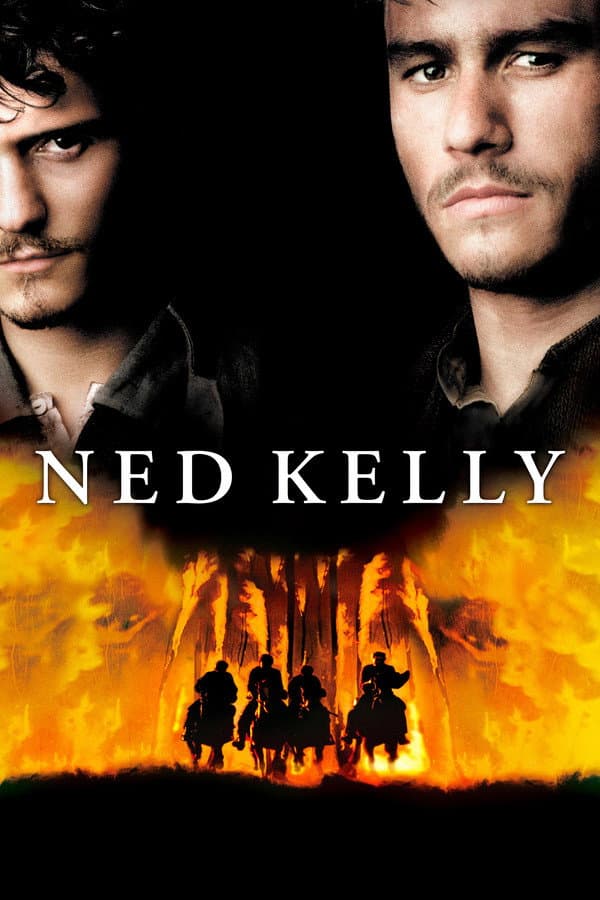
Ned Kelly
2003 • Action, Adventure, Drama, History • R
After getting threatened by Kelly's friends and family, Constable Fitzpatrick places the blame on Ned Kelly and exaggerates what happened. With the biggest ever award available, Kelly and his gang set into the wild, to remain hidden from everyone who seeks them. Even if it means having his family arrested, the members of the Kelly Gang stay hidden and plan a way to get their names cleared.
Runtime: 1h 50m
Buy related books from Amazon
As an Amazon Associate I earn from qualifying purchases. Read the full disclosure.
Why you should read the novel
Before pressing play on the 2003 film, read the source novel Our Sunshine by Robert Drewe to experience Ned Kelly’s voice from the inside. Drewe’s lyrical, close-up storytelling turns Australia’s most famous bushranger into a complex human being, rich with contradictions the screen can only hint at. If you’re searching for the definitive Ned Kelly book, this is the one to start with.
Our Sunshine delivers the immersive detail, texture, and psychological nuance that fast-cut action can’t provide. Drewe’s English-language classic of historical fiction lets you feel the dust, hear the magpies, and live the moral gray zones that shaped Kelly’s legend. It’s available widely in paperback, ebook, and audiobook, making it easy to read before or instead of watching the movie.
Readers who value authenticity and depth will find Our Sunshine a more rewarding way to learn Ned Kelly’s story than a two-hour adaptation. The novel’s poetic prose, layered themes, and intimate perspective provide a richer, more thought-provoking journey—ideal for book clubs, students of Australian history, and anyone comparing the Ned Kelly book vs movie experience.
Adaptation differences
Narrative structure is the clearest difference between the Ned Kelly (2003) movie and the book. Robert Drewe’s Our Sunshine is fragmentary, lyrical, and often interior—shifting time, memory, and point of view to explore how a legend is made. The film opts for a more linear, action-driven arc that compresses chronology and connects events cleanly, prioritizing momentum over the novel’s impressionistic, reflective pacing.
Characterization also diverges. In the book, Ned’s inner life—his fears, pride, tenderness, and contradictions—drives the story, while the film frames him more squarely as a folk-hero under pressure. The movie expands or invents romantic material (notably the Julia Cook subplot) to externalize motives and raise stakes; Drewe’s novel treats relationships more obliquely, emphasizing family bonds and the corrosive forces around the Kellys. Figures like the police are shaded with greater ambiguity on the page, whereas the screen version sharpens them into clearer antagonists.
Specific incidents are streamlined or reframed for cinema. Our Sunshine lingers in ambiguity around flashpoints like the Fitzpatrick incident, while the film presents a more decisive, morally legible version to propel the plot. Bank robberies and the forging of the iron armor become larger set pieces on screen; the novel, by contrast, often uses these moments to interrogate mythmaking and consequence rather than spectacle. The Glenrowan siege, though present in both, is staged more for tactical clarity and action in the film than for the meditative fatalism that colors the book’s ending.
Thematically, Drewe’s prose constantly questions who owns the Ned Kelly story—Ned, the newspapers, the authorities, or posterity—using voice, rhythm, and irony to blur fact and legend. The movie gestures to this idea but foregrounds camaraderie, injustice, and last-stand heroics. Even when the film echoes Kelly’s language, it employs it sparingly; the novel saturates you in that voice. As a result, the book feels like an inquiry into myth, while the adaptation reads as a rousing, tragic outlaw narrative—closely related, but fundamentally different in emphasis and effect.
Ned Kelly inspired from
Our Sunshine
by Robert Drewe