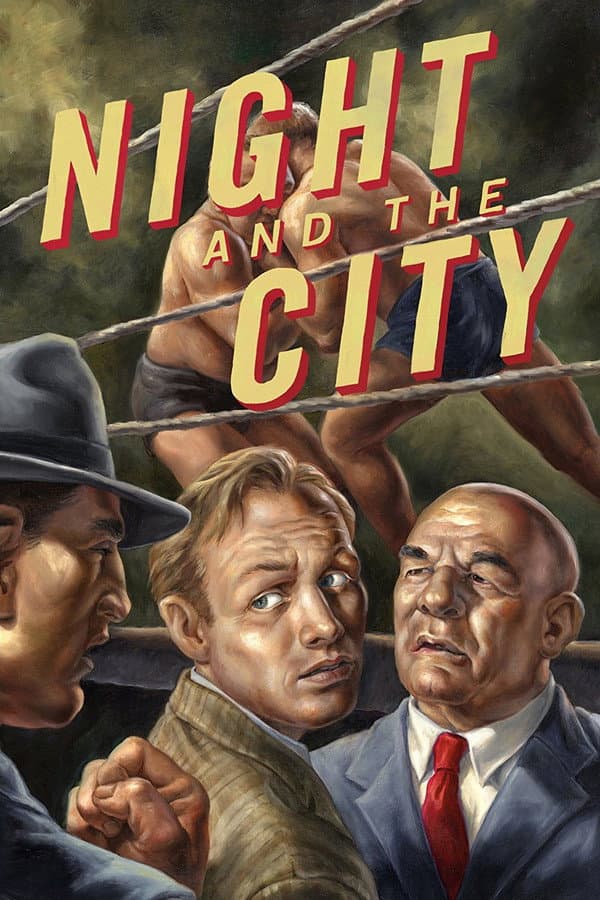
Night and the City
1950 • Crime, Drama
Londoner Harry Fabian is a second-rate con man looking for an angle. After years of putting up with Harry's schemes, his girlfriend, Mary, becomes fed up when he taps her for yet another loan.
Runtime: 1h 35m
Buy related books from Amazon
As an Amazon Associate I earn from qualifying purchases. Read the full disclosure.
Why you should read the novel
Before watching the film, discover the raw power of Night and the City by Gerald Kersh. The novel plunges you into the authentic London underworld with sharper detail, richer psychology, and a darkness no camera can fully capture.
Kersh’s crime classic delivers the city’s smoky clubs, alleyway hustles, and desperate dreams with visceral immediacy. You’ll meet Harry Fabian on the page first—from the inside out—understanding his schemes, fears, and desires in ways the movie only hints at.
If you value gritty realism, complex characterization, and the unfiltered pulse of Soho’s nightlife, read the novel Night and the City. It’s the definitive experience for lovers of noir literature and London crime fiction.
Adaptation differences
Gerald Kersh’s Night and the City is a stark, socially grounded portrait of pre-war Soho; the 1950 film is a stylized film noir shaped by expressionist visuals and genre fatalism. The novel’s realism and satiric edge contrast with the movie’s tightly wound thriller structure and chase-driven suspense.
Harry Fabian undergoes a major transformation in the adaptation. On the page, he’s a more predatory, exploitative figure—an unvarnished parasite in a world of vice—whereas the film recasts him as a desperate hustler with flashes of vulnerability, inviting more pity than the book ever grants.
The movie foregrounds the professional wrestling racket as its narrative engine; in Kersh’s novel, wrestling is not the central focus. The book’s grifts revolve around Soho touting, vice, and everyday exploitation, while characters such as Mary Bristol and the Nosseross couple are largely film inventions or substantial reinterpretations of Kersh’s broader cast.
Censorship and postwar studio demands also reshape content and tone. The film sanitizes or sidelines the book’s frank depictions of prostitution and sordid detail, compresses time, and orchestrates a more poetic noir comeuppance. The novel’s ending is bleaker and more squalid, reinforcing its merciless view of urban survival.
Night and the City inspired from
Night and the City
by Gerald Kersh