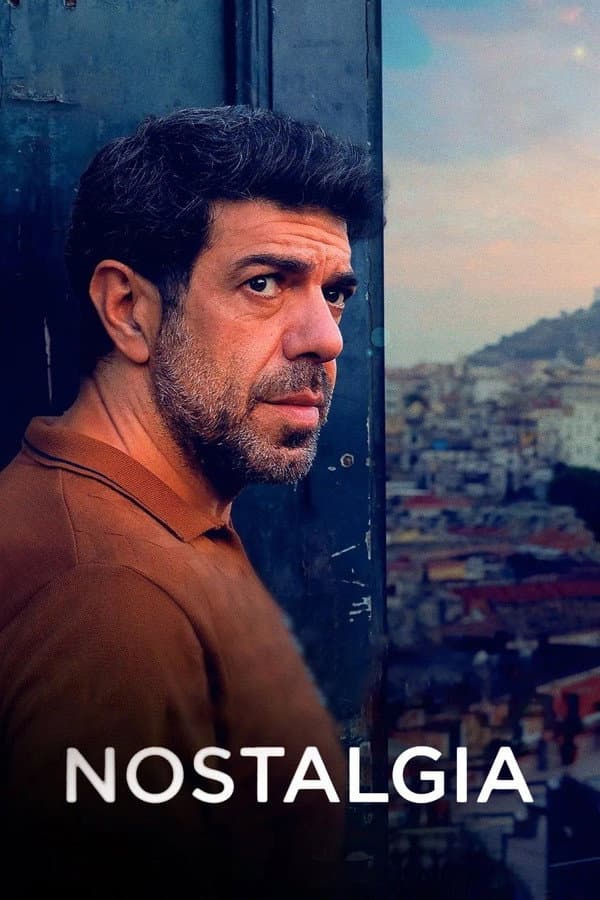
Nostalgia
2022 • Crime, Drama
Felice returns to his native Rione Sanità in Naples to look after his dying mother, having lived abroad for the last forty years. Here he discovers that his old friend Oreste has become a notorious crimeboss.
Runtime: 1h 57m
Buy related books from Amazon
As an Amazon Associate I earn from qualifying purchases. Read the full disclosure.
Why you should read the novel
Before pressing play on the 2022 film, discover the source: Nostalgia by Ermanno Rea. The novel invites you into Naples with a depth only literature can give—layered memory, lived history, and the moral gray zones that shape identity. If you’re searching for the definitive Nostalgia experience, the book offers a richer, more intimate journey than any screen can deliver.
Readers who love Neapolitan settings, literary crime, and character-driven storytelling will find Rea’s Nostalgia to be essential reading. The novel’s evocative prose lingers on streets, courtyards, and voices, capturing the Rione Sanità with documentary clarity and poetic nuance. For anyone comparing book vs movie, the page grants more context, more voice, and more time inside the protagonist’s conscience.
Choosing the book over the movie means embracing the complete architecture of themes—belonging, guilt, friendship, exile, and return. Searchers for "Nostalgia novel," "Nostalgia book by Ermanno Rea," or "read before you watch" will discover a gripping, humane narrative that rewards close reading. Start with the novel to understand the heartbeat of the story the film adapts.
Adaptation differences
The film Nostalgia (2022) translates Rea’s interior, reflective novel into a visual, place-forward experience. On screen, atmosphere and physical geography lead—stone stairways, bustling alleys, and the Rione Sanità’s textures become central. On the page, inner voice carries more weight; memory, doubt, and motive unfold with a clarity that only sustained prose can provide.
Expect streamlined plotting in the adaptation. The movie condenses timelines and backstory, especially the years away from Naples, to maintain momentum and tension. By contrast, the book lingers on formative experiences and the sociology of the neighborhood, giving readers broader historical and cultural context that shapes every decision the characters make.
Character focus shifts between versions. Secondary figures—family, childhood friends, and community leaders—are more compressed and function-driven in the film, while the novel elaborates their histories, contradictions, and roles in the local power structure. If you’re comparing novel vs film, the book’s fuller portraits reveal why loyalties harden, why fear spreads, and how the community negotiates with criminal influence.
Tone and emphasis diverge as well. The film leans into suspense and inevitability, guiding viewers toward a starker, more concentrated climax. The novel favors ambiguity, moral complexity, and reflective aftermath, allowing consequences to echo across memory and time. For searchers of "Nostalgia movie differences" or "book vs movie analysis," the key takeaway is this: the adaptation privileges immediacy and image; the book deepens causality and conscience.
Nostalgia inspired from
Nostalgia
by Ermanno Rea