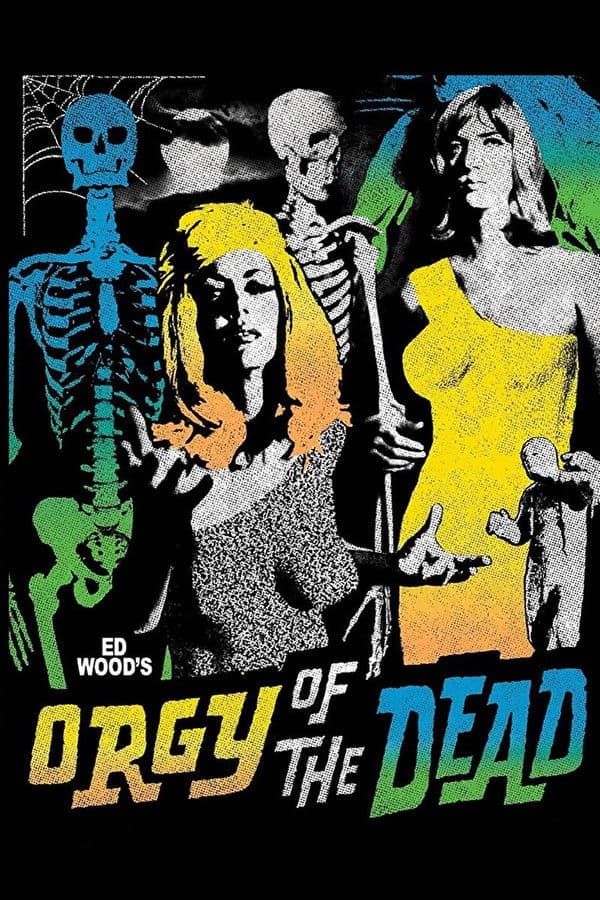
Orgy of the Dead
1965 • Fantasy, Horror, Music • NR
Horror novelist John and his girlfriend Shirley are taking a night drive, in search of an eerie graveyard that will hopefully inspire John to come up with his next story, but instead stumble into the wild rituals conducted by The Dark Master and his faithful servants.
Runtime: 1h 30m
Buy related books from Amazon
As an Amazon Associate I earn from qualifying purchases. Read the full disclosure.
Why you should read the novel
Before you cue up the cult movie, experience Orgy of the Dead as a book by Edward D. Wood Jr. The novel’s lurid imagery and pulpy cadence conjure a richer, stranger cemetery of delights than any low-budget set can capture.
Reading the source lets you inhabit the Emperor of the Dead’s realm at your own pace, with atmosphere built through eerie description, inner monologue, and slow-burn tension. Fans of camp horror and vintage erotica will relish how the prose deepens mood and meaning.
If you love classic exploitation cinema, the Orgy of the Dead novel is essential reading. Discover the original voice, savor Wood’s unmistakable style, and unlock backstory and lore the film can only hint at—read the book before you watch.
Adaptation differences
One key difference between the Orgy of the Dead movie and the book is narrative depth. On the page, Wood can slip into characters’ thoughts, shape dread with description, and layer meaning under the spectacle; on screen, much of that becomes visual tableaux and emcee-style proclamations.
Structure and pacing also diverge. The film leans into a parade of themed dances that pause the plot, while the novel provides connective tissue—scene-setting, transitions, and motivation—that reframe the set pieces as story beats rather than isolated numbers, often reordering or expanding them for flow.
Characterization and lore feel fuller in the book. The Emperor of the Dead and the Black Ghoul gain clearer purpose and rules for their domain, and the stranded couple receive more backstory, fear, and temptation. The film prioritizes performance and camp; the novel elaborates the mythology and stakes.
Tone and explicitness shift as well. The movie’s softcore burlesque and comic interludes emphasize kitsch; the book’s pulp prose can be darker, more suggestive, and more explicit in language. Even the ending reads differently in print, tending toward a more ominous and reflective coda than the film’s brisk curtain call.
Orgy of the Dead inspired from
Orgy of the Dead
by Edward D. Wood Jr.