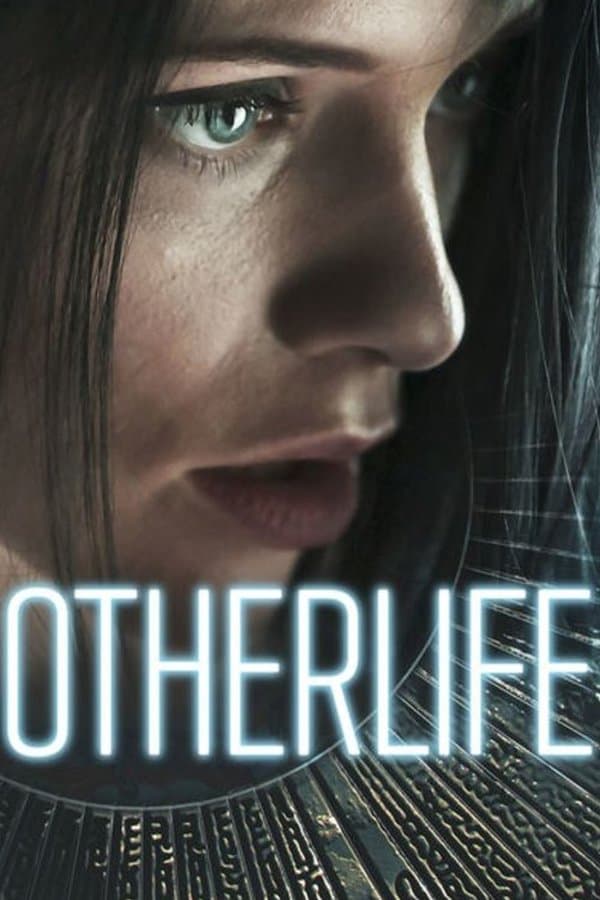
OtherLife
2017 • Crime, Mystery, Science Fiction
Ren Amari is the driven inventor of a revolutionary new drug. OtherLife expands the brain's sense of time and creates virtual reality directly in the user's mind. With OtherLife, mere seconds in real life feel like hours or days of exciting adventures. As Ren and her colleagues race around the clock to launch OtherLife, the government muscles in to use the drugs as a radical solution to prison overcrowding. They will create virtual cells where criminals serve long sentences in just minutes of real time. When Ren resists, she finds herself an unwilling guinea pig trapped in a prison cell in her mind. She must escape before she descends into madness, and then regain control of OtherLife before others suffer the same fate.
Runtime: 1h 36m
Buy related books from Amazon
As an Amazon Associate I earn from qualifying purchases. Read the full disclosure.
Why you should read the novel
Before you stream the movie, read Solitaire by Kelley Eskridge—the novel that inspired OtherLife. Eskridge’s book delivers a deeper, more intimate exploration of virtual confinement, identity, and freedom than any ninety-minute thriller can. If you enjoy character-driven science fiction with moral complexity and high-stakes psychological tension, the novel is the essential starting point.
Solitaire invites you inside the protagonist’s mind for an immersive examination of power, technology, and consequence. Page by page, Eskridge builds a world where corporate influence and justice systems intersect with chilling precision. It’s a gripping, thought-provoking read that rewards fans of near-future fiction who want more world-building, richer interiority, and a slower-burn suspense than the film format allows.
For readers searching “book behind OtherLife,” “novel like Black Mirror,” or “best sci-fi about virtual reality,” Solitaire is a standout. Choose the paperback, ebook, or audiobook and discover the original vision—layered, human, and unforgettable—long before any adaptation’s twists come into view.
Adaptation differences
The biggest difference between OtherLife and Kelley Eskridge’s Solitaire is the protagonist’s context and arc. The film’s Ren Amari is a startup scientist whose invention becomes a corporate bargaining chip; the book’s protagonist navigates an entrenched corporate culture and a formalized justice apparatus. The novel spends far more time inside the character’s psyche, unpacking identity, autonomy, and intimate relationships, whereas the movie prioritizes thriller momentum and external plot turns.
Technology is framed differently, too. OtherLife depicts a slick, consumer-facing biotech (delivered as an eye-drop) repurposed for punishment, creating fast, marketable “experiences.” Solitaire centers on a direct neural confinement protocol designed explicitly for sentencing, with the ethical debate built into the system from day one. The book’s technology feels institutional and systemic; the film’s feels like a disruptive prototype that spirals into misuse.
Setting and tone also diverge. The movie unfolds in contemporary Australia with startup offices, sparse labs, and minimal world-building to keep the pace razor-sharp. The novel builds a fuller near-future landscape shaped by corporate power, social status, and public policy. As a result, Solitaire reads as a psychologically dense, sociopolitical study of punishment and personhood, while OtherLife plays as a contained, twist-heavy techno-thriller.
Plot structure and themes land differently. The film leans into conspiracy beats, memory puzzles, and a cat-and-mouse escalation that keeps the viewer guessing scene to scene. The novel’s long-form narrative dwells in the subjective experience of virtual confinement and the aftermath—recovery, reintegration, and moral reckoning. Romantic and identity threads are more pronounced and nuanced in the book, whereas the adaptation streamlines relationships and compresses outcomes to deliver a satisfying cinematic snap rather than the novel’s slower, transformative resolution.
OtherLife inspired from
Solitaire
by Kelley Eskridge