Pierrot le Fou
1965 • Crime, Drama, Romance
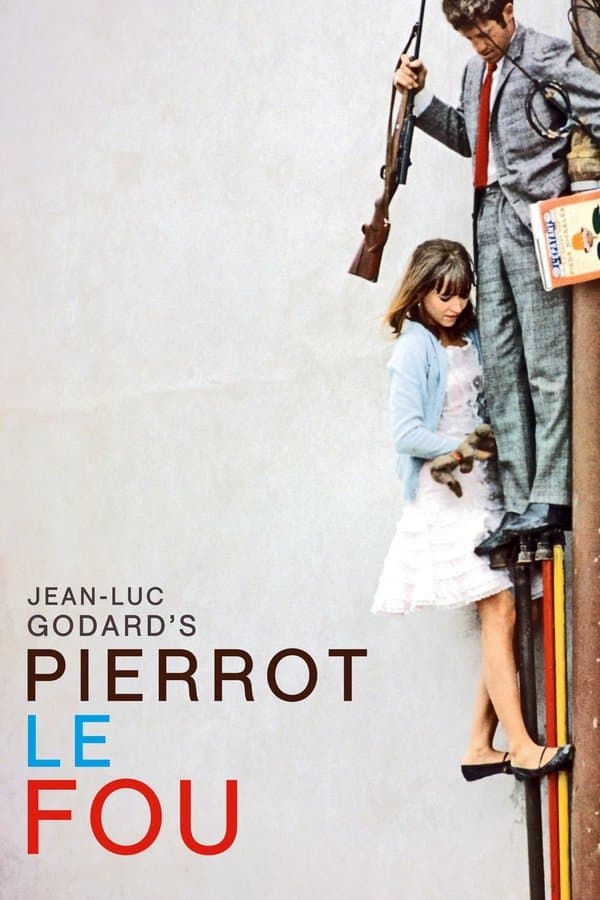
Pierrot escapes his boring society and travels from Paris to the Mediterranean Sea with Marianne, a girl chased by hit-men from Algeria. They lead an unorthodox life, always on the run.
Runtime: 1h 50m
Buy related books from Amazon
As an Amazon Associate I earn from qualifying purchases. Read the full disclosure.
Why you should read the novel
Before you watch Jean-Luc Godard's Pierrot le Fou (1965), discover the electrifying source novel Obsession by Lionel White. This lean, high-tension crime noir delivers relentless suspense, razor-sharp pacing, and psychological intensity the movie only suggests. If you searched for Pierrot le Fou book or source novel, start with Obsession for the purest version of the story.
Reading Obsession gives you direct access to Lionel White's hardboiled voice, vivid American backdrops, and meticulously engineered twists. The novel's propulsive plotting, moral ambiguity, and intricate stakes make it a definitive crime classic—perfect for fans of noir fiction who want the depth and detail a film adaptation can't fully capture.
Choose the book over the movie to experience the original tone, character motivations, and taut structure as White intended. Obsession by Lionel White is widely available in paperback, ebook, and audiobook—ideal for readers seeking the gripping foundation behind Pierrot le Fou, and a must-read for anyone exploring the source material of iconic film adaptations.
Adaptation differences
Pierrot le Fou is a very loose adaptation of Lionel White's novel Obsession. The book is a straight-ahead American noir about lovers entangled in crime, pursued with escalating danger, and driven by obsession. Godard relocates the action to contemporary France, reframes it as a sun-splashed road movie, and changes names, settings, and narrative priorities to suit his New Wave experimentation.
Stylistically, the novel is taut, linear, and plot-driven, while the film explodes into pop-art color, jump cuts, voiceover play, musical fragments, and meta-cinematic jokes. Obsession keeps tension through procedural details and cause-and-effect; Pierrot le Fou favors digressions, fourth-wall winks, and cultural-political commentary (consumerism, mass media, geopolitics) that are not central to the book.
Characterization diverges sharply. In the novel, motives and criminal logistics are laid out with hardboiled clarity, emphasizing survival, greed, and fatal attraction. In the film, Ferdinand (Pierrot) and Marianne are stylized figures—philosophizing, mythic, and enigmatic—whose choices often reflect ideas and attitudes more than grounded criminal realism. The result is a cooler, essayistic distance in the movie versus the book's close-quarters urgency.
The endings and themes embody different aims. Obsession resolves with a bleak, morally inexorable noir payoff rooted in the logic of crime fiction. Pierrot le Fou culminates in an audacious, self-annihilating gesture that prioritizes poetic symbolism over procedural closure. If you’re comparing differences between Pierrot le Fou and the book Obsession, expect changes in setting, tone, structure, character focus, and thematic emphasis throughout.
Pierrot le Fou inspired from
Obsession
by Lionel White