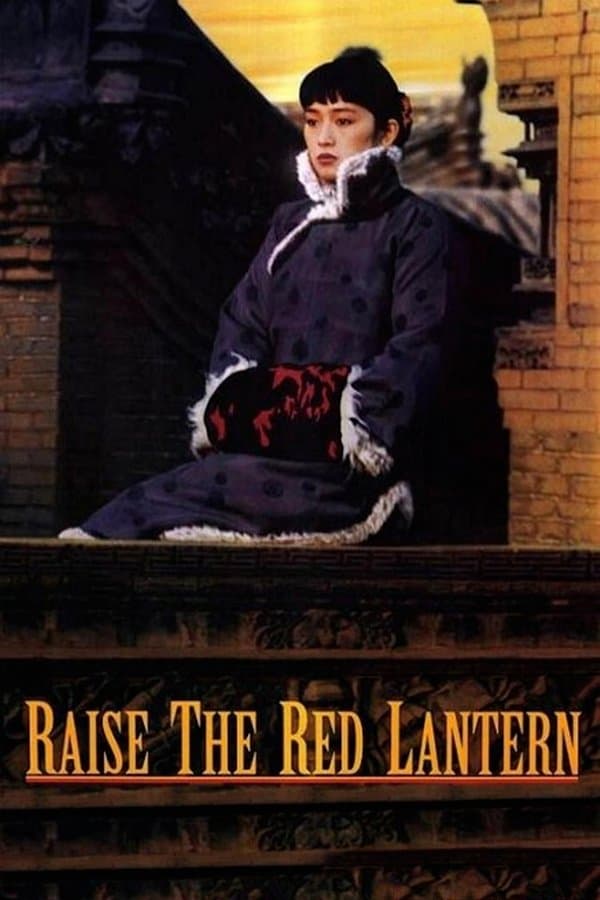
Raise the Red Lantern
1991 • Drama
In 1920s China, 19-year-old Songlian becomes a concubine of a powerful lord and is forced to compete with his three wives for the privileges gained.
Runtime: 2h 5m
Buy related books from Amazon
As an Amazon Associate I earn from qualifying purchases. Read the full disclosure.
Why you should read the novels
Experience Su Tong’s original vision in Wives and Concubines, the English-available novella that inspired Raise the Red Lantern. On the page, hidden motives, family rules, and shifting alliances unfold with intimate clarity and cultural nuance that no screen can fully capture.
Reading the source text places you inside the compound’s rooms and rituals, revealing layered psychology, understated cruelty, and the complex social fabric behind each decision. Su Tong’s prose invites reflection and rewards close reading, offering richer context for every rivalry and whispered secret.
If you loved the film’s atmosphere, the book offers even more: deeper characterization, broader social detail, and a quietly devastating portrait of power. Explore Wives and Concubines—or the collection Raise the Red Lantern: Three Novellas—to experience the story as Su Tong crafted it.
Adaptation differences
Perspective and interiority differ markedly. The film centers tightly on Songlian’s restrained viewpoint and keeps the Master distant and faceless, while the book provides broader narrative access, richer backstories, and more insight into household hierarchies and motives.
Symbolism is amplified on screen. Zhang Yimou heightens the red-lantern ritual, foot-massage ceremonies, and architectural symmetry to visualize favoritism and control. In the book, these customs exist but are less choreographed, conveyed more through observation and implication than through stylized repetition and color design.
Characterization varies in emphasis. The movie foregrounds the Third Mistress’s past as a performer and the Second Mistress’s calculated manipulations through striking visual cues and staging. The book devotes more space to personal histories, servants’ roles, and day-to-day politics, mapping how gossip, tradition, and small decisions reshape power over time.
Plot texture and tone diverge. The film condenses timelines and renders punishments with ritualized, elliptical severity, leaving gaps the audience must infer. The book more explicitly traces causes and consequences—who orders what, why rules are invoked, and how the compound rationalizes brutality—while its ending dwells longer on aftermath and the lingering social scars.
Raise the Red Lantern inspired from
Raise the Red Lantern: Three Novellas
by Su Tong
Wives and Concubines
by Su Tong