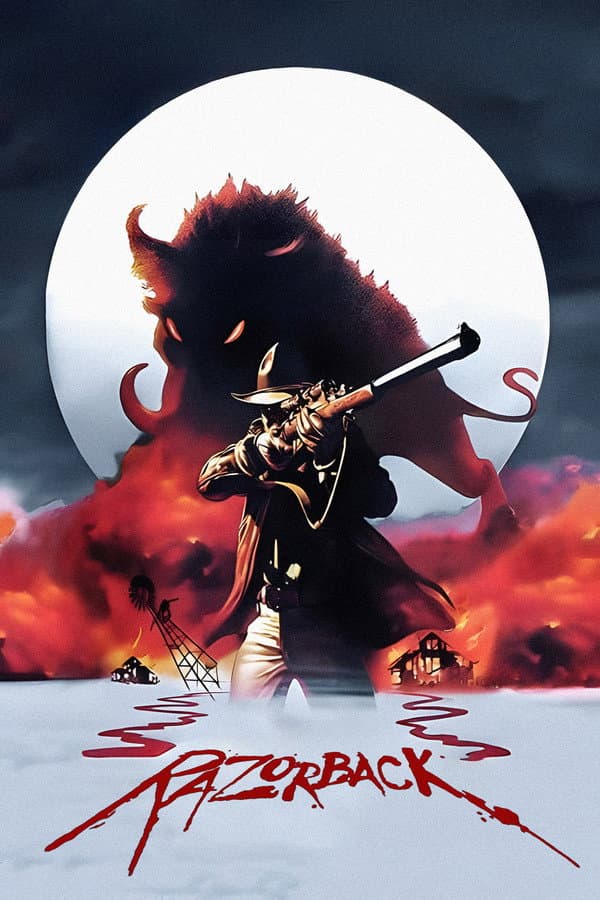
Razorback
1984 • Horror, Thriller • R
In the Australian outback a vicious wild boar kills and causes havoc to a small community.
Runtime: 1h 35m
Buy related books from Amazon
As an Amazon Associate I earn from qualifying purchases. Read the full disclosure.
Why you should read the novel
If Razorback (1984) hooked you with its killer-boar premise, Peter Brennan’s novel Razorback delivers the full-blooded experience. The book digs deeper into the Outback’s unforgiving ecology, the lore of feral hogs, and the human costs the film can only suggest. It’s the definitive source that sharpens every fear the movie hints at while building patient, nerve-tightening suspense.
Where the film sprints from set piece to set piece, the novel lets characters breathe, evolve, and collide. You’ll discover layered motivations, ethical gray areas, and the slow encroachment of dread that only prose can sustain. The result is a richer psychological thriller that makes every confrontation feel earned—and far more harrowing.
If you’re searching for an Australian outback thriller to read, choose the Razorback book. Peter Brennan’s creature-feature classic offers immersive world-building, authentic tracking and survival detail, and a grounded, chilling plausibility. For fans of giant boar horror novels and atmospheric suspense, reading Razorback is the most satisfying way to experience this story.
Adaptation differences
Tone and style diverge immediately: the Razorback movie prioritizes stylized visuals, music-video energy, and heightened nightmare imagery, while Peter Brennan’s Razorback novel is more grounded and methodical. The book’s horror builds from ecological detail and realistic behavior, trading cinematic flash for steadily mounting tension and plausibility.
Characterization also differs. The film streamlines roles into a handful of clear protagonists and overt human antagonists, whereas the novel spends more time on multiple viewpoints, local dynamics, and the toll the landscape exacts on everyone. In the book, motivations and moral ambiguities are explored with greater nuance, giving the human story as much weight as the monster.
Plot emphasis shifts as well. The movie condenses investigations and heightens action into memorable set pieces (including industrial and outback locales), while the novel devotes more pages to tracking, survival technique, and the logistics of confronting a lethal animal in vast terrain. This makes the book’s world-building and sense of place more expansive, even as the film opts for velocity and spectacle.
Finally, the creature itself is framed differently. Onscreen, the razorback often feels mythic—larger-than-life and expressionistic—supporting the film’s dreamlike tone. On the page, its menace is rooted in believable scale, habits, and environmental pressures, shaping a climax that’s more strategic and endurance-focused. The result is two distinct takeaways: the movie offers operatic terror, while the book underscores nature’s brutal realism and the consequences of human incursion.
Razorback inspired from
Razorback
by Peter Brennan