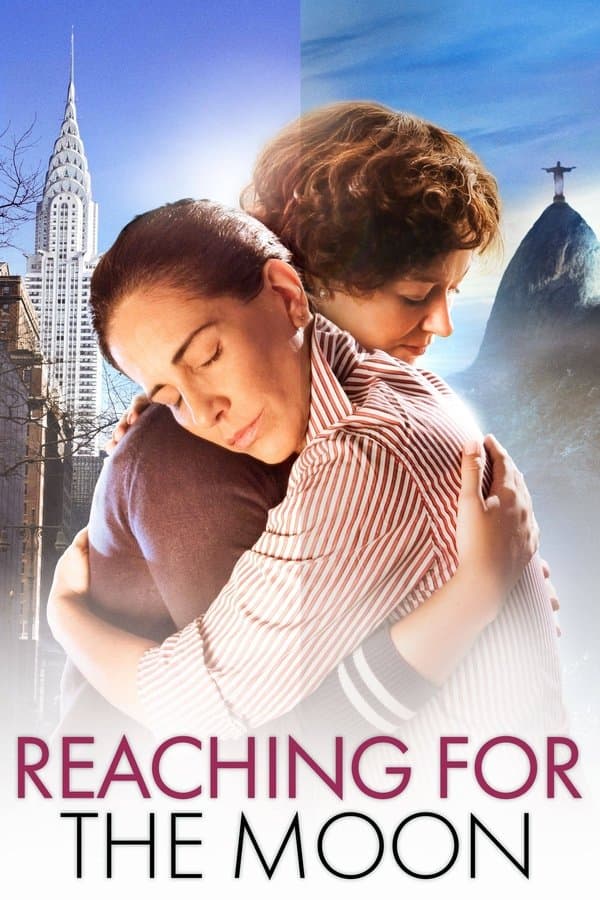
Reaching for the Moon
2013 • Drama, Romance • NR
In 1951, New York poet Elizabeth Bishop travels to Rio de Janeiro to visit Mary, a college friend. The shy Elizabeth is overwhelmed by Brazilian sensuality. She is the antithesis to Mary’s dashing partner, architect Lota de Macedo Soares. Mary is jealous, but unconventional Lota is determined to have both women at all costs. This eternal triangle plays out against the backdrop of the military coup of 1964. Bishop’s moving poems are at the core of a film which lushly illustrates a crucial phase in the life of this influential Pulitzer prize-winning poet.
Runtime: 1h 58m
Buy related books from Amazon
As an Amazon Associate I earn from qualifying purchases. Read the full disclosure.
Why you should read the novel
If Reaching for the Moon (2013) intrigued you, read Rare and Commonplace Flowers: The Story of Elizabeth Bishop and Lota de Macedo Soares by Carmen L. Oliveira. The book offers a richly researched, English-language portrait of poet Elizabeth Bishop and architect Lota de Macedo Soares, grounded in documents, interviews, and historical context that a two-hour film can’t fit.
Oliveira’s biography situates their love story within Brazil’s cultural and political landscape, exploring Bishop’s creative breakthroughs and Lota’s visionary role behind Rio’s Flamengo Park. You’ll discover the inspirations for Bishop’s poems, the daily textures of their life in Petrópolis and Rio, and the complex challenges that tested their partnership.
For readers seeking LGBTQ+ history, literary biography, and Brazilian cultural history, this book delivers depth the movie only hints at. Choose the source: Rare and Commonplace Flowers is the definitive, immersive way to understand Elizabeth Bishop and Lota de Macedo Soares—perfect for fans who want the full story behind the film.
Adaptation differences
Scope and focus: The movie centers on the romance between Elizabeth Bishop and Lota de Macedo Soares, shaping scenes around their most cinematic highs and lows. The book, Rare and Commonplace Flowers, broadens the lens with extensive biography—childhood histories, friendships, career arcs, and social networks—offering a fuller timeline and multiple perspectives that contextualize their relationship and careers.
Timeline and characters: Reaching for the Moon compresses years into a streamlined narrative, merging or abbreviating events and reducing some secondary figures. The book details the evolving dynamic among Bishop, Lota, and Mary Morse; the rhythms of life at Samambaia (in the Petrópolis mountains) and in Rio; and the long, bureaucratic, and political saga of the Flamengo Park project under Governor Carlos Lacerda—nuances the film necessarily simplifies.
Art and process: The film samples Bishop’s poetry and uses voiceover sparingly. By contrast, Oliveira’s biography tracks Bishop’s creative process, travels, drafts, and correspondence, connecting specific poems and collections—such as Questions of Travel—to lived experience in Brazil. Readers get granular insight into how place, language, and partnership shaped Bishop’s art in ways a visual adaptation can only gesture toward.
Climax and aftermath: The movie depicts Lota’s breakdown and death in a direct, emotionally driven arc. The book documents a more layered chain of causes—professional pressures, political conflicts over the park, health struggles, and the precise timeline of events in New York—alongside Bishop’s subsequent reflections. This documentary texture alters how readers interpret responsibility, causality, and the enduring impact on Bishop’s later life and work.
Reaching for the Moon inspired from
Rare and Commonplace Flowers: The Story of Elizabeth Bishop and Lota de Macedo Soares
by Carmen L. Oliveira