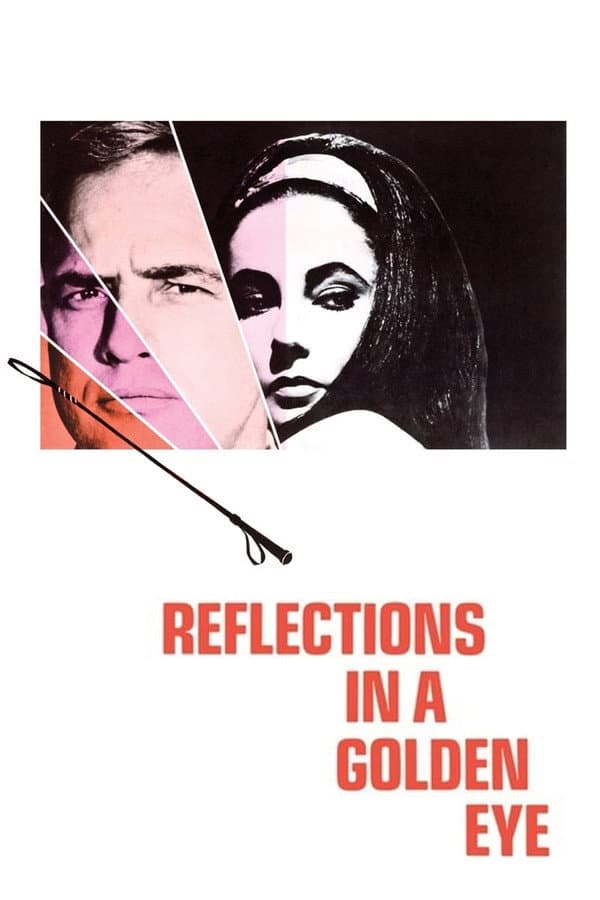
Reflections in a Golden Eye
1967 • Drama, Romance, Thriller • NR
Bizarre tale of sex, betrayal, and perversion at a military post.
Runtime: 1h 48m
Buy related books from Amazon
As an Amazon Associate I earn from qualifying purchases. Read the full disclosure.
Why you should read the novel
Before you press play on the 1967 film, discover the source: Reflections in a Golden Eye by Carson McCullers. The novel’s Southern Gothic atmosphere and piercing psychological insight turn the same story into a deeper, more unsettling experience that only prose can unlock.
McCullers’ lyrical, razor-sharp writing reveals the inner lives of characters trapped by desire, secrecy, and social constraint. If you’re searching for the most complete version of this tale—rich in theme, nuance, and voice—the Reflections in a Golden Eye book delivers what no screen can.
Choose the novel for its intimate interiority, layered symbolism, and haunting tone. Read Reflections in a Golden Eye by Carson McCullers in print or ebook to experience the original vision that inspired the movie, with all the depth cinephiles and book lovers crave.
Adaptation differences
Looking for differences between the Reflections in a Golden Eye book and movie? The novel unfolds through an omniscient perspective that dives into private thoughts and motivations, while the film must externalize those conflicts through performance and image. Reading the book clarifies why characters act as they do, offering interior monologues and authorial nuance the adaptation can only suggest.
Content and candor also diverge. McCullers writes more frankly about repressed desire, obsession, and bodily vulnerability; the film—shaped by 1960s studio constraints—softens or codes certain sexual and psychological elements. The novel’s treatment of fixation, queerness, and self-destructive impulses carries a rawness that the movie largely implies rather than states.
Structure and emphasis shift as well. To foreground star performances and pacing, the film condenses subplots and trims back backstory, especially around Alison Langdon and Anacleto, whose inner lives and symbolic roles are more expansive on the page. In the book vs movie comparison, this compression narrows the story’s social and emotional breadth.
Symbolism takes different forms. McCullers’ prose weaves the “golden eye” motif through image, irony, and narration, while the movie famously experiments with a golden-tinted palette to literalize that metaphor (often replaced by a standard-color version). The core arc and climactic act remain, but the novel frames events with reflective commentary and aftermath the adaptation compresses—making the book the definitive guide to the story’s meaning.
Reflections in a Golden Eye inspired from
Reflections in a Golden Eye
by Carson McCullers