Rumble Fish
1983 • Crime, Drama, Romance • R
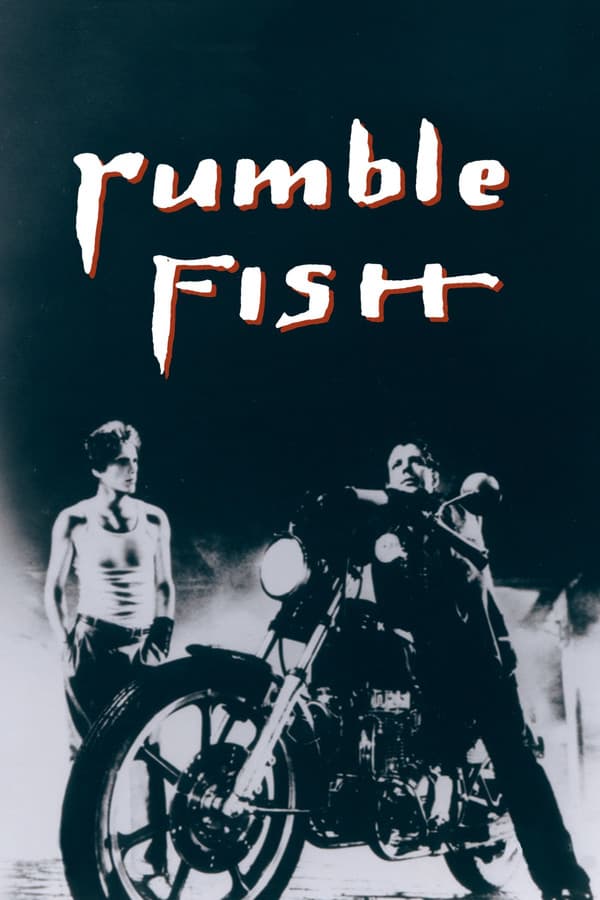
Absent-minded street thug Rusty James struggles to live up to his legendary older brother's reputation, and longs for the days of gang warfare.
Runtime: 1h 34m
Buy related books from Amazon
As an Amazon Associate I earn from qualifying purchases. Read the full disclosure.
Why you should read the novel
Before you watch the 1983 film, read the source novel Rumble Fish by S. E. Hinton. The original book delivers a raw, intimate, and authentically voiced coming-of-age story that the movie can only suggest. Discover the layered psychology of Rusty-James and the mythic pull of the Motorcycle Boy through Hinton’s direct, unforgettable prose.
The novel’s first-person perspective dives deep into identity, brotherhood, violence, and the cost of living by reputation. If you’re searching for the definitive version of this story, the original book provides clarity, nuance, and emotional detail that make every scene more resonant than the screen adaptation.
Choose the source novel to experience the author’s intent: a compact, powerful read that’s ideal for book clubs, classrooms, and personal reflection. Whether in paperback, ebook, or audiobook, Rumble Fish by S. E. Hinton offers a timeless, thought-provoking journey that rewards close reading and re-reading.
Adaptation differences
Rumble Fish book vs movie: The most significant difference is perspective and interiority. The novel is told in Rusty-James’s first-person voice, giving you unfiltered access to his fears, impulses, and rationalizations. The film externalizes those feelings through stylized images and sound, sacrificing the book’s direct inner monologue for an impressionistic, dreamlike mood.
Tone and setting diverge strongly. S. E. Hinton’s book is grounded in a realistic, contemporary Tulsa environment with concrete details of school, streets, and family life. Francis Ford Coppola’s adaptation abstracts place and time into a monochrome, almost mythic city filled with clocks, smoke, and time-lapse clouds, shifting the story from gritty realism to poetic expressionism.
Character focus changes as well. The novel spends more time developing Rusty-James’s relationships—especially with Steve and Patty—and shows how young these characters truly are. The movie streamlines side plots and ages the vibe upward, while foregrounding symbolic figures like Cassandra and emphasizing the Motorcycle Boy’s aura. As a result, motivations that are explicit on the page can feel elliptical on screen.
Symbolism and ending differ notably. In the book, the Motorcycle Boy’s color-blindness and the meaning of the rumble fish are conveyed through plainspoken description and Rusty-James’s reflections. The film literalizes this with near-total black-and-white and selective color, then adds a final ocean epilogue absent from the novel. The movie’s visual poetry reframes the conclusion, while the book’s ending lands with a starker, more grounded impact.
Rumble Fish inspired from
Rumble Fish
by S. E. Hinton