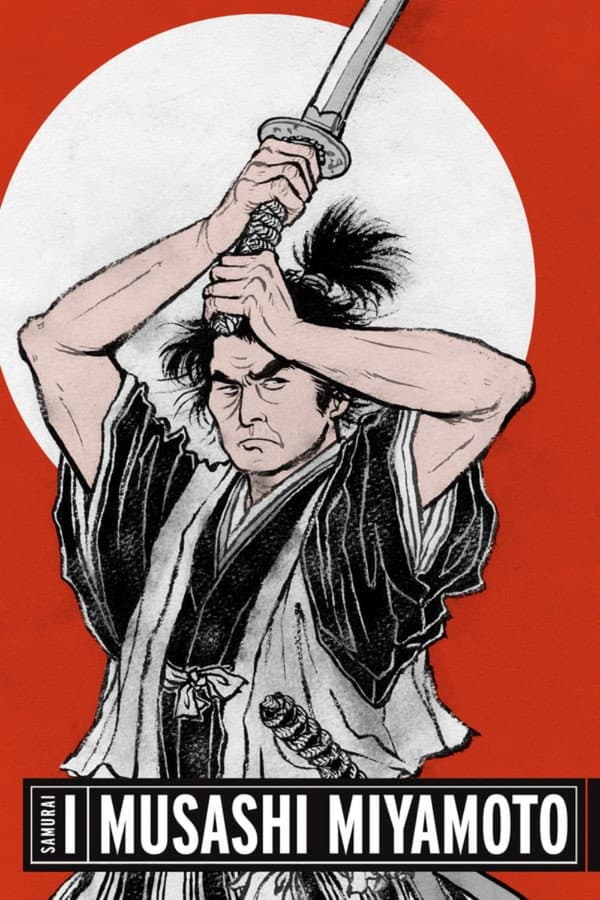
Samurai I: Musashi Miyamoto
1954 • Action, Adventure, Drama
Struggling to elevate himself from his low caste in 17th century Japan, Miyamoto trains to become a mighty samurai warrior.
Runtime: 1h 33m
Buy related books from Amazon
As an Amazon Associate I earn from qualifying purchases. Read the full disclosure.
Why you should read the novel
Before pressing play on Samurai I: Musashi Miyamoto (1954), consider reading Musashi by Eiji Yoshikawa—the sweeping samurai classic that inspired the film. The novel delivers deeper history, richer character arcs, and the authentic texture of Miyamoto Musashi’s world that no two-hour adaptation can capture.
Readers seeking immersive samurai fiction, epic historical adventure, and philosophy-laced storytelling will find Yoshikawa’s Musashi unmatched. The English edition presents a complete journey through honor, love, rivalry, and self-mastery—ideal for fans of Japanese history, martial arts, and literary epics.
If you want the definitive Musashi experience, read the source. Discover the uncut narrative, nuanced motivations, and contemplative passages that made Musashi a global bestseller—available in English paperback, hardcover, ebook, and audiobook formats.
Adaptation differences
The biggest difference between the movie Samurai I: Musashi Miyamoto and the book Musashi is scope. The film adapts only the opening portion of Yoshikawa’s vast serialized epic, compressing timelines and streamlining subplots to fit a single feature. The novel’s early chapters dwell longer on the aftermath of Sekigahara, village politics, and the social upheaval surrounding Tokugawa consolidation.
Character development is also more layered in the book. Takezo’s transformation into Miyamoto Musashi unfolds across extended mentorship, letters, and introspection, particularly through Takuan’s tough, patient guidance. In the film, this moral and spiritual reformation is condensed into a handful of pivotal sequences, prioritizing cinematic momentum over prolonged inner change.
Romantic and interpersonal dynamics are simplified on screen. In the novel, Otsu’s inner conflicts, Akemi’s complicated loyalties, and Matahachi’s failings play out over many chapters with shifting perspectives and consequences. The movie emphasizes a clearer, more direct emotional through-line, softening or abbreviating some morally messy situations and reducing the breadth of side characters’ arcs.
Philosophical texture and training detail are richer in the book. Yoshikawa weaves Zen practice, craftsmanship, and tactical thinking into Musashi’s daily discipline, along with numerous bouts and encounters that build his style. The film externalizes much of this with visuals and set pieces, omitting several duels and developmental episodes and mostly postponing the parallel rise of Sasaki Kojiro that the novel seeds earlier.
Samurai I: Musashi Miyamoto inspired from
Musashi
by Eiji Yoshikawa