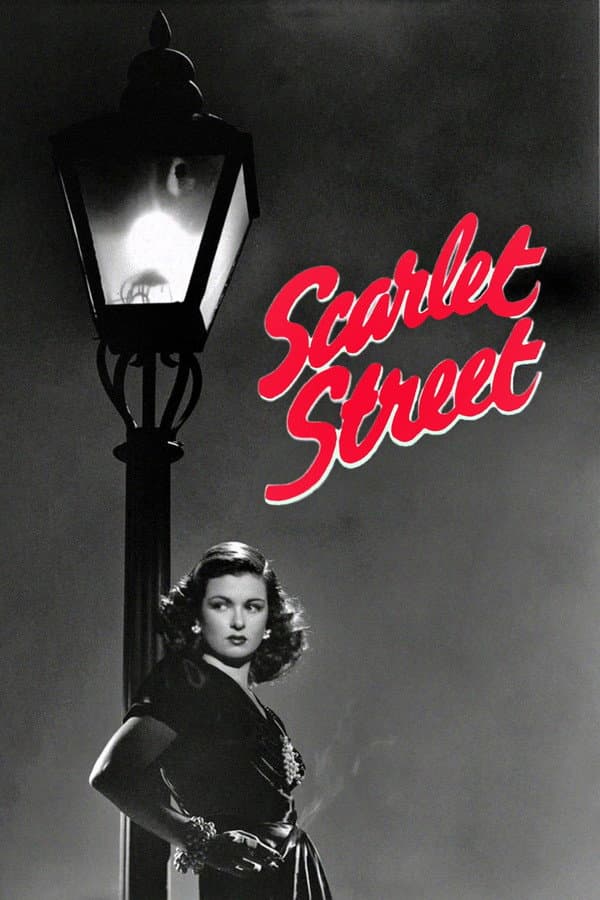
Scarlet Street
1945 • Crime, Drama • NR
Cashier and part-time starving artist Christopher Cross is absolutely smitten with the beautiful Kitty March. Kitty plays along, but she's really only interested in Johnny, a two-bit crook. When Kitty and Johnny find out that art dealers are interested in Chris's work, they con him into letting Kitty take credit for the paintings. Cross allows it because he is in love with Kitty, but his love will only let her get away with so much.
Runtime: 1h 43m
Buy related books from Amazon
As an Amazon Associate I earn from qualifying purchases. Read the full disclosure.
Why you should read the novel
Before you press play on Scarlet Street, discover the sharper original vision in Georges de La Fouchardière’s novel The Bitch (La Chienne). On the page, the characters’ motives, self-delusions, and moral compromises are rendered with a caustic intimacy only prose can sustain, making every choice feel inevitable—and avoidable—all at once.
Reading the source novel offers a richer psychological journey than the movie can condense. You’ll get fuller backstories, deeper interior monologues, and an unfiltered portrait of desire, manipulation, and social hypocrisy that censorship-era Hollywood could only hint at. It’s a denser, darker, and more ironic experience.
If you’re curious about where the film’s twisted romance and artistic obsession truly began, seek out The Bitch (La Chienne) in English. It’s the definitive way to understand the book-versus-movie debate, appreciate the original themes, and see how later adaptations reshaped the story for the screen.
Adaptation differences
Setting and names shift dramatically from the novel to the film. The Bitch (La Chienne) unfolds in interwar Paris with a biting view of its streets and small-bourgeois routines, while Scarlet Street moves the action to 1940s New York and renames the characters, recasting the clerk-painter as Chris Cross and the lovers as Kitty and Johnny. This relocation alters the social texture and local color that drive the book’s satire.
Hollywood’s Production Code reshapes sexuality and violence. In the novel, the woman’s profession and the couple’s exploitation are frank and unsentimental; the film softens these elements, implying rather than stating prostitution and filtering their grifts through euphemism. That censorship tilts the tone: the book’s raw, sardonic candor becomes a more coded, suggestive noir fatalism on screen.
Plot emphasis also diverges. Scarlet Street amplifies the art-world angle—gallery interest, critical acclaim under a false signature, and the marketplace’s fickle fame—turning painting into a public scandal. In the novel, art functions more as a private obsession and ethical mirror than a springboard to celebrity, keeping the focus on corrosive desire and petty cruelty rather than media buzz.
The endings reflect different moral logics. The novel’s resolution leans into bitter social irony and personal ruin without the machinery of codified “justice.” The film introduces a high-profile legal punishment for the wrong person and leaves Chris haunted by guilt and voices, a tailored concession to Code-era expectations. The book’s finale feels more ambiguously damning—society shrugs while the protagonist spiritually disintegrates—whereas the movie externalizes retribution and underscores noir torment.
Scarlet Street inspired from
The Bitch (La Chienne)
by Georges de La Fouchardière