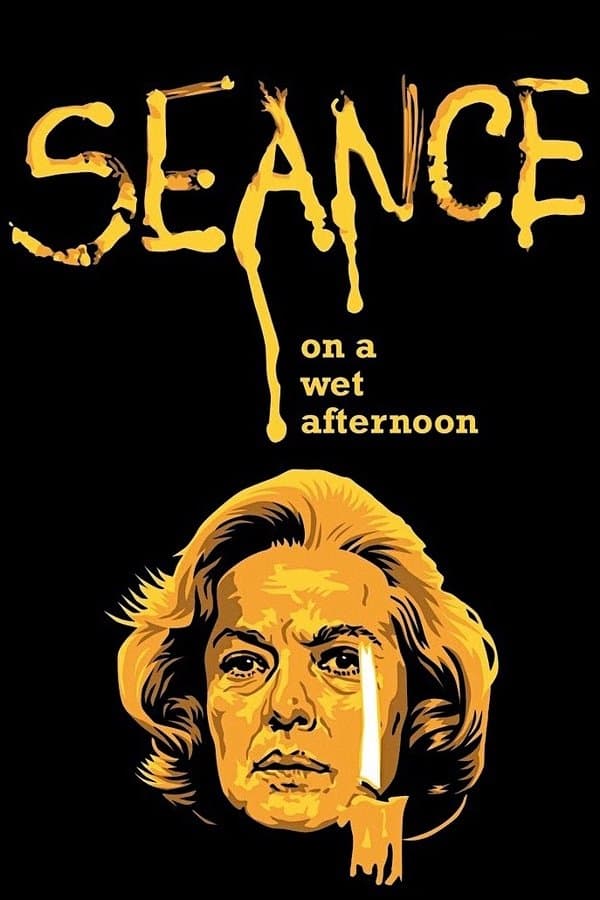
Seance on a Wet Afternoon
1964 • Crime, Drama, Thriller
Working-class British housewife Myra Savage reinvents herself as a medium, holding seances in the sitting room of her home with the hidden assistance of her under-employed, asthmatic husband, Billy. In an attempt to enhance her credibility as a psychic, Myra hatches an elaborate, ill-conceived plot to kidnap a wealthy couple's young daughter so that she can then help the police "find" the missing girl.
Runtime: 1h 51m
Buy related books from Amazon
As an Amazon Associate I earn from qualifying purchases. Read the full disclosure.
Why you should read the novel
Before you watch the classic film, read the source: Seance on a Wet Afternoon by Mark McShane. The novel’s intimate psychological detail and razor‑taut suspense put you directly inside the scheme, revealing motives the screen can only hint at.
McShane’s prose blends noir tension with a sly, macabre wit, building dread through quiet observations, ethical gray areas, and razor‑edged character work. You’ll encounter richer backstories, shifting viewpoints, and period texture that deepen every choice and consequence.
For readers who crave atmosphere, psychology, and moral complexity, the book is the definitive experience. Discover why critics and crime‑fiction fans still recommend reading McShane’s novel—available in print, ebook, and audiobook—before pressing play.
Adaptation differences
The film adaptation is notably faithful to the novel’s premise, but the tones diverge. Mark McShane’s book weaves dark humor and irony into the tension, while the movie leans into sober realism and somber, documentary‑like restraint. As a result, scenes that feel wryly macabre on the page register as stark and unsettling on screen.
Characterization differs in emphasis. The novel grants sustained access to Myra’s and her husband’s interior thoughts, exposing rationalizations, doubts, and flashes of mordant wit; the film must convey this through performance, framing, and silence, which makes Myra’s instability feel more immediate and Bill’s reluctance more sympathetic. Readers often find the book’s psychological shading broader and more layered.
Structurally, the book allows more breathing room for planning, aftermath, and secondary perspectives—at times shifting focus to observers surrounding the crime—whereas the film streamlines events for momentum and keeps the camera close to the couple’s claustrophobic world. Police and peripheral subplots tend to be more compressed on screen to preserve a tight thriller pace.
In theme and resolution, the novel preserves greater ambiguity around spiritualism and self‑deception, encouraging readers to question what’s performance and what’s genuinely believed. The film clarifies some of that ambiguity and stages the climax more publicly and decisively, delivering catharsis through confrontation, while the book leaves a slightly wider interpretive space for motive, guilt, and consequence.
Seance on a Wet Afternoon inspired from
Seance on a Wet Afternoon
by Mark McShane