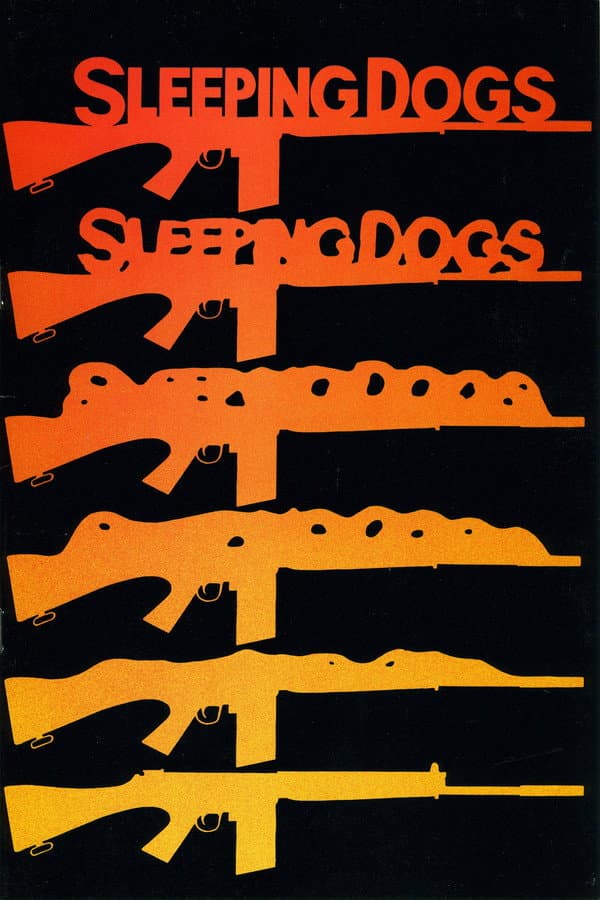
Sleeping Dogs
1978 • Action, Drama, Thriller • NR
Recluse Smith is drawn into a revolutionary struggle between guerrillas and right-wingers in New Zealand. Implicated in a murder and framed as a revolutionary conspirator, Smith tries to maintain an attitude of non-violence while caught between warring factions.
Runtime: 1h 47m
Buy related books from Amazon
As an Amazon Associate I earn from qualifying purchases. Read the full disclosure.
Why you should read the novel
Before you stream Sleeping Dogs (1978), discover Smith's Dream by C. K. Stead—the provocative New Zealand novel that inspired the film. The book delivers a richer, more nuanced dystopian vision, blending political suspense with literary depth that the movie can only hint at.
Reading Smith's Dream puts you inside Smith’s mind, where moral ambiguity, fear, and reluctant courage collide. Stead’s sharp prose, layered symbolism, and razor-edged social commentary create an immersive political thriller that rewards thoughtful readers with context the film compresses for action.
If you love New Zealand fiction, dystopian novels, or high-stakes political drama, Smith's Dream is essential reading. Choose the book for fuller world-building, richer characterization, and insights that make every scene in Sleeping Dogs even more compelling.
Adaptation differences
Sleeping Dogs (1978) adapts Smith's Dream with a lean, action-forward style, while the novel leans literary and introspective. The book’s mood is more ambiguous and reflective, exploring ideology and personal responsibility; the film prioritizes chases, raids, and survival beats.
C. K. Stead’s novel presents a complex, often satirical political landscape, whereas the movie streamlines the conflict into a clearer authoritarian-versus-resistance frame. Sleeping Dogs heightens militarization on screen—most notably through the prominent role of an American military advisor—while the book lingers on the creeping mechanisms of state power and public fear.
Characterization shifts, too. In Smith's Dream, Smith’s interior life, doubts, and rationalizations drive the narrative; relationships and side characters illustrate moral gray zones. The film trims or combines supporting roles, reduces internal monologue, and externalizes motivations to keep momentum, changing how we interpret Smith’s choices and loyalties.
Plot structure and ending emphasis differ. Sleeping Dogs compresses timelines, relocates incidents, and amplifies set pieces for cinematic impact, culminating in a visually decisive climax. The novel’s resolution is more open to interpretation, leaving political outcomes and Smith’s personal fate deliberately less certain—and more haunting—on the page.
Sleeping Dogs inspired from
Smith's Dream
by C. K. Stead