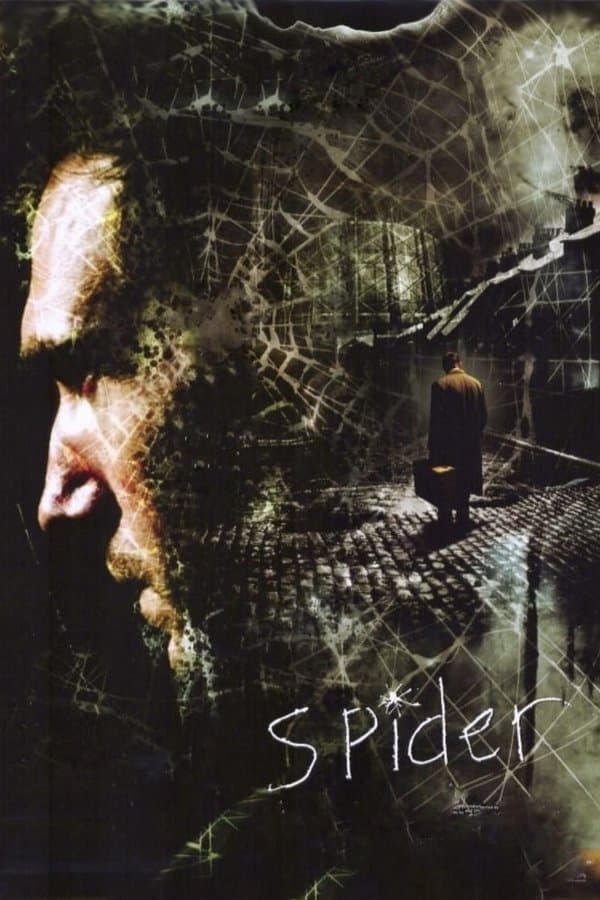
Spider
2002 • Drama, Mystery, Thriller • R
A mentally disturbed man takes residence in a halfway house. His mind gradually slips back into the realm created by his illness, where he replays a key part of his childhood.
Runtime: 1h 38m
Buy related books from Amazon
As an Amazon Associate I earn from qualifying purchases. Read the full disclosure.
Why you should read the novel
If you’re drawn to the haunting mood of David Cronenberg’s Spider (2002), start with the source: Spider, the novel by Patrick McGrath. This psychological thriller book immerses you directly in Dennis Clegg’s mind through intimate, first-person pages that no screen can duplicate.
Reading Spider offers richer context, slow-burn suspense, and the full texture of an unreliable narrator—shifting memories, obsessive repetitions, and chilling detail. For fans of literary psychological horror, McGrath’s prose delivers a deeper, more complex experience than any movie runtime allows.
Searches like read Spider novel, Patrick McGrath book, and Spider book vs movie all point to the same truth: the novel rewards careful reading with nuance, ambiguity, and unforgettable atmosphere. Choose the book to understand Spider from the inside out.
Adaptation differences
The biggest difference between the Spider novel and the movie lies in narration. Patrick McGrath’s book is a first-person diary, steeped in Spider’s unstable voice; David Cronenberg’s film translates that interiority into images, silence, and production design, inevitably reducing direct access to the character’s thoughts.
Structure also shifts. The novel unspools memories at the pace of written obsession, while the film condenses timelines and rearranges events for cinematic clarity. Adult Spider frequently appears inside childhood scenes on screen, a visual device that replaces the book’s layered recollections and handwritten confessions.
Character emphasis changes as well. On film, casting the same actress as both Spider’s mother and his father’s lover powerfully blurs identities; the novel achieves the same confusion through language and perception. Secondary figures and day-to-day life in the lodging house are leaner on screen, fuller on the page.
Finally, the revelation of what truly happened diverges in texture. The book unveils Spider’s culpability gradually through voice, motifs, and journal logic; the film delivers realization via visual juxtapositions and spare dialogue. For readers comparing Spider book vs movie, these differences shape tone, ambiguity, and emotional impact.
Spider inspired from
Spider
by Patrick McGrath