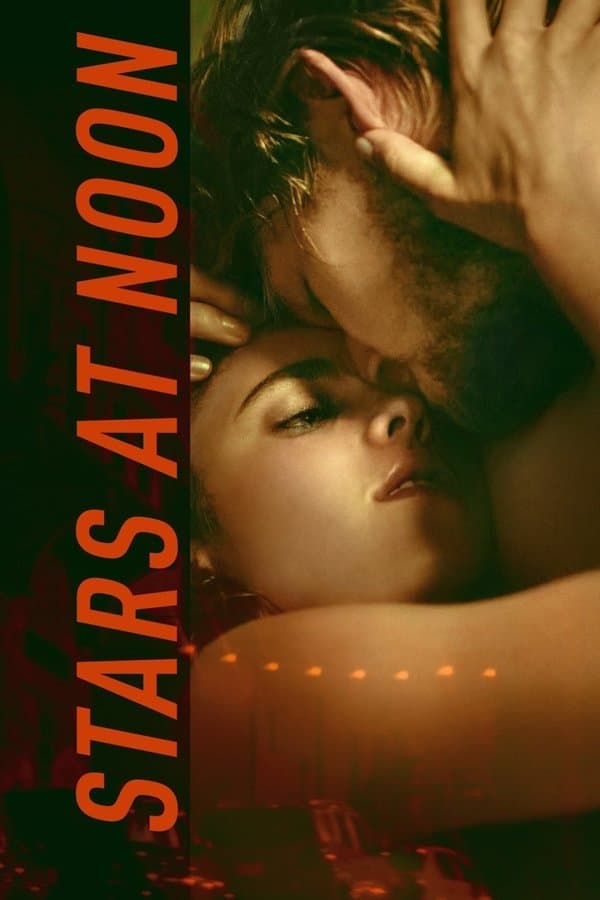
Stars at Noon
2022 • Crime, Drama, Romance • R
In present-day Nicaragua, a headstrong American journalist and a mysterious English businessman strike up a romance as they become embroiled in a dangerous labyrinth of lies and conspiracies and are forced to try and escape the country.
Runtime: 2h 18m
Buy related books from Amazon
As an Amazon Associate I earn from qualifying purchases. Read the full disclosure.
Why you should read the novel
Before streaming or rewatching Stars at Noon, experience the original vision in Denis Johnson’s novel The Stars at Noon. The book delivers immersive atmosphere, razor-edged tension, and a fiercely intimate perspective you simply can’t get on screen.
The Stars at Noon book plunges you into 1980s Nicaragua with visceral detail, unreliable narration, and searing political undercurrents. If you’re curious about the world behind the film, the novel’s layered context, interiority, and moral complexity reward every page.
Discover why readers champion Denis Johnson’s prose: hypnotic sentences, stark humor, and aching humanity. If you loved the movie’s mood, the novel offers the deeper, richer, and more haunting journey—perfect for fans of literary thrillers and politically charged fiction.
Adaptation differences
Time and setting shift dramatically. Denis Johnson’s novel unfolds amid the 1980s Nicaraguan Revolution, while the film moves to the present day, during pandemic-era turmoil. This update alters technology, surveillance, and the geopolitical pressures shaping every choice the characters make.
Perspective and voice diverge. The book’s first-person narration traps you inside the protagonist’s fevered, unreliable consciousness, steeped in guilt, desire, and paranoia. The film translates that interiority into sensual images and atmosphere, often favoring mood over the novel’s explicit political and psychological exposition.
Plot architecture and characters compress and realign. Supporting figures are merged or omitted, motivations are streamlined, and certain encounters play out with different stakes. Where the novel lingers on bureaucratic snares, clandestine deals, and contested loyalties, the film distills these into fewer set pieces and a more elliptical cat-and-mouse tension.
Themes and outcomes shift in emphasis. The book’s scalding critique of imperial entanglements and moral rot sits alongside a love story corroded by fear; the film foregrounds erotic dependency and sensual immediacy over detailed geopolitical scaffolding. Without spoilers, expect altered escalations and a different tonal landing—another reason to read the novel for the full, original impact.
Stars at Noon inspired from
The Stars at Noon
by Denis Johnson