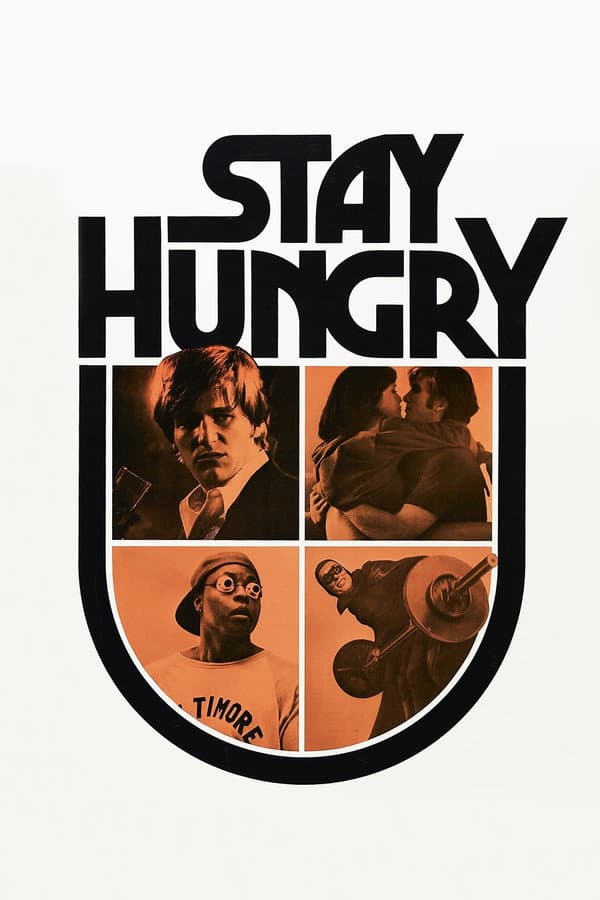
Stay Hungry
1976 • Comedy, Drama • R
A dishonest businessman asks rich layabout Craig Blake to help him buy a gym, which will be demolished for a development project in Alabama. But after spending time with weightlifter Joe Santo and gym worker Mary Tate Farnsworth, Craig wants out of the deal. The property negotiations turn ugly, causing a brawl at the gym and a spectacle at a big bodybuilding meet, as Craig learns that it's not easy to turn your back on fair-weather friends.
Runtime: 1h 42m
Buy related books from Amazon
As an Amazon Associate I earn from qualifying purchases. Read the full disclosure.
Why you should read the novel
Before you press play on Stay Hungry (1976), consider reading Stay Hungry by Charles Gaines—the vivid, witty novel that inspired the film. The book’s sharp observations and immersive Southern setting deliver a layered experience no two-hour movie can match.
In the Stay Hungry novel, Gaines dives deep into Birmingham’s high society, the gritty bodybuilding world, and the moral gray zones of business, offering nuance, humor, and social insight. You’ll meet fully realized characters whose motives, fears, and contradictions unfold with rich interiority and detail.
If you love character-driven stories and evocative regional fiction, the original Stay Hungry book is the definitive way to enter this world. Read the source material to appreciate Charles Gaines’s voice, cultural texture, and the complex themes the movie can only hint at.
Adaptation differences
Curious about the differences between the Stay Hungry movie and the book? The film adapts Charles Gaines’s novel into a brisk, offbeat dramedy, prioritizing romance and spectacle. The novel, by contrast, is a more layered social portrait that interweaves class satire, personal ambition, and ethical compromise.
In the book vs. movie comparison, character depth is the biggest shift. The novel gives Craig Blake, Joe Santo, and Mary Tate more psychological nuance, backstory, and interior reflection. You feel the weight of Birmingham’s social codes and the personal costs of the real-estate scheme in a way the film largely streamlines.
Structurally, the adaptation condenses timelines, pares back subplots, and often combines minor gym and business figures into composite roles. Corporate machinations and community dynamics that play out over extended chapters in the book become cleaner narrative beats on screen, keeping the pace lively but reducing complexity.
Tonally, the film leans into comedic energy and performance-driven set pieces—especially around the gym and the bodybuilding competition—while the novel balances humor with sharper social critique and cultural observation. The movie tends toward a tidier catharsis, whereas the novel leaves more room for ambiguity, reflection, and the lingering consequences of the characters’ choices.
Stay Hungry inspired from
Stay Hungry
by Charles Gaines