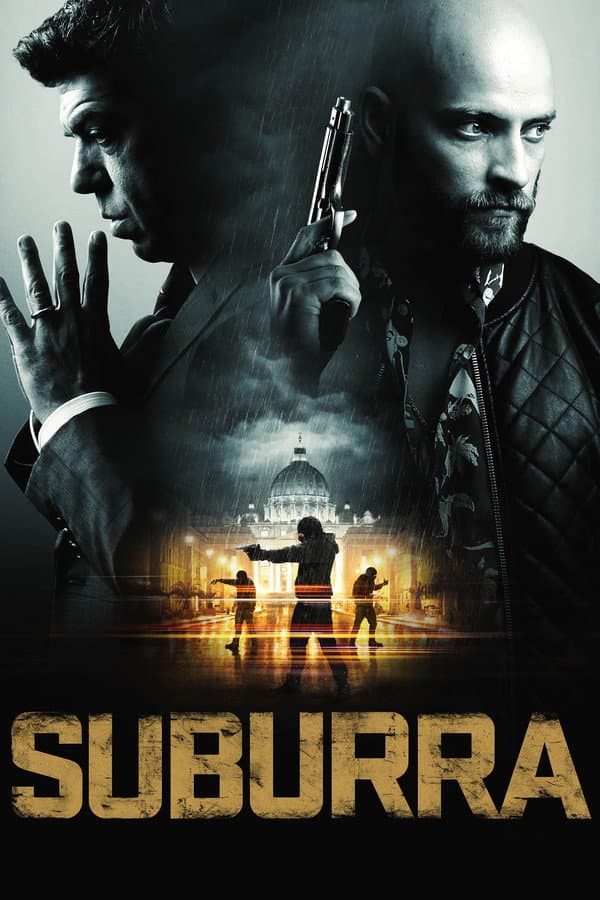
Suburra
2015 • Crime, Drama, Thriller
A gangster known as "Samurai" wants to turn the waterfront of Rome into a new Las Vegas. All the local mob bosses have agreed to work for this common goal. But peace is not to last long.
Runtime: 2h 10m
Buy related books from Amazon
As an Amazon Associate I earn from qualifying purchases. Read the full disclosure.
Why you should read the novel
Before pressing play, experience Suburra where it began: the gripping crime novel by Carlo Bonini and Giancarlo De Cataldo. The book plunges you into Rome’s underworld, City Hall backrooms, and Vatican corridors with a depth and precision no two-hour movie can match. If you love dark, sophisticated crime fiction and want the complete story behind the headlines, read the Suburra novel first.
On the page, Suburra unfolds through layered perspectives, meticulously charting the alliances, betrayals, and money flows that fuel power in Rome. Every neighborhood and institution feels lived-in, every character’s choice shaped by history and consequence. The novel’s rich context, investigative detail, and slow-burn tension reward readers who crave authenticity in a crime thriller.
Searching for the definitive Suburra experience? Choose the book over the movie. You’ll discover expanded plotlines, sharper motives, and a fuller picture of the political and criminal ecosystems that inspired the film. For fans of gritty noir, organized-crime sagas, and true-to-life corruption tales, reading Suburra is the essential first step.
Adaptation differences
Book vs movie: scope and structure. The Suburra film compresses sprawling events into a tight countdown for cinematic momentum, while the novel sprawls across a wider timeframe, mapping networks of politicians, gang leaders, fixers, and financiers with patient, investigative breadth. The book’s larger canvas reveals how seemingly minor decisions ripple through Rome’s power grid.
Characters and development diverge. In the adaptation, several arcs are streamlined or combined to keep pace, giving the spotlight to a core ensemble. The novel invests more pages in backstories, loyalties, and fractures inside families and clans, offering clearer motives and more nuanced transformations that sharpen every betrayal and alliance.
Institutions and context shift in emphasis. The film hints at the Vatican’s financial shadows, municipal rezoning schemes, and far-right/criminal intermediaries; the book digs much deeper, naming mechanisms, detailing money paths, and showing how public contracts, lobbying, and organized crime intertwine. Readers get granular context that reframes key scenes from quick beats into systemic revelations.
Tone and outcomes differ. The movie embraces operatic fatalism, stylized violence, and a storm-lashed crescendo; the novel leans into reportage-driven realism, moral ambiguity, and the slow grind of cause and effect. Event order, pacing, and some causal links change to heighten cinematic impact, while the book’s themes emphasize institutional responsibility as much as personal doom.
Suburra inspired from
Suburra
by Carlo Bonini, Giancarlo De Cataldo