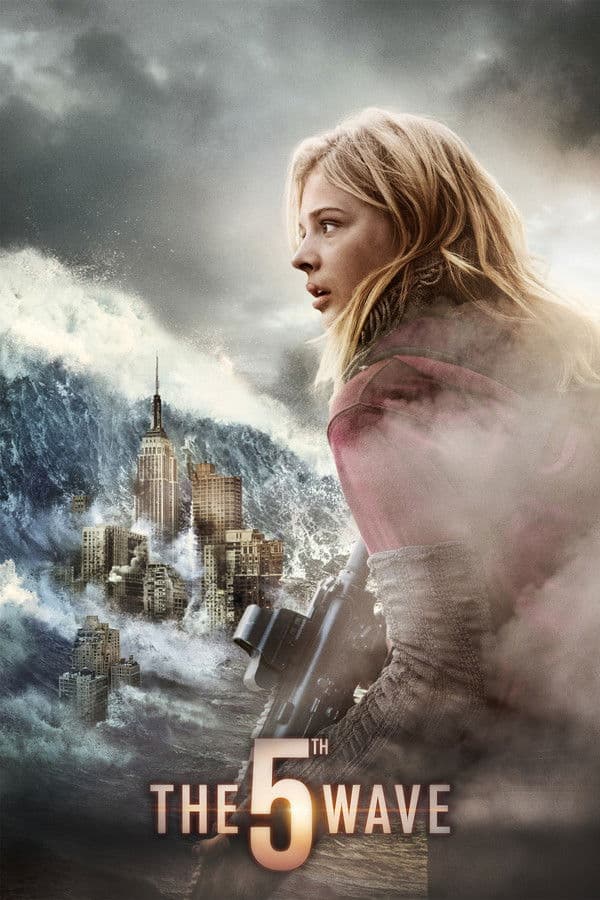
The 5th Wave
2016 • Action, Adventure, Science Fiction • PG-13
16-year-old Cassie Sullivan tries to survive in a world devastated by the waves of an alien invasion that has already decimated the population and knocked mankind back to the Stone Age.
Runtime: 1h 52m
Buy related books from Amazon
As an Amazon Associate I earn from qualifying purchases. Read the full disclosure.
Why you should read the novel
Before you press play, consider reading The 5th Wave book by Rick Yancey. The novel delivers a richer, more suspenseful young adult science fiction experience, with textured worldbuilding, layered twists, and visceral survival stakes that the movie only hints at. If you want the full story of the alien invasion’s waves and the haunting paranoia they unleash, the source material is the place to start.
Readers who dive into The 5th Wave novel get nuanced character development for Cassie, Ben, Evan, and Sammy, plus multiple perspectives that deepen the mystery. Yancey’s sharp prose and relentless tension turn every page into a puzzle about trust, identity, and what it means to stay human when humanity is under siege.
Love the film’s premise? The book goes further—and continues across the complete The 5th Wave trilogy with The Infinite Sea and The Last Star. For fans of YA sci-fi, dystopian thrillers, and character-driven stories, reading the original novels provides the definitive, most immersive version of The 5th Wave.
Adaptation differences
One of the biggest differences between The 5th Wave movie and the book is narrative structure. Rick Yancey’s novel rotates through multiple first-person viewpoints and leans into unreliable narration, unraveling the truth about the “waves” slowly. The film streamlines this into a more linear, action-forward arc, focusing primarily on Cassie and compressing Ben’s squad storyline, which reduces the slow-burn mystery that defines much of the book.
Characterization also shifts in the adaptation. On the page, Evan Walker is more morally ambiguous and alien in affect, creating a thornier, slower-burning relationship with Cassie. The movie reframes him as a clearer romantic ally and downplays the unsettling, predatory edge present in the novel. Likewise, Ringer’s complexity, tactical brilliance, and evolving dynamic with Ben (Zombie) receive less time and nuance on screen.
Key plot mechanics are simplified for film pacing. The novel devotes greater detail to how the Others infiltrate human systems and manipulate military tech that “marks” targets, making the kids-soldier twist a more insidious revelation discovered over time. The movie uses visible neck implants and HUD-style targeting as a quicker visual shorthand, condenses Cassie’s solitary survival trek, and accelerates the Camp Haven infiltration and rescue beats. Several training sequences, squad relationships, and moments of moral uncertainty are compressed or altered.
Tone and thematic emphasis diverge as well. The book is darker, more paranoid, and more violent, leaning into the horror of not knowing who to trust; the PG-13 film favors broader action, clearer villains, and teen-romance momentum. The novel’s ending lands on a sharper cliffhanger with lingering dread, while the movie offers a comparatively tidier sense of closure. For readers seeking the bleak ambiguity, deeper themes of identity, and intricate reveals, the book delivers a far richer, more haunting experience.
The 5th Wave inspired from
The 5th Wave
by Rick Yancey