The Black Arrow
1948 • Action, Adventure, History, Romance • NR
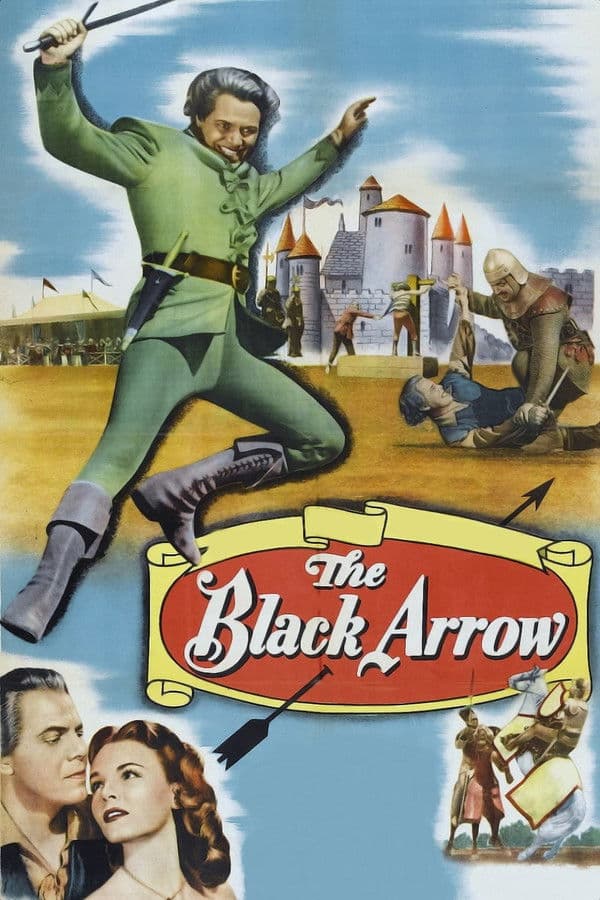
A young British nobleman comes back from fighting in the War of the Roses to discover that his father has been murdered by an old family friend who is now an outlaw. However, he becomes suspicious about the exact circumstances of his father's death and determines to find out exactly what happened.
Runtime: 1h 16m
Buy related books from Amazon
As an Amazon Associate I earn from qualifying purchases. Read the full disclosure.
Why you should read the novel
Before you press play on the 1948 film, discover the original experience in Robert Louis Stevenson’s The Black Arrow: A Tale of the Two Roses. The novel plunges readers into the Wars of the Roses with authentic atmosphere, vivid treachery, and a coming‑of‑age journey far richer than any brief screen adventure.
Stevenson’s storytelling delivers layered characters, razor‑sharp pacing, and morally complex twists that a movie can only hint at. Follow Dick Shelton as he uncovers the truth about his father’s murder, navigates shifting loyalties, and learns the cost of justice in a war‑torn England.
If you enjoy historical adventure, chivalry, and romance, the definitive way to experience this tale is to read the book. Explore the full arc of the Black Arrow fellowship, savor Stevenson’s prose, and see why the novel remains a classic for fans of swashbuckling fiction.
Adaptation differences
The biggest difference between the 1948 movie and the book is scope. The film streamlines the Wars of the Roses into a clear backdrop for action, while the novel threads politics through nearly every chapter. Richard of Gloucester’s strategic presence and the fraught civic landscape are largely minimized on screen, narrowing the story to personal vendettas and castle‑set exploits.
Characterization shifts noticeably. In the novel, Dick Shelton evolves from a conflicted ward into a wiser, self‑reliant hero; the film tends to present him as a confident swashbuckler from the start. Joanna Sedley’s resourceful disguise as a boy and her stealthy travels with Dick are shortened or reshaped, and the romance is heightened to fit classic late‑1940s adventure conventions.
Plot and structure are compressed. The fellowship of the Black Arrow in the book operates as a covert network with coded messages and insurgent aims; on screen it’s reduced and simplified, with several secondary figures (such as Ellis Duckworth, Bennet Hatch, or Sir Oliver Oates) merged, minimized, or omitted. The adaptation favors brisk duels and sieges over the novel’s investigative turns, moral debates, and shifting alliances.
Themes and tone also diverge. Stevenson’s novel wrestles with loyalty, law versus vengeance, and the chaos of civil war, often ending episodes with uneasy consequences. The movie opts for cleaner triumphs, clear‑cut villainy, and a neatly resolved ending. Readers who return to the source will find greater ambiguity, richer symbolism around the black arrows, and a more resonant final reckoning.
The Black Arrow inspired from
The Black Arrow: A Tale of the Two Roses
by Robert Louis Stevenson