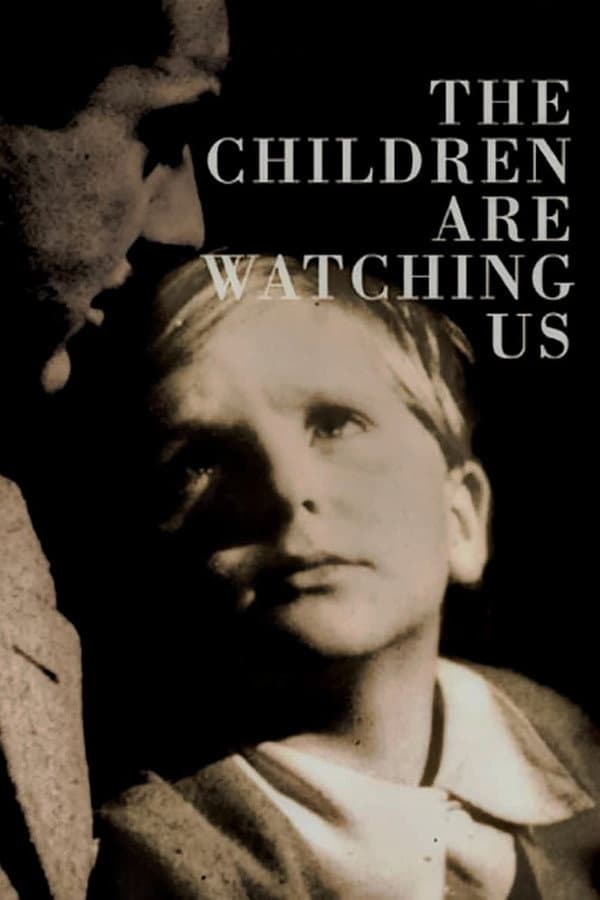
The Children Are Watching Us
1943 • Drama • NR
In his first collaboration with renowned screenwriter and longtime partner Cesare Zavattini, Vittorio De Sica examines the cataclysmic consequences of adult folly on an innocent child. Heralding the pair’s subsequent work on some of the masterpieces of Italian neorealism, The Children Are Watching Us is a vivid, deeply humane portrait of a family’s disintegration.
Runtime: 1h 24m
Buy related books from Amazon
As an Amazon Associate I earn from qualifying purchases. Read the full disclosure.
Why you should read the novel
Before you watch The Children Are Watching Us (1943), step into the original literary world of Prico by Cesare Giulio Viola. The novel gives you unfiltered access to the child’s inner life, offering a depth of feeling and psychological nuance that no camera can fully capture.
Reading Prico reveals layered social detail, quiet ironies, and the subtle emotional shifts that form the bedrock of the story. Viola’s prose lingers over textures, gestures, and the private thoughts that shape a family’s unraveling, turning every page into an intimate encounter with conscience and love.
If you care about Italian neorealism, family dramas, or book-to-film adaptations, start with the source. Prico by Cesare Giulio Viola rewards close reading, enriches classroom and book-club discussions, and deepens your appreciation for De Sica’s film by illuminating what only the novel can say.
Adaptation differences
One of the clearest differences between the book and the movie The Children Are Watching Us (1943) is perspective. Prico places you inside the child’s mind and feelings, while the film primarily externalizes his experience through looks, silences, and mise-en-scène. The novel’s interiority turns quiet moments into profound moral reckonings that the camera renders more implicitly.
Structure and pacing also diverge. The film compresses time, streamlines settings, and selects a handful of pivotal episodes to sustain dramatic momentum. In the novel, daily routines, school scenes, and social vignettes accumulate gradually, making the family’s fracture feel like a slow, bruising drift rather than a sequence of condensed crises.
Characterization shifts with adaptation pressures. On the page, the parents and the lover are shaded with backstory and contradictory impulses; their choices emerge from social circumstance as much as personal failing. The 1943 film, shaped by contemporary standards and censorship, leans more visibly into moral consequence and public respectability, often framing the mother’s affair in starker terms than the novel’s more elastic sympathy.
Tone and emphasis differ in the resolution. The movie culminates in an austere, iconic ending that imprints the child’s isolation in a single, unforgettable image. The book’s closing movements feel more reflective on the page, dwelling on the textures of memory and the possibility—or impossibility—of emotional repair, inviting readers to weigh aftermath over image.
The Children Are Watching Us inspired from
Prico
by Cesare Giulio Viola