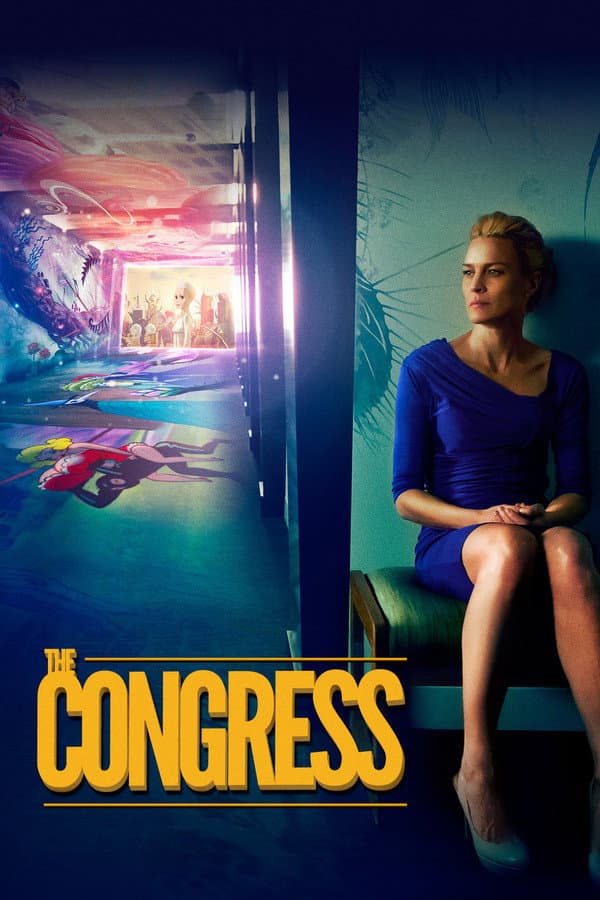
The Congress
2013 • Animation, Drama, Science Fiction • NR
An aging, out-of-work actress accepts one last job, though the consequences of her decision affect her in ways she didn't consider.
Runtime: 2h 3m
Buy related books from Amazon
As an Amazon Associate I earn from qualifying purchases. Read the full disclosure.
Why you should read the novel
If The Congress (2013) intrigued you, go straight to its source: The Futurological Congress by Stanislaw Lem. This seminal science-fiction novel delivers razor-sharp satire, mind-bending layers of reality, and big ideas the movie only hints at. Discover the original vision behind the hallucinatory worlds and the social critique that made Lem a legend.
Reading The Futurological Congress book offers deeper context on mass perception, political manipulation, and the ethics of engineered happiness—core themes that power the film’s most striking scenes. The English translation is widely available in paperback, ebook, and audiobook, making it easy to experience the full philosophical sweep of Lem’s classic.
For fans of thought-provoking science fiction, Black Mirror–style dilemmas, and dystopian satire, this is essential reading. Skip the surface; read the book that inspired The Congress and see why generations of readers consider Lem one of the most visionary authors in the genre.
Adaptation differences
The most fundamental difference is the protagonist and framing. Lem’s novel follows space traveler Ijon Tichy at an international futurology conference, while the film centers on a fictionalized Robin Wright, a Hollywood actor who sells the rights to her scanned image. The movie reframes the story as a critique of celebrity, digital avatars, and studio power, shifting away from the novel’s academic-conference satire.
Lem’s worldbuilding hinges on society-wide psychoactive dosing that manipulates collective perception to mask political and economic crises. The Congress (2013) borrows the idea of chemically altered realities but pivots to consumer entertainment—people choose identities and animated dreamselves as a lifestyle. The book’s setting is a chaotic congress and a future city revealed through layers of deception; the film turns that into a studio-run “futurological” showcase and a hallucinatory animated metropolis linked to media culture.
Tone and structure also diverge. The novel is a brisk, first-person satirical romp full of bureaucratic absurdity, neologisms, and philosophical gags, constantly yanking the floor out from under the reader. The movie is half live-action, half animation, with a melancholic, intimate throughline about aging, career control, and a mother’s bond with her son. Both use reality slips, but the book leans into systemic, political farce, while the film leans into personal tragedy and identity dissolution.
Endings and stakes reflect different aims. Lem’s conclusion wrestles with whether a chemically maintained utopia justifies illusion, leaving an unsettling, ambiguous choice about truth versus comfort. The film steers toward emotional resolution—seeking connection and hope amid digital immortality and commodified selves. In short, The Congress is very loosely based on The Futurological Congress: it keeps the hallucinatory-reality conceit and the “congress” idea but replaces Lem’s institutional satire with a Hollywood-focused, character-driven meditation on image and self.
The Congress inspired from
The Futurological Congress
by Stanislaw Lem