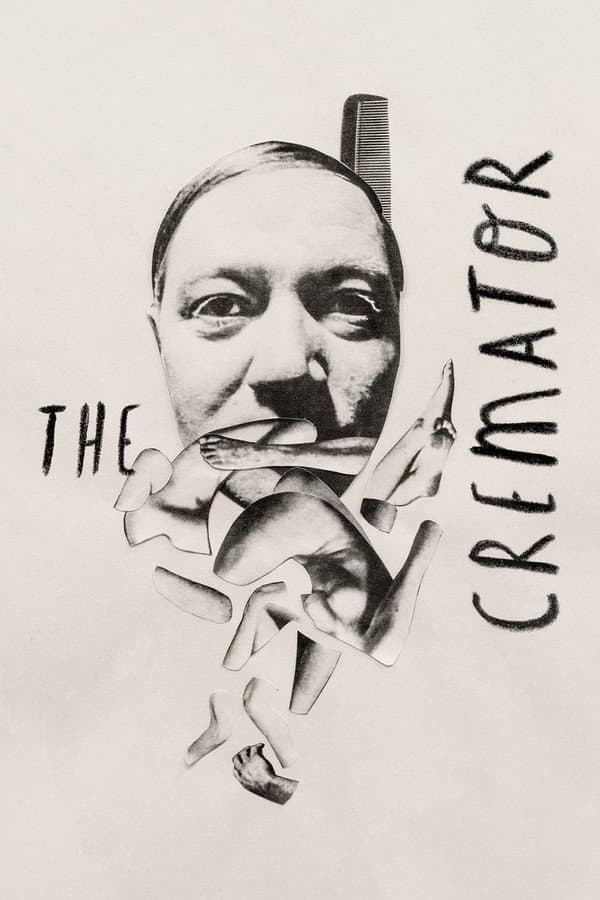
The Cremator
1969 • Comedy, Crime, Drama, Horror
In 1930s Prague, a Czech cremator who firmly believes cremation relieves one from earthly suffering is drawn inexorably to Nazism.
Runtime: 1h 41m
Buy related books from Amazon
As an Amazon Associate I earn from qualifying purchases. Read the full disclosure.
Why you should read the novel
Before you watch The Cremator (1969), experience the chilling source novel The Cremator by Ladislav Fuks in English. The book offers a deeper, more intimate psychological portrait of Karel Kopfrkingl and the bureaucratic language that masks his descent into horror—nuances no screen adaptation can fully replicate.
Reading the novel brings you into prewar Prague through Fuks’s razor-sharp satire, dark humor, and immersive interior narration. You’ll encounter layers of cultural context, moral ambiguity, and linguistic irony that enrich the story far beyond the film’s unforgettable imagery, making the book essential for fans of literary horror and Central European fiction.
If you’re comparing book vs movie, choose the original The Cremator novel for its unfiltered themes, character depth, and historical texture. Ideal for book clubs, students, and readers of psychological suspense, the English edition lets you engage with Ladislav Fuks’s classic as it was meant to be read—before or instead of pressing play.
Adaptation differences
Narrative perspective is the clearest difference between the adaptation and the book. Ladislav Fuks’s novel keeps you inside Kopfrkingl’s euphemisms and self-justifications through sustained interior narration and irony, while the film externalizes his mindset via expressionist visuals, rapid cutting, and sound design. The movie’s unsettling camera and voice fragments approximate his delusions, but the book’s language-driven satire exposes them from within.
Structure and pacing also diverge. The film compresses time and streamlines subplots to sustain momentum, often combining or pruning secondary characters and social milieus into a tighter circle around Kopfrkingl. In the novel, colleagues, family, and acquaintances occupy more space, building a broader panorama of prewar Prague’s petty conformities and pressures, which gradually enable his radicalization.
Tone and depiction of violence shift markedly. The movie stages key acts on screen, pushing grotesque, black-comic horror to the forefront. The novel tends to insinuate or understate violence through Kopfrkingl’s polite bureaucratic diction, creating a slower, more insidious chill. This change in emphasis makes the film’s horror immediate and visceral, while the book’s dread is cumulative and linguistic.
Thematic emphasis differs as well. The adaptation foregrounds visual motifs—fisheye distortions, ritualized crematorium space, and stylized quotations—that translate spiritual rationalizations and authoritarian seduction into cinema. The novel disperses these ideas through recurring phrases, bureaucratic doublespeak, and moral irony. As a result, the film culminates in a chilling visual apotheosis of power, whereas the book’s conclusion lands as a bleakly satirical reckoning anchored in Kopfrkingl’s inner voice.
The Cremator inspired from
The Cremator
by Ladislav Fuks