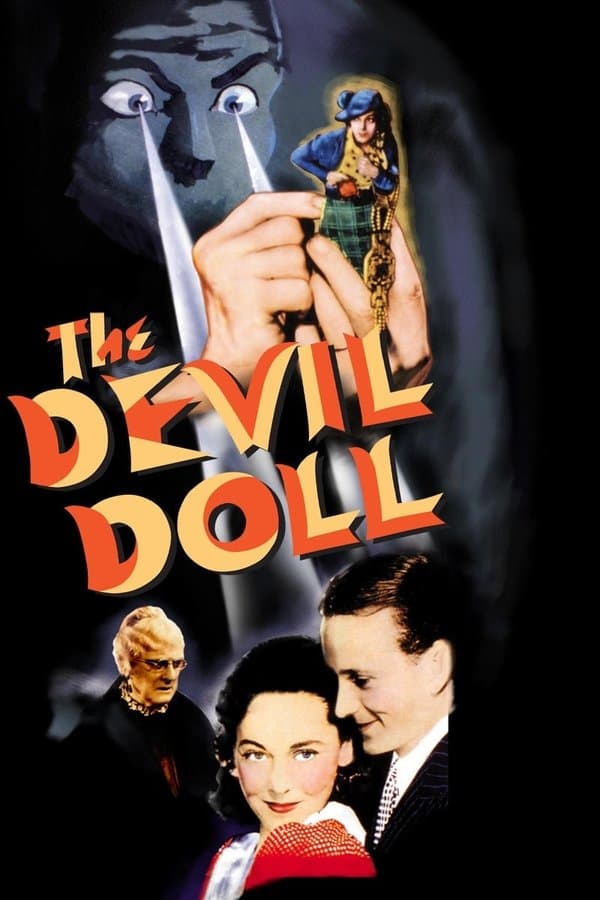
The Devil-Doll
1936 • Horror, Science Fiction • NR
Wrongfully convicted of a robbery and murder, Paul Lavond breaks out of prison with a genius scientist who has devised a way to shrink humans. When the scientist dies during the escape, Lavond heads for his lab, using the shrinking technology to get even with those who framed him and vindicate himself in both the public eye and the eyes of his daughter, Lorraine. When an accident leaves a crazed assistant dead, however, Lavond must again make an escape.
Runtime: 1h 18m
Buy related books from Amazon
As an Amazon Associate I earn from qualifying purchases. Read the full disclosure.
Why you should read the novel
Before pressing play on The Devil-Doll (1936), discover the original source: Abraham Merritt’s Burn, Witch, Burn! This classic of weird fiction delivers a magnetic mix of occult mystery, urban crime, and creeping dread that a single film can’t fully contain. Reading the novel gives you Merritt’s hypnotic prose, layered atmosphere, and the slow-burn unveiling of a diabolical plot that grips from the first page.
Burn, Witch, Burn! isn’t just background material—it’s a richer, darker journey. Where the movie streamlines and sentimentalizes, the book expands its underworld intrigues, medical sleuthing, and supernatural stakes. You’ll meet characters with sharper edges, step into a shadowy doll shop of true menace, and feel the uncanny power that made Merritt a cornerstone of early 20th‑century fantasy and horror.
If you’re searching for the definitive Devil-Doll experience, read the novel first. You’ll gain the deeper context, the original villainy behind the “dolls,” and the unnerving logic of Merritt’s occult world-building. Then watch the film to enjoy a fascinating, alternate interpretation—one that’s even more rewarding after you’ve absorbed the book’s potent spell.
Adaptation differences
The film reshapes the premise from occult horror to quasi-science fiction. In The Devil-Doll, victims are attacked by miniaturized humans created through a shrinking serum and controlled remotely. In Burn, Witch, Burn!, the threat is authentic witchcraft: an evil shopkeeper uses sorcery and sympathetic magic to animate figures as instruments of murder, with no scientific miniaturization involved.
Character focus and motivation differ dramatically. The movie centers on Paul Lavond, a wronged banker in disguise seeking revenge and personal redemption. Merritt’s novel follows a hard-nosed physician and the crime boss Julian Ricori as reluctant allies investigating a wave of deaths—an investigative partnership absent from the film’s family-driven storyline.
The antagonist’s identity is inverted. On screen, Lionel Barrymore masquerades as “Madame Mandilip” to ensnare his enemies; in the book, Madame Mandilip is the true malevolent witch who operates a sinister doll shop. This switch turns the film into a revenge melodrama with cross‑dressing subterfuge, while the novel remains a straight occult thriller with a formidable, explicitly supernatural villain.
Tone, setting, and resolution also diverge. The film blends macabre set‑pieces with pathos, moving from Devil’s Island to Paris and ending on a note of sacrifice and emotional closure with Lavond’s daughter. The novel’s urban setting (rooted in American city streets) sustains a grittier, investigative tone and concludes with the strategic unmasking and defeat of a sorceress—less sentimental, more procedural, and thoroughly steeped in the eerie logic of weird fiction.
The Devil-Doll inspired from
Burn, Witch, Burn!
by Abraham Merritt